Last updated on November 17th, 2026 at 03:05 pm
To enable Dolby Atmos in Windows 11, install the free Dolby Access app from the Microsoft Store and set up Dolby Atmos for Headphones or Dolby Atmos for Home Theater in it. Then select Start > Settings > System > Sound, select your headphones or speakers, and under Spatial audio, set Type to the Dolby Atmos option. Dolby Atmos for Headphones comes with a free trial and then needs a one-time purchase in the app.
Applies to: Windows 11.
Headphones or home theater?
- Headphones or home theater? Dolby Atmos for Headphones works with ordinary stereo headphones, wired or wireless. Dolby Atmos for Home Theater is for a soundbar or AV receiver that supports Dolby Atmos, connected to your PC by HDMI.
- Windows 11 version 24H2 changed things. According to Dolby, new installations of Windows 11 version 24H2 no longer include the Dolby Digital and Dolby Digital Plus codecs, so Dolby Atmos movies and music may not play on them. PCs that were upgraded from an earlier version keep the codecs, and PCs from makers that advertise Dolby audio include them. Games that support Dolby Atmos bring their own support, so they still work.
- Want something free? Windows includes Windows Sonic for Headphones, a built-in spatial sound option that needs no app or purchase.
Is Dolby Atmos free on Windows 11?
The Dolby Access app is free, and it includes a free trial of Dolby Atmos for Headphones. After that, a one-time purchase is needed. Windows Sonic for Headphones is free.
What’s the difference between Dolby Atmos and Windows Sonic?
Both simulate surround sound on headphones. Windows Sonic is built in and free. Dolby Atmos is a paid add-on with its own tuning and support for Dolby Atmos content.
Install Dolby Access
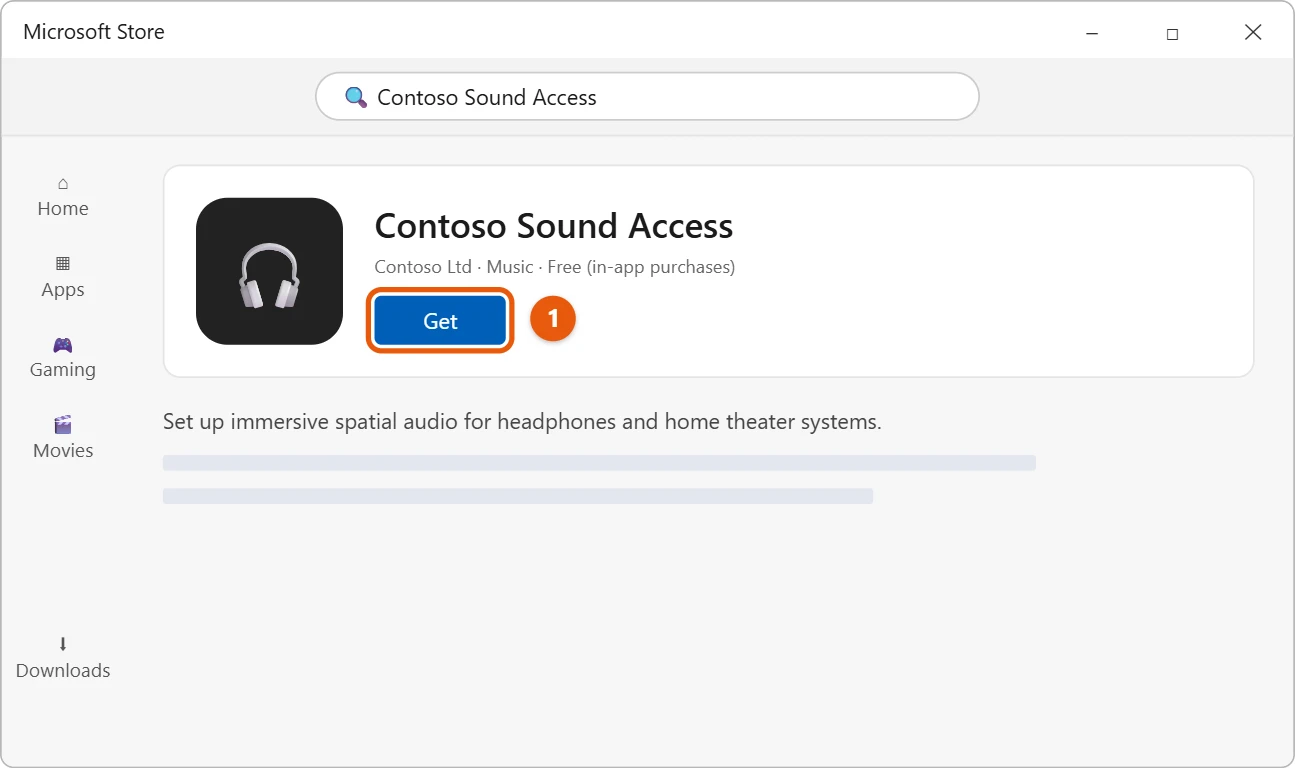
- Select Start, type Microsoft Store, and open it.
- Search for Dolby Access.
- Check that the publisher is Dolby Laboratories, and then select Get.
- Open Dolby Access and follow the setup. Choose Dolby Atmos for Headphones or Dolby Atmos for Home Theater, and start the free trial or buy the license.
Dolby Access can turn on Dolby Atmos for you at the end of setup. If it does, you’re done. If not, continue with the next section.
Turn on Dolby Atmos in Sound settings
- Connect your headphones, soundbar or receiver.
- Select Start > Settings > System > Sound.
- Under Output, select the device you want to use, so its properties page opens.
- Under Spatial audio, open the Type list and choose Dolby Atmos for Headphones or Dolby Atmos for Home Theater.

Recent versions of Windows 11 also let you choose Spatial sound from the sound menu in the taskbar, next to the volume controls.
Using the classic Sound control panel
- In Settings > System > Sound, select More sound settings.
- On the Playback tab, select your device and then Properties.
- On the Spatial sound tab, choose the Dolby Atmos format, and select OK.
Can I use Dolby Atmos on two outputs at once?
Spatial audio is set per device. Getting sound from two devices at the same time takes a separate setup for playing sound through two audio outputs in Windows 11.
Connect to a Dolby Atmos TV or receiver
For speakers instead of headphones, connect the PC by HDMI to a TV, soundbar, or AV receiver that supports Dolby Atmos. If the soundbar connects through the TV, the TV needs eARC (or ARC with Atmos passthrough) turned on. Then open Dolby Access, choose the home theater option, and select Dolby Atmos for home theater under Spatial audio for that HDMI output. This option doesn’t need a purchase, but it only appears when Windows detects a compatible device.
Adjust the sound in Dolby Access
Once Dolby Atmos for Headphones is active, open the Dolby Access app to fine-tune it. You can pick a preset for what you’re doing, such as Game, Movie, Music, or Voice, and adjust the equalizer to boost bass or make dialogue clearer. Changes apply to everything you hear through those headphones.
Get the most out of Dolby Atmos
- Use content made for it. Games and movies mixed in Dolby Atmos give the clearest sense of direction and height. Ordinary stereo music gets a wider sound but less positional detail.
- Use the app, not the browser, when a streaming service offers a Windows app, because some services only send Atmos audio through their apps.
- Check the game’s audio settings. Some games have their own 3D audio option that should be set to Dolby Atmos or headphones.
Test that it’s working
Open Dolby Access and play one of its demos. Sounds should seem to come from around and above you rather than just left and right. Movies, music and games mixed in Dolby Atmos make the biggest difference. Ordinary stereo music changes less.
Turn Dolby Atmos off
Go to Settings > System > Sound, select your device, and set Spatial audio > Type to Off.
If Dolby Atmos is missing or won’t turn on
- The option isn’t in the Type list. Finish setup in Dolby Access first. The Dolby option only appears after the app has set it up for that device.
- You’re on a new Windows 11 24H2 installation. See the note in “Before you start”. Dolby Atmos in games can still work, but Dolby movie and music content may not.
- Home Theater is missing. Your HDMI device must support Dolby Atmos, and it has to be the selected output. Check the device’s own settings and connect it directly to the PC’s HDMI port.
- It turns off after sleep or a restart. Open Sound settings and choose the format again. Updating your audio driver from your PC maker can help.
- It’s greyed out. Some apps take exclusive control of the audio device. Close them and try again.
When there is no sound at all, start by turning on the computer speakers in Windows 11.
Your computer’s sound can also go into a voice chat or recording when you play music through your mic in Windows 11.

Matt Jacobs writes and maintains the guides on Support Your Tech, which he started in 2017. He spent most of his career keeping small-business PCs running and still takes the occasional consulting job, so the steps here come from fixing the same problems on other people’s computers. Every guide is checked on his own Windows 11, Windows 10, Mac, iPhone and iPad before it goes up.