To find your IP address in Windows 10, select Start > Settings > Network & Internet. Select Wi-Fi or Ethernet, then select the network you’re connected to. Your IP address is listed next to IPv4 address.
The fastest way is Command Prompt: type ipconfig and press Enter. Look for IPv4 Address under your Wi-Fi or Ethernet adapter.
Applies to: Windows 10. Checked against Microsoft Support on September 25, 2026.
Local IP or public IP?
- Local (private) IP: the address your router gives your PC, such as
192.168.1.25. Use it for file sharing, printers, and Remote Desktop on your home network. - Public IP: the address websites see. Your router shares it with every device in your home.
Method 1: Find your IP address in Settings
- Select Start > Settings > Network & Internet.
- Select Wi-Fi (or Ethernet) on the left, then select your connected network.
- Scroll to Properties and find IPv4 address.
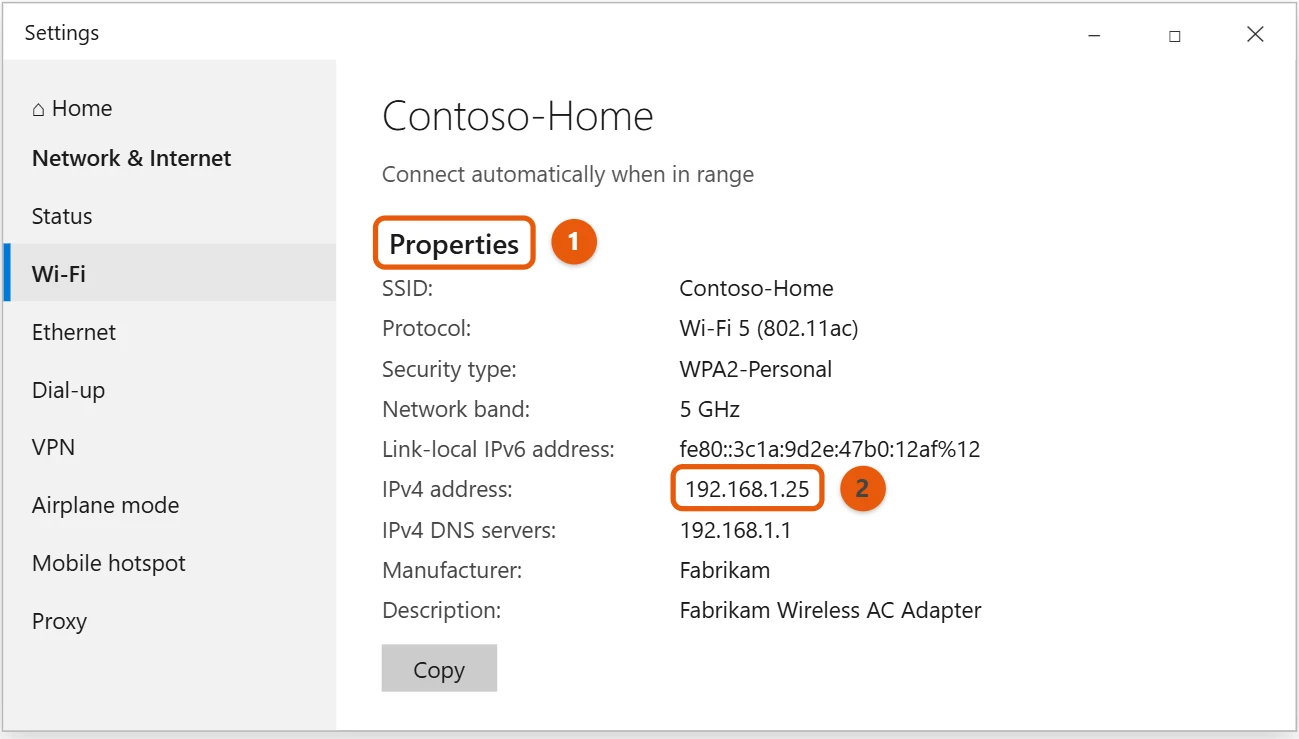
You can select Copy to copy the details.
Method 2: Use Command Prompt (ipconfig)
- Press Windows + R, type
cmd, and press Enter. - Type
ipconfigand press Enter. - Find your adapter, such as Wireless LAN adapter Wi-Fi, and read the IPv4 Address line.
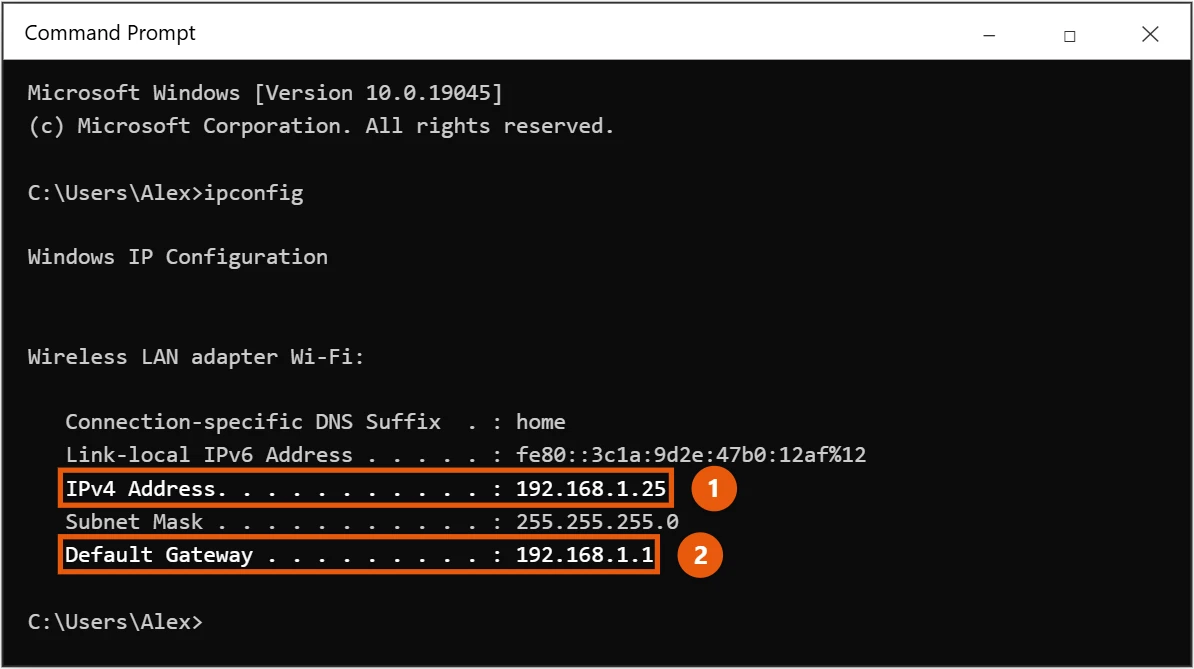
For more detail, including your MAC address and DNS servers, type ipconfig /all.
Method 3: Use Network Connections
- Press Windows + R, type
ncpa.cpl, and press Enter. - Right-click your active connection and select Status.
- Select Details. Your IP address is next to IPv4 Address.
Method 4: Find your public IP address
Your public IP isn’t shown in Windows settings. Open a browser and search for what is my IP. Your router’s admin page also shows it, often as WAN IP or Internet IP.
Find your router’s IP address
Your router’s address is the Default Gateway. It’s shown in ipconfig just below your IPv4 address, often 192.168.1.1 or 192.168.0.1. Type it into a browser to open the router’s settings.
If you don’t see an IP address
- No IPv4 address, or it starts with 169.254: your PC didn’t get an address from the router. Restart the router and your PC.
- Still nothing: in Command Prompt, run
ipconfig /releaseand thenipconfig /renew. - No Wi-Fi adapter listed: the network driver may be missing. Check Device Manager > Network adapters.
Frequently asked questions
Does my IP address change?
Usually, yes. Most home routers hand out addresses that can change after a restart. Your public IP can also change.
What is IPv6?
A newer, longer address format. Most home network tasks still use the IPv4 address.
Is it safe to share my IP address?
Your local IP is only useful inside your network. Be more careful with your public IP.
Why did my IP address change?
Your router hands out local addresses automatically and can give the PC a different one after a restart or when the address lease runs out. If a printer or game needs a fixed address, reserve one for the PC in your router’s settings, or set a static IP in Windows.
To find your adapter’s hardware address, see how to find your MAC address in Windows 10.
To make this PC easier to spot on your network, see how to change your PC name in Windows 10.
To give this PC a different address, see how to change your IP address in Windows 10.
If you don’t get an IP address, see how to reset network settings in Windows 10.
The ipconfig command runs in Command Prompt. If you’re not sure how to open it, see how to open Command Prompt in Windows 10.
To see which ports your PC is using, see how to find port numbers in Windows 10.
If your IP address starts with 169.254, see how to enable DHCP in Windows 10.
To see the IP addresses of other devices, see how to see all IP addresses on your network in Windows 10.
To connect to this PC from another computer, see how to set up Remote Desktop on Windows 10. Microsoft’s guide is Essential network settings and tasks in Windows. More help is on our Windows Help & Guides page.
Your adapter also has a MAC address. To change it, see how to change your MAC address in Windows 10.

Matt Jacobs has been working as an IT consultant for small businesses since receiving his Master’s degree in 2003. While he still does some consulting work, his primary focus now is on creating technology support content for SupportYourTech.com.
His work can be found on many websites and focuses on topics such as Microsoft Office, Apple devices, Android devices, Photoshop, and more.