Last updated on November 9th, 2026 at 01:14 pm
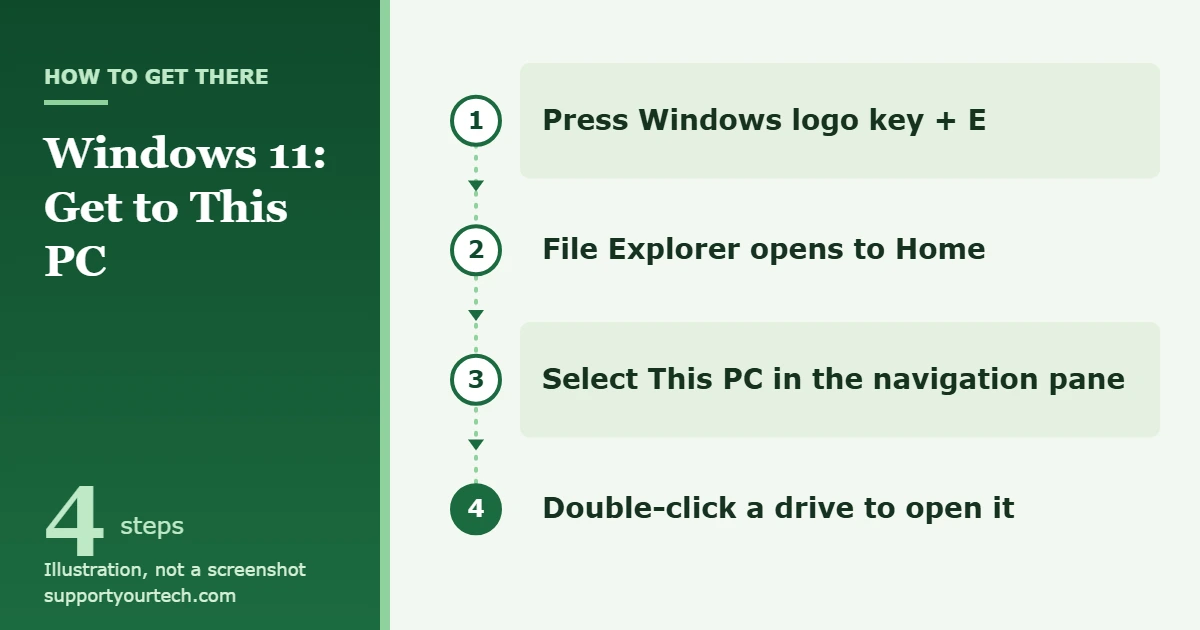
To get to This PC in Windows 11, press Windows logo key + E to open File Explorer, then select This PC in the navigation pane on the left. This PC is what older versions of Windows called My Computer, and it is where you see the drives on your computer.
Applies to: Windows 11.
This PC is a location inside File Explorer, the app Windows uses to browse files. It did not go away in Windows 11. It is just no longer the first thing you see, for two reasons:
- File Explorer opens to Home by default. Home shows the folders pinned to Quick access and your recent files, not your drives.
- The desktop does not show a This PC icon unless it is turned on in Settings.
Starting with Windows 11, version 22H2, the standard folders (Desktop, Documents, Downloads, Pictures, Music, and Videos) are pinned to Quick access and are no longer listed under This PC, so that This PC stays focused on your drives and network locations. If you go to This PC looking for Documents or Downloads, look in Home or at the top of the navigation pane instead.
What is the difference between Home and This PC?
Home shows your Quick access folders and recent files. This PC shows the drives and network locations on your computer.
Should I search from Home or from This PC?
Search from Home to quickly find files from your PC and the cloud. Searching from This PC is slower but more thorough, so use it when a quick search does not find the file.
Open This PC from File Explorer
- Press Windows logo key + E on your keyboard. You can also select File Explorer (the folder icon) on the taskbar or in the Start menu. A File Explorer window opens, normally on Home.
- Look at the navigation pane, which is the list of locations down the left side of the window, and select This PC. Scroll the list if you do not see it right away. The right side of the window changes to show your drives.
- Double-click a drive, such as the C: drive, to open it and browse the folders on it.
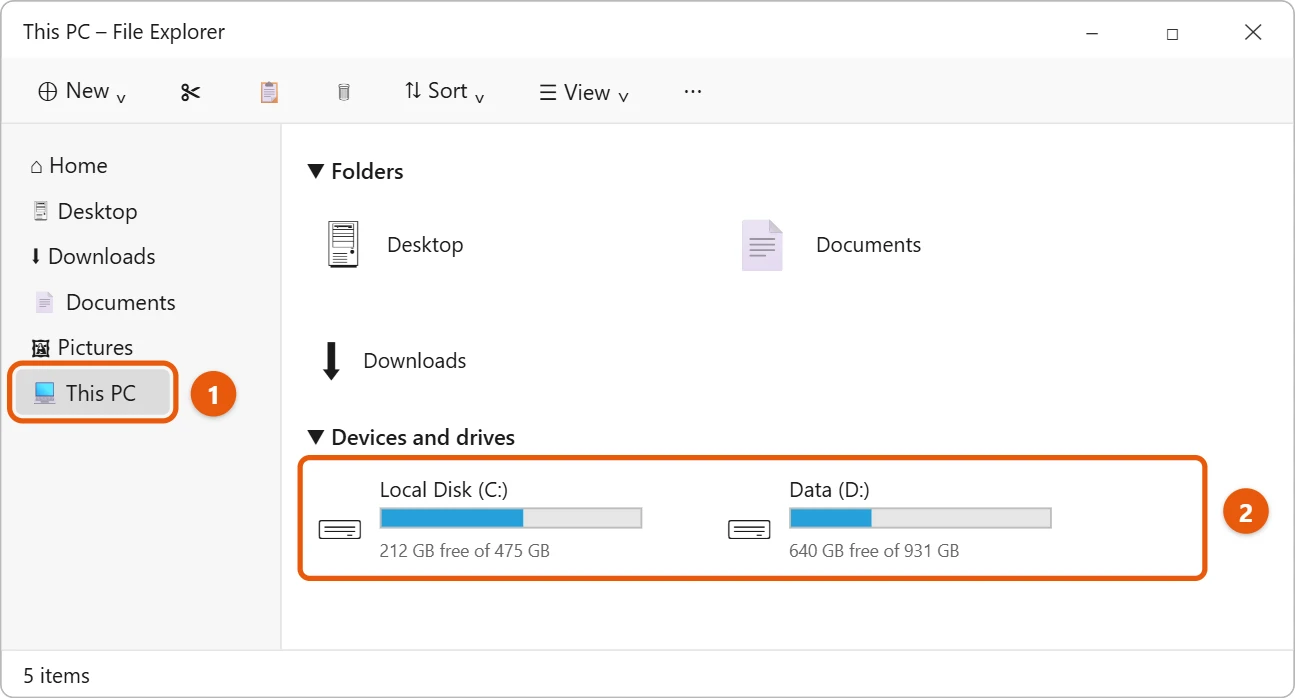
To go back up after opening a drive, select the Up arrow to the left of the address bar, or press Alt + Up arrow. Either one moves you up one level in the folder path. If you expected to see a D: drive under This PC and it is missing, see how to find the D drive on Windows 11.
Make File Explorer open to This PC every time
If you use This PC more than Home, you can make it the starting page. After this change, the Windows logo key + E shortcut takes you straight to This PC.
- Open File Explorer.
- On the bar at the top of the window, select See more (the three dots), then select Options. A small settings window opens.
- Next to Open File Explorer to, open the list and select This PC.
- Select Apply. The next File Explorer window you open starts on This PC.
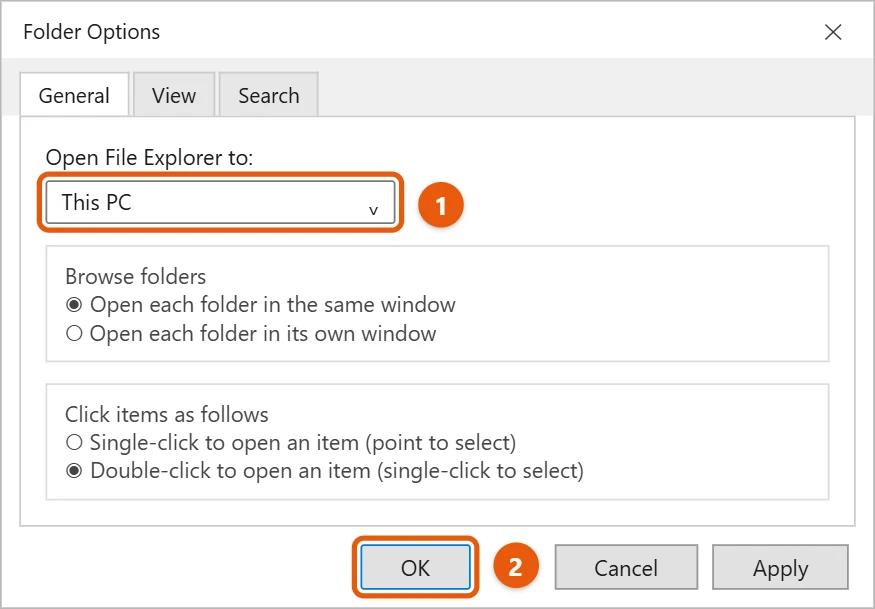
To undo this, follow the same steps and choose Home from the list instead, then select Apply.
Put a This PC icon on the desktop
If you liked having My Computer on the desktop, Windows 11 can show a This PC icon there. It is one of the default desktop icons, along with Recycle Bin, Network, and User’s Files.
- Press Windows logo key + I to open Settings.
- Select Personalization, then Themes.
- Select Desktop icon settings. A small window lists the default icons.
- Select the icon for your computer, then select OK. The This PC icon appears on the desktop, and double-clicking it opens This PC.
There is a longer walkthrough of this method in showing This PC on the desktop in Windows 11.
Which method to use
| If you want to | Use |
|---|---|
| Get to This PC right now | Windows logo key + E, then This PC in the navigation pane |
| Land on This PC every time File Explorer opens | See more > Options > Open File Explorer to |
| Open it from the desktop, like the old My Computer icon | Settings > Personalization > Themes > Desktop icon settings |
How to tell you are in the right place
When This PC is open, the main part of the window shows your drives instead of your recent files. This PC is the place for your drives and connected devices, so a USB flash drive or external drive you plug in should be listed there too. Tracking down one particular drive is covered in finding your hard drive on a Windows 11 PC. If you’d rather not have recent file names on Home at all, you can clear recent files in Windows 11 and turn the list off.
There is no list on the left side of File Explorer
The navigation pane has been hidden. In File Explorer, select View on the bar at the top, select Show, then select Navigation Pane. The list of locations comes back, with This PC in it.
The navigation pane is there, but This PC is not in it
Scroll down the pane first, because it can be further down the list than you expect. If it really is missing, open See more > Options and look on the View tab. A reply on Microsoft’s own Q&A forum points to a setting for showing This PC near the bottom of that tab. Whatever the pane shows, you can still reach This PC by making it the opening page with the steps above.
My Documents and Downloads folders are not under This PC
That is expected on Windows 11, version 22H2 and later. Those folders now live in Quick access, which you can see in Home and at the top of the navigation pane. Your files have not moved.
The This PC icon is missing from the desktop
First check that desktop icons are not all hidden. Right-click an empty part of the desktop, select View, and make sure Show desktop icons is checked. If other icons are visible but This PC is not, repeat the Desktop icon settings steps above.
The options are different or locked on a work or school PC
An organization can manage settings on the computers it owns. If a setting described here is missing or will not change on a work or school device, ask your IT administrator.
Can I pin a folder I open often so I do not have to go through This PC?
Yes. Right-click the folder and select Pin to Quick access. It then appears in Home and in the navigation pane. To remove it later, right-click it and select Unpin from Quick access.
Once you are there, Microsoft’s File Explorer help page covers what else you can do, and its page on showing, hiding, or resizing desktop icons covers the desktop side. If you open This PC many times a day, setting File Explorer to open there is the change most worth making.

Matt Jacobs writes and maintains the guides on Support Your Tech, which he started in 2017. He spent most of his career keeping small-business PCs running and still takes the occasional consulting job, so the steps here come from fixing the same problems on other people’s computers. Every guide is checked on his own Windows 11, Windows 10, Mac, iPhone and iPad before it goes up.