Last updated on November 10th, 2026 at 10:07 am
Installing macOS on a Windows 11 PC isn’t legitimate. Apple’s software license agreement for macOS Tahoe 26 allows macOS only on Apple-branded computers, and even its extra virtual copies must run on a Mac. For macOS itself, get a Mac (a Mac mini is the cheapest new one) or rent a remote Mac from a hosting company. What you want from macOS, such as iCloud Photos, Pages, iPhone backups or building iPhone apps, usually works on Windows 11 without it.
Why the “macOS on a PC” guides are a bad idea
Most guides that promise macOS on Windows use one of two routes. Here’s what each one actually involves and why we don’t recommend either.
Route 1: a VirtualBox or VMware virtual machine on your PC
These guides have you download a pre-built macOS disk image from a file-sharing link, then run a patch (usually called an “unlocker”) that changes the virtual machine app so it will offer macOS as a guest system. The problems:
- It breaks the license. Section 2B of Apple’s license allows up to two additional virtual copies of macOS, but only “on each Apple-branded computer you own or control that is already running the Apple Software.” A Windows PC doesn’t qualify, no matter which virtual machine app you use.
- The disk image is a stranger’s file. Apple doesn’t offer macOS as an ISO or virtual disk for PCs. A pre-built image comes from whoever made it, with whatever they added, and you have no way to check it.
- It runs poorly. A macOS guest on a PC gets no real graphics acceleration, so the interface stutters and video, design and 3D apps barely work.
- Apple services often fail. iMessage, FaceTime, iCloud and the App Store depend on identifiers that real Macs have and these virtual machines fake, so sign-ins are unreliable.
- It conflicts with Windows features. Several guides tell you to turn off Hyper-V and Memory Integrity (a Core Isolation security setting) so the virtual machine app runs, which lowers your PC’s protection.
Route 2: a “Hackintosh” or dual boot
A Hackintosh installs macOS directly on PC hardware using a third-party bootloader, custom configuration files and drivers. Dual-boot guides do the same thing on a second partition next to Windows. Beyond the license problem (section 2J says you agree not to “install, use or run the Apple Software on any non-Apple-branded computer”), these setups require turning off Secure Boot, repartitioning your drive and editing boot settings. A mistake can leave the PC unable to start Windows, and every macOS update can break the setup again.
Why this is getting worse, not better
Every one of these routes depends on Intel-based Macs, because that’s the only kind of Mac a PC resembles. That door has now closed. Apple’s macOS 27 page lists only Macs with Apple silicon as compatible, so the current version of macOS doesn’t run on any Intel computer, Apple-made or not. A PC setup would be stuck on an older macOS that stops getting security updates.
A common mix-up is also worth clearing up: Boot Camp Assistant is a Mac tool that installs Windows on Intel-based Macs. It can’t install macOS on a PC.
Does an older macOS version, like Catalina, get around the license?
No. Every macOS license is written for Apple-branded systems, and older versions no longer receive security updates, so they’re a worse choice on any computer that goes online.
Pick the option that matches what you need
Most people searching for macOS on Windows want one specific thing. Find yours below, then jump to that method.
| What you want | Best option | What it costs |
|---|---|---|
| iCloud Photos, iCloud Drive, passwords, bookmarks | Method 1: Apple’s apps for Windows | Free (iCloud storage plans extra) |
| Pages, Numbers, Keynote, iCloud Mail, Notes | Method 2: iCloud.com in a browser | Free with an Apple Account |
| Back up, update or sync an iPhone or iPad | Method 1: Apple Devices app | Free |
| Build or test iPhone and Mac apps | Method 3: a remote Mac or a Mac mini | Rental fee, or the price of a Mac |
| Use a Mac-only app every day | Method 4: get a Mac | The price of a Mac (refurbished saves money) |
| Just see what macOS is like | Try a display Mac at an Apple Store or other retailer, or rent a remote Mac for a day | Free, or a short rental |
Method 1: Install Apple’s apps for Windows 11
Apple splits its Windows software into separate Microsoft Store apps: iCloud (for iCloud Photos, iCloud Drive, passwords, bookmarks, mail, contacts and calendars), Apple Music, Apple TV and Apple Devices (for backing up, updating and syncing an iPhone or iPad). Here’s how to install iCloud for Windows; the other apps install the same way.
- Select Start and open Microsoft Store.
- Type iCloud in the search box at the top and press Enter.
- Select the iCloud app and check that the publisher is Apple Inc. Then select Get (or Install). Windows downloads and installs the app.

- Open iCloud from the Start menu and sign in with your Apple Account email and password. If you use two-factor authentication, approve the sign-in on your iPhone or another Apple device and type the code it shows.
- Turn on the features you want, such as Photos or iCloud Drive, and select Apply or Done.

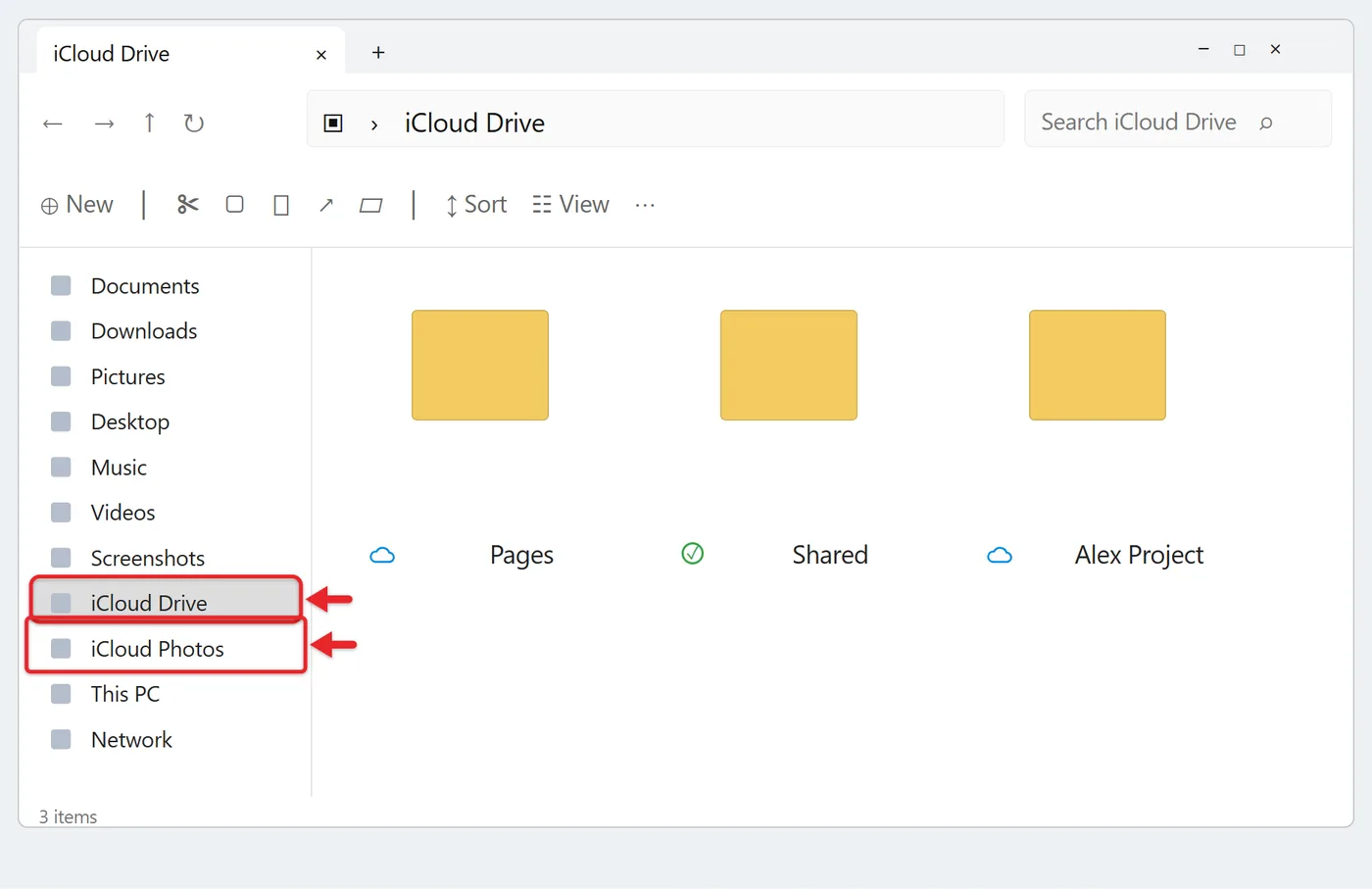
When it works, you’ll see iCloud Drive and iCloud Photos in the left pane of File Explorer, and files start downloading as you open them. According to Apple’s iCloud for Windows download page, the latest version needs Windows 11 or later (and Outlook 2021 or later if you want iCloud mail, contacts and calendars in Outlook). It doesn’t support Managed Apple Accounts, the kind some schools and businesses issue.
For music, follow our guide to listening to Apple Music on Windows 11. iTunes is still available for podcasts and audiobooks if you need it; see how to download iTunes on Windows 11. To manage an iPhone, Apple’s guide to installing the Apple Devices app notes that you need the Apple Music and Apple TV apps installed first if you want to sync songs and videos.
Microsoft’s own Phone Link app, built into Windows 11, can also pair with an iPhone over Bluetooth so you can see notifications and handle calls and text messages on your PC. It offers fewer features with an iPhone than with an Android phone, so treat it as a convenience rather than a full Messages replacement.
Can I get iMessage on Windows 11?
Not the full Messages app. Phone Link can relay texts through a paired iPhone, but it depends on the phone being nearby and connected, and it doesn’t offer every Messages feature.
Method 2: Use Pages, Numbers and Keynote at iCloud.com
You don’t need to install anything to use Apple’s office apps on a PC. Apple’s iCloud.com feature list says the site works in current versions of Edge, Chrome, Firefox and Opera on Windows.
- Open your browser and go to icloud.com.
- Select Sign In and enter your Apple Account email and password. Approve the sign-in on a trusted Apple device if asked.
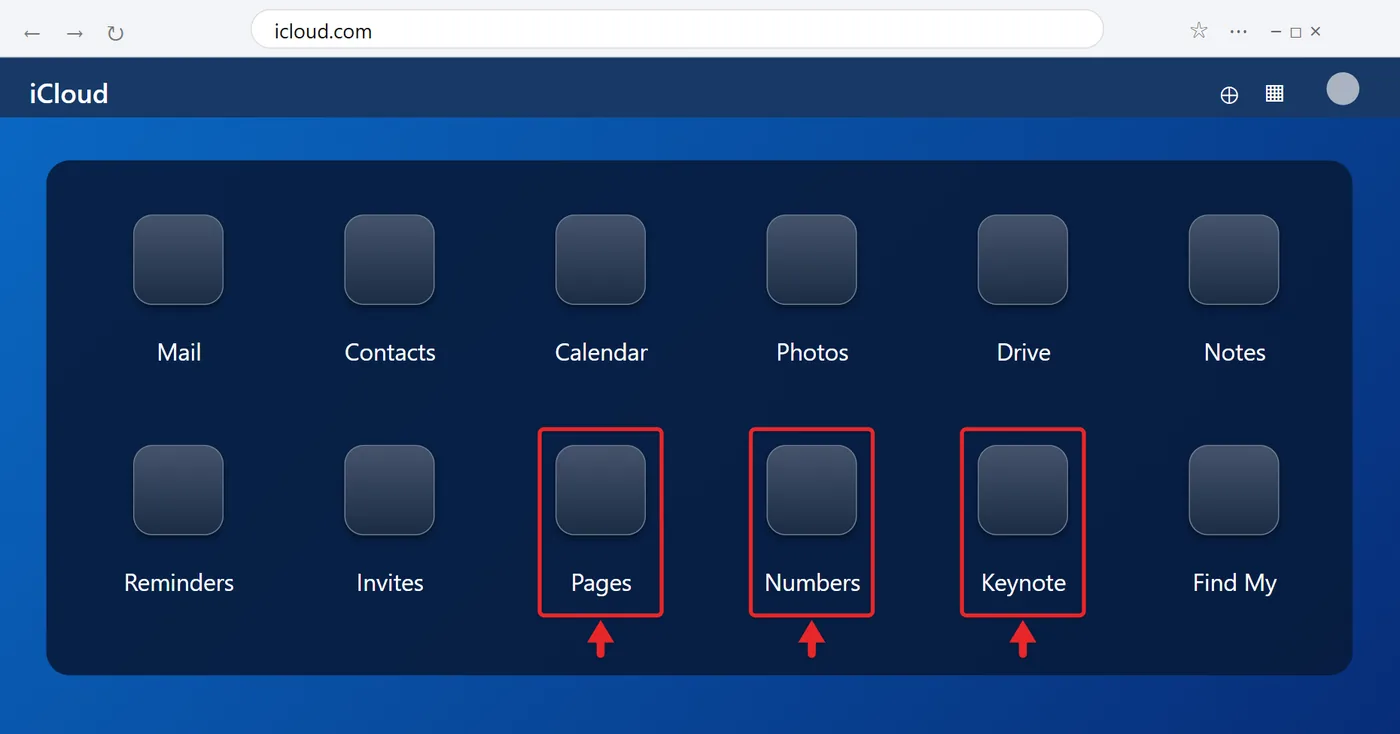
- Choose an app from the home page or the app menu: Pages, Numbers, Keynote, Mail, Notes, Reminders, Photos, iCloud Drive or Find My.
- Create a document or open one that’s already in iCloud Drive. Changes save automatically and appear on your iPhone, iPad or Mac.
Pages, Numbers and Keynote on iCloud.com are available only in a desktop browser, so use your PC rather than a phone. If someone sends you a Pages file, upload it to iCloud Drive at iCloud.com and open it there; you can also download a copy in Word, Excel or PowerPoint format from the same app.
Method 3: Rent a remote Mac
Several hosting companies rent real Macs that you control over the internet from your Windows PC, usually through a remote desktop or screen-sharing app or a browser window. Because the Mac is real Apple hardware, this is the one way to get full macOS on screen without owning a Mac. Apple’s license (section 3) allows macOS to be leased this way for developer work such as building, testing and running developer tools, as long as each lease runs at least 24 consecutive hours and the renter has sole use of that Mac.
Before you pay for one, check these points:
- Chip and macOS version: pick an Apple silicon Mac if you want macOS 27. Older Intel Macs can’t run it.
- Billing: some services bill by the day or month rather than the hour, partly because of the 24-hour minimum. Work out the cost for how long you’ll really need it.
- How you connect: make sure the service supports a Windows client and that the connection is encrypted.
- Your data: treat a rented Mac as someone else’s computer. Sign out of your Apple Account and delete your files before the rental ends.
If you want to build iPhone apps
Xcode, the app Apple requires for building iPhone and Mac apps, runs only on macOS, which is why so many people look for macOS on a PC. A remote Mac lets you run Xcode from Windows. Apple’s Xcode Cloud service builds, tests and distributes apps on Apple’s servers, but you still set it up from Xcode, so you need some access to a Mac. Our article on whether you can install Xcode on Windows covers cross-platform frameworks and other workflows that let you write most of the code on your PC.
Is a Hackintosh illegal?
It violates Apple’s license agreement, which you accept when you install macOS. Apple has historically gone after companies that sell computers with macOS preinstalled more than individuals, but a license violation can still carry legal risk, especially for a business, and Apple offers no support or warranty for such systems.
Can I run Mac apps on Windows without macOS?
No. Mac apps are built for macOS and won’t open on Windows. Many popular ones have a Windows or web version, so check the developer’s website before looking for a workaround.
Method 4: Get an affordable Mac
If you need macOS every day, a Mac is cheaper over time than renting one and avoids every problem above.
- Mac mini: the lowest-priced new desktop Mac. It plugs into the monitor, keyboard and mouse you already use with your PC.
- Refurbished: Apple’s certified refurbished Mac store sells tested Macs with a one-year warranty at lower prices.
- Check compatibility: if you buy a used Mac, make sure it has Apple silicon (M1 or later). An Intel Mac can’t run macOS 27.
- Share one desk: a KVM switch lets one keyboard, mouse and monitor control both your PC and the Mac.
Virtual machines that are fine on Windows 11
Virtualization itself is useful, just not for macOS on a PC. You can legitimately run Linux or another copy of Windows (with its own license) in a virtual machine on Windows 11.
- Make sure virtualization is turned on in your PC’s firmware. Our guide to enabling virtualization in Windows 11 shows how to check whether it is on and turn it on in your PC’s settings.
- On Windows 11 Pro, Enterprise or Education, use Hyper-V: follow the steps to create a virtual machine in Windows 11.
- On Windows 11 Home, use a free app instead; see how to install VirtualBox on Windows 11. Download guest systems only from their official sources, such as Microsoft for Windows or the Linux distribution’s own site.
Going the other way: Windows on a Mac
Running Windows on a Mac is supported. Microsoft’s page on options for using Windows 11 with Mac computers with Apple silicon lists two routes: Parallels Desktop, which runs the Arm version of Windows 11 in a virtual machine, and Windows 365, which streams a Windows 11 Cloud PC to the Mac. Microsoft notes that Windows 11 for Arm has limits, for example with some games and apps that rely on DirectX 12. If you need both systems on one computer, a Mac is the only machine that can legitimately run macOS and Windows.
Troubleshooting and common situations
iCloud for Windows won’t install
- Install pending updates in Settings > Windows Update, restart, and try the Microsoft Store again.
- If you see a message about a Media Feature Pack, follow the prompt to download it. Apple’s iCloud for Windows install help notes that the app won’t install without Windows media features, which some editions sold in Europe and South Korea leave out.
- If it says it can’t connect to the server, check your internet connection and Apple’s System Status page, then try again later.
iCloud.com keeps asking for a code
The six-digit code appears on your trusted iPhone, iPad or Mac, not on the PC. Unlock that device, select Allow, then type the code in your browser. Select Trust when asked whether to trust the browser so you’re asked less often.
You already downloaded a macOS image or tried a Hackintosh
- Don’t keep using it. Delete the virtual machine and the downloaded image, and uninstall any patch tool you ran.
- Run a full scan in Windows Security > Virus & threat protection > Scan options > Full scan.
- If you turned off Memory Integrity for the virtual machine, turn it back on in Windows Security > Device security > Core isolation details.
- If you signed in with your Apple Account inside that system, follow Apple’s steps to review the devices signed in to your Apple Account: sign in at account.apple.com, select Devices, select the unfamiliar entry and choose Remove from Account. Then change your Apple Account password.
How to confirm it’s working, or undo it
- iCloud for Windows: iCloud Drive and iCloud Photos appear in File Explorer, and a photo taken on your iPhone shows up on the PC after a short wait.
- iCloud.com: a document you create in Pages on the web appears in the Pages app on your iPhone or Mac.
- To remove an Apple app: go to Settings > Apps > Installed apps, select the three dots next to the app and choose Uninstall. Your iCloud data stays in iCloud.
Start with the cheapest option that covers your goal: install iCloud for Windows or open iCloud.com today, and only rent or buy a Mac if you need macOS itself. If you need a sandbox for other operating systems, set up a Linux or Windows virtual machine instead.

Matt Jacobs writes and maintains the guides on Support Your Tech, which he started in 2017. He spent most of his career keeping small-business PCs running and still takes the occasional consulting job, so the steps here come from fixing the same problems on other people’s computers. Every guide is checked on his own Windows 11, Windows 10, Mac, iPhone and iPad before it goes up.