iTunes for Windows doesn’t have a dark mode. It stays light even when Windows 11 is set to dark mode, and there’s no setting inside iTunes to change it. If you want a dark look, use Apple’s Apple Music app for your music, set Windows apps to Dark in Settings > Personalization > Colors, or try a Windows contrast theme, which darkens Windows and many older programs.
Applies to: iTunes and Apple’s Windows apps on Windows 11.
Why iTunes doesn’t go dark
Dark mode on a Mac comes from macOS, and iTunes on Windows never gained the same option. Apple now points Windows users to its newer apps: Apple Music for music, Apple TV for movies and shows, and Apple Devices for iPhone and iPad, with iTunes kept for podcasts and audiobooks. Downloading iTunes on Windows 11 explains which app does what.
Guides that suggest skins, patched versions or “dark themes” for iTunes involve third-party files that change the program. They can break updates or bring unwanted software, so they aren’t covered here.
Option 1: Use the Apple Music app with Windows set to dark
The Apple Music app doesn’t have its own dark mode switch. It follows the Windows setting for apps, so setting Windows apps to dark makes it dark too.
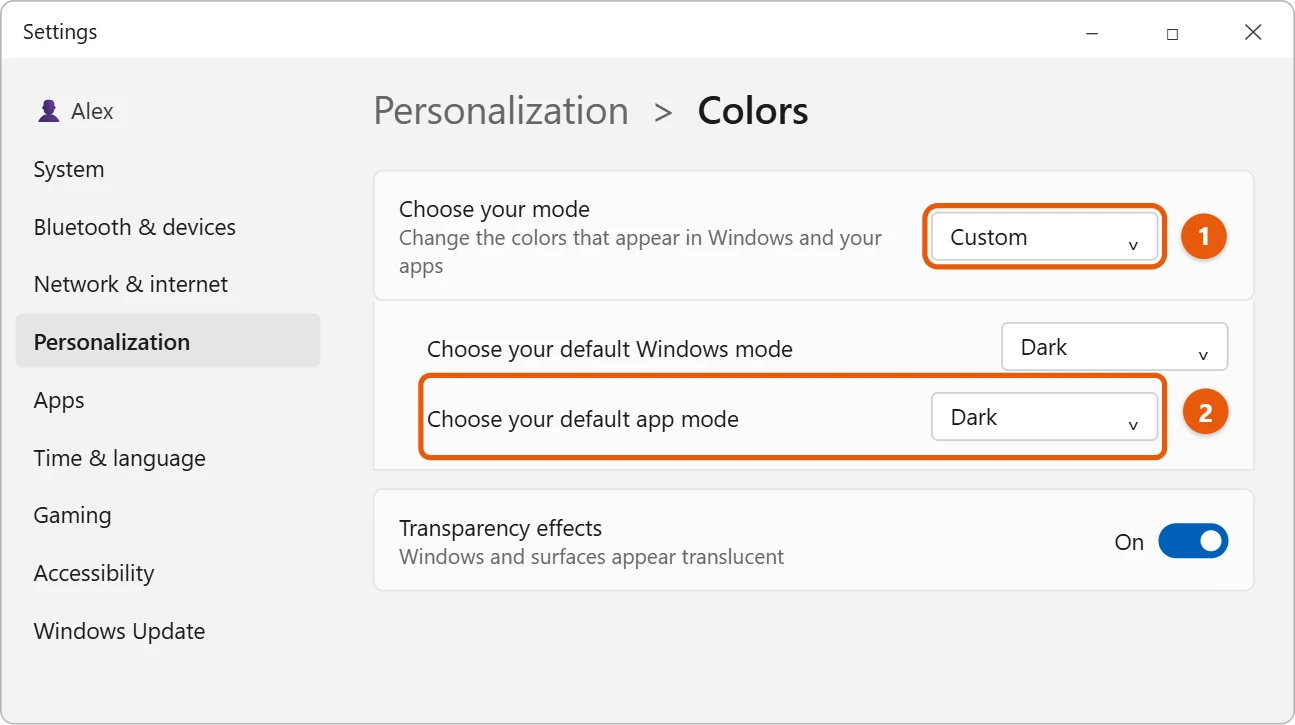
- Select Start > Settings > Personalization > Colors.
- Set Choose your mode to Dark. Or choose Custom and set Choose your default app mode to Dark, if you want only apps to be dark.
- Open Apple Music. If it’s already open, close it and open it again.
If you don’t have Apple Music yet, start with listening to Apple Music on Windows 11. Apple Music can use the music library you built in iTunes.
Other dark mode settings are in turning on dark mode in Windows 11.
Option 2: Use a Windows contrast theme
Contrast themes are an accessibility feature that swaps the colors in Windows and in many programs for high-contrast ones, including a dark background with bright text. Many older programs pick up these colors, though how much of iTunes changes can vary.
- Select Start > Settings > Accessibility > Contrast themes.
- Choose Night sky or Aquatic, which use dark backgrounds.
- Select Apply.
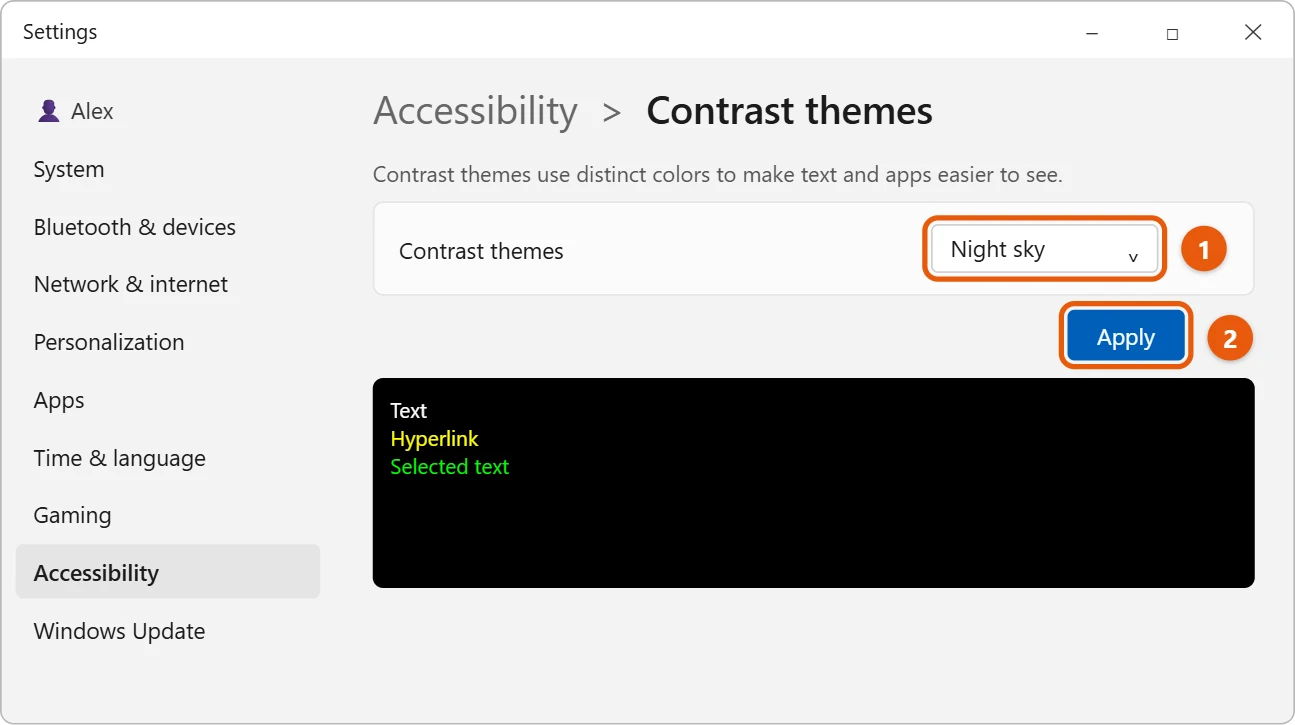
Contrast themes change every app and website, not just iTunes, and album artwork may look different. To switch back, choose None and select Apply. You can also turn contrast themes on or off with Left Alt + Left Shift + Print Screen.
Option 3: Use the Apple Music web player
In a browser, music.apple.com follows your system or browser dark setting. With Windows set to dark mode, the web player usually appears dark too.
Make iTunes easier to look at
If you keep using iTunes for podcasts or audiobooks:
- Turn on Night light in Settings > System > Display to warm the screen colors in the evening.
- Lower your screen brightness with the brightness slider in Quick Settings (Windows logo key + A).
If a contrast theme makes iTunes hard to use
- Buttons or text disappear. Some contrast themes hide parts of iTunes. Try a different theme, such as Night sky instead of Aquatic.
- Everything else looks wrong too. Contrast themes change all of Windows. Switch back by pressing Left Alt + Left Shift + Print Screen, or set Contrast themes to None in Settings.
- Album art looks strange. That’s a side effect of the theme recoloring images. The Apple Music app avoids it.
Frequently asked questions
Will Apple add dark mode to iTunes for Windows?
Apple hasn’t announced one. Its newer Windows apps are where Apple is adding features.
Does Windows dark mode change iTunes at all?
Not the main window. iTunes keeps its light look whether Windows is set to light or dark.
Is there an official iTunes dark theme to download?
No. Apple doesn’t offer themes for iTunes on Windows. Files that claim to add one come from third parties.
Will using Apple Music remove iTunes?
No. iTunes stays installed for podcasts and audiobooks. Apple Music takes over music playback.
Can I still use iTunes on Windows 11?
Yes. iTunes still works for older features such as syncing an iPod or managing some iPhone backups. For music, TV, and device syncing, Apple now points Windows users to the Apple Music, Apple TV, and Apple Devices apps from the Microsoft Store, which follow Windows dark mode.

Matt Jacobs writes and maintains the guides on Support Your Tech, which he started in 2017. He spent most of his career keeping small-business PCs running and still takes the occasional consulting job, so the steps here come from fixing the same problems on other people’s computers. Every guide is checked on his own Windows 11, Windows 10, Mac, iPhone and iPad before it goes up.