To put a Control Panel icon on the desktop in Windows 11, go to Start > Settings > Personalization > Themes and select Desktop icon settings. Check Control Panel, then select Apply and OK. The Control Panel icon appears on your desktop right away, and double-clicking it opens Control Panel.
Applies to: Windows 11. No downloads or administrator rights needed. Checked against Microsoft Support on September 29, 2026.
Why add a Control Panel icon?
Most settings in Windows 11 have moved to the Settings app, but Control Panel is still there, and some tasks are easier or only possible in it. Examples include some sound, mouse, power and program settings. Control Panel isn’t on the desktop or pinned to Start by default, so a desktop icon saves you searching for it each time.
Method 1: Use Desktop icon settings
This is the built-in way, and it gives you the real Control Panel icon without a shortcut arrow.
- Right-click an empty part of the desktop and select Personalize, or go to Start > Settings > Personalization.
- Select Themes.
- Scroll down to Related settings and select Desktop icon settings. A separate window opens.
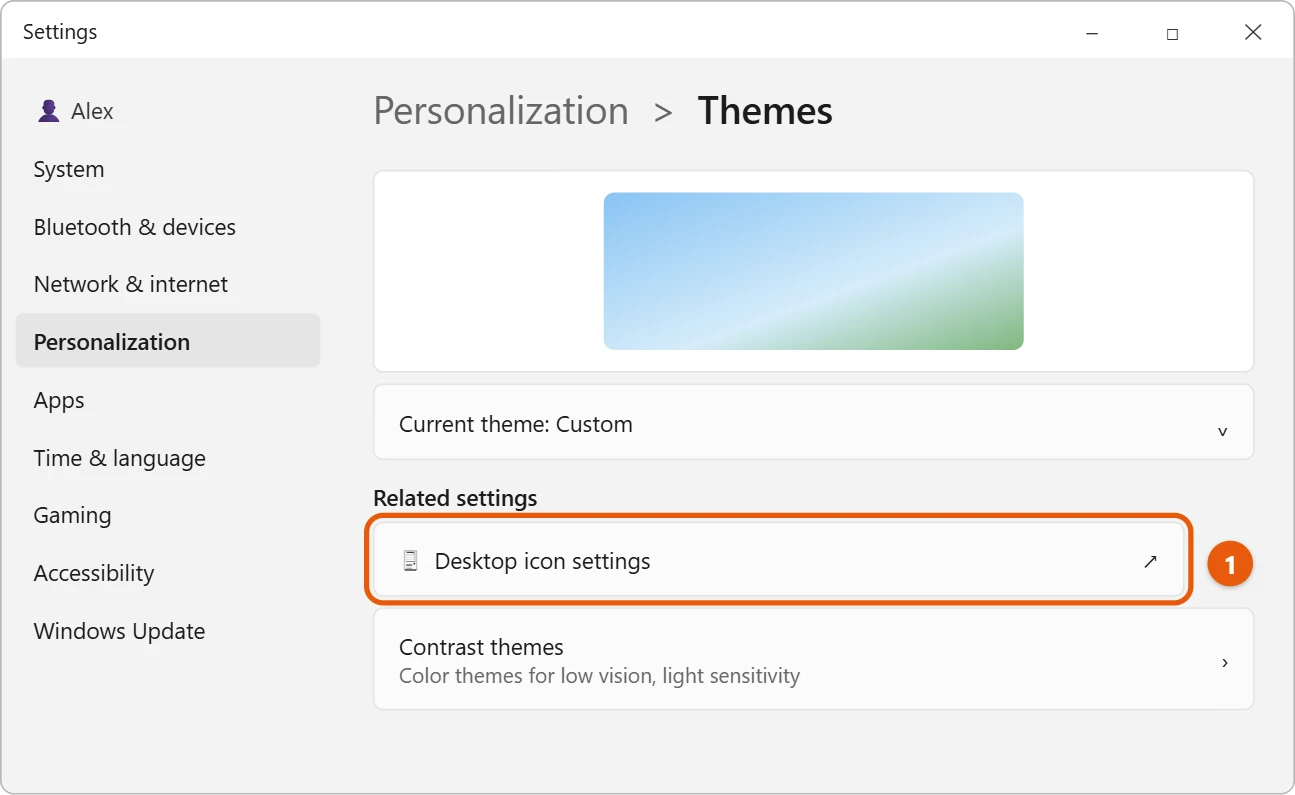
- Under Desktop icons, check Control Panel.
- Select Apply, then OK.
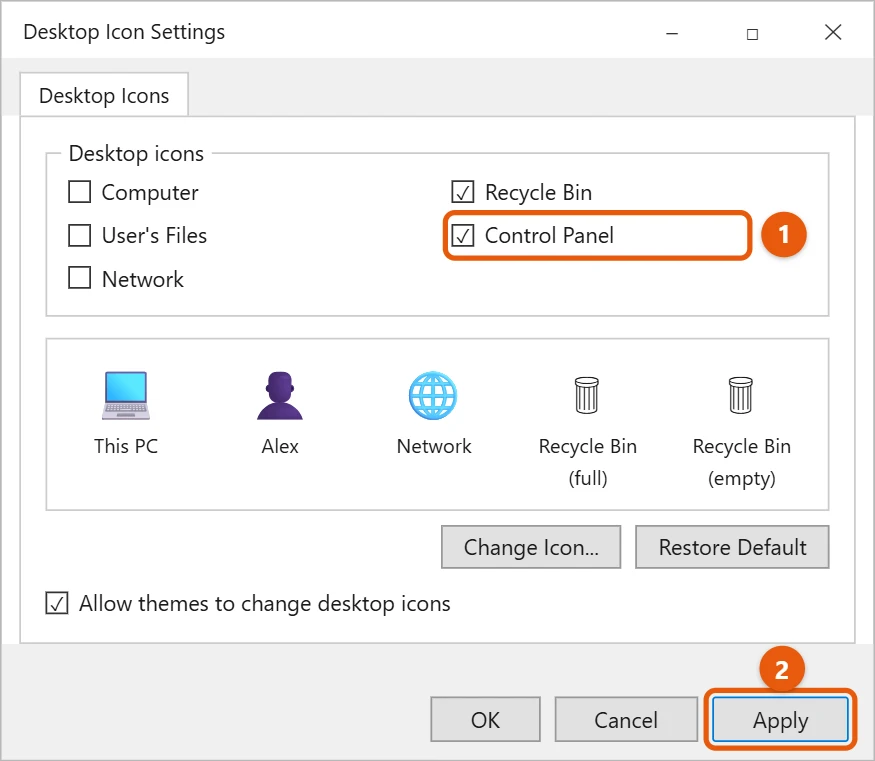
You can add other icons in the same window, such as Computer (This PC), User’s Files, Network and Recycle Bin. Microsoft notes that leaving Allow themes to change desktop icons checked lets a new theme change how these icons look, so clear it if you’ve customized them.
Method 2: Make a shortcut
If you’d rather have a regular shortcut you can rename or move into a folder, create one yourself:
- Right-click an empty part of the desktop and select New > Shortcut.
- In Type the location of the item, type control and select Next.
- Type a name, such as Control Panel, and select Finish.
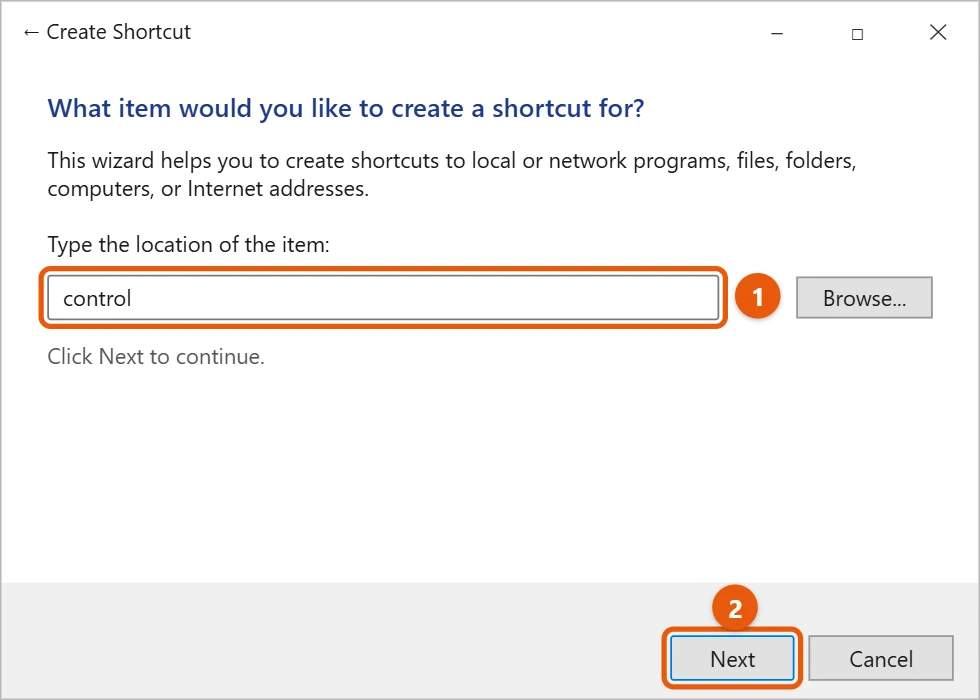
The shortcut opens Control Panel just like the built-in icon. control runs control.exe, which is in the C:\Windows\System32 folder.
Method 3: Pin Control Panel to Start or the taskbar
If you want Control Panel handy but don’t want more desktop icons, pin it instead:
- Select Start and type Control Panel.
- Right-click Control Panel in the results.
- Select Pin to Start or Pin to taskbar.
When it’s pinned to the taskbar, right-click the icon to see the Control Panel pages you opened recently. To unpin it, right-click it again and select Unpin from Start or Unpin from taskbar.
Open Control Panel without an icon
You don’t need an icon to get to Control Panel. Any of these work:
- Select Start, type Control Panel, and press Enter.
- Press Windows logo key + R, type control, and press Enter.
- Open File Explorer, type Control Panel in the address bar, and press Enter.
See how to open Control Panel in Windows 11 for more ways.
Choose how Control Panel opens
Control Panel opens in Category view, which groups settings into eight headings. To see every item in one list, select View by in the top-right corner of the Control Panel window and choose Large icons or Small icons. Windows remembers your choice, so the desktop icon opens in that view next time.
Remove the Control Panel icon
To take the icon off your desktop:
- If you added it with Desktop icon settings: go back to Settings > Personalization > Themes > Desktop icon settings, clear Control Panel, and select OK.
- If you made a shortcut: select it and press Delete, or right-click it and select Delete.
Removing the icon doesn’t remove Control Panel from Windows. It’s still in Start.
If the icon doesn’t show up
- Desktop icons are hidden. Right-click the desktop, select View, and check Show desktop icons.
- The icon is behind open windows. Press Windows logo key + D to show the desktop.
- Desktop icon settings won’t open or options are grayed out. Your work or school may manage these settings. Ask your IT department.
- You checked the box but didn’t apply it. Open Desktop icon settings again, check Control Panel, and select Apply before OK.
Frequently asked questions
Is Control Panel going away in Windows 11?
Microsoft keeps moving settings from Control Panel to the Settings app, but Control Panel is still included in Windows 11. Some older settings are still only found there.
What’s the difference between the icon and a shortcut?
The icon from Desktop icon settings is a system icon without a shortcut arrow, and you turn it on or off in that window. A shortcut from New > Shortcut is an ordinary shortcut you can rename, move or delete like any other.
Can I add Control Panel to the right-click menu instead?
Only by editing the registry, which needs administrator rights and can cause problems if you make a mistake. The desktop icon or a pinned taskbar icon is quicker and safer.
Can I add This PC to the desktop the same way?
Yes. Check Computer in Desktop icon settings. See how to show This PC on the desktop in Windows 11.
Next steps
You can put other handy items on the desktop too. See how to put a printer icon on the desktop in Windows 11 and how to move apps from the taskbar to the desktop in Windows 11. Microsoft explains desktop icons in Customize the Desktop Icons in Windows.

Matt Jacobs has been working as an IT consultant for small businesses since receiving his Master’s degree in 2003. While he still does some consulting work, his primary focus now is on creating technology support content for SupportYourTech.com.
His work can be found on many websites and focuses on topics such as Microsoft Office, Apple devices, Android devices, Photoshop, and more.