Last updated on November 17th, 2026 at 03:08 pm
Classic Outlook checks for new mail every 30 minutes unless you change it. Press Ctrl + Alt + S to open Send/Receive Groups, select All Accounts, type a new number of minutes next to Schedule an automatic send/receive every, and select Close. That matches Microsoft’s page on changing send/receive group settings for Outlook 2016 through Microsoft 365. The new Outlook for Windows has no schedule; use View > Sync or F9 instead.
First, check which Outlook you’re using
Both apps are called Outlook and can sit side by side on the same PC, so it’s worth a ten-second check.
- Classic Outlook: the ribbon has File, Home, Send / Receive and Folder tabs. This is the one with an adjustable schedule.
- New Outlook: there’s no File tab and no Send / Receive tab, and a New Outlook toggle near the top-right corner is switched on.
If you’re in the new Outlook and want the schedule, select that toggle and choose Switch back to classic Outlook (or Use classic Outlook this time to try it once without switching for good). This works only if classic Outlook is installed, which it usually is with a Microsoft 365 or Office desktop subscription.
What “send/receive” actually controls
A send/receive is one round trip to your mail server: Outlook sends anything waiting in the Outbox and downloads new messages. Classic Outlook runs one when it starts and then at the interval set in a Send/Receive group. Gmail has its own away message for a Gmail mailbox, explained in how to set an out of office reply in Gmail.
A group is a set of accounts that share one schedule. Every profile starts with a group called All Accounts, and every account you add joins it. Groups also cover RSS feeds and internet calendar subscriptions, so the same interval decides how often those refresh.
How much the interval matters depends on the account type:
- POP accounts (some internet-provider and older hosting mailboxes) only get new mail when Outlook checks, so the schedule directly sets how fast mail shows up.
- IMAP accounts (Gmail, Yahoo, iCloud and many others added to classic Outlook) also rely on the schedule, so a shorter interval usually means new mail appears sooner.
- Microsoft 365 work or school, Exchange and Outlook.com accounts normally show new mail as the server delivers it, so changing the interval usually makes little visible difference for them.
Change the send/receive frequency in classic Outlook
- Open classic Outlook and select the Send / Receive tab on the ribbon.
- In the Send & Receive group, select Send/Receive Groups > Define Send/Receive Groups. The keyboard shortcut Ctrl + Alt + S opens the same window.
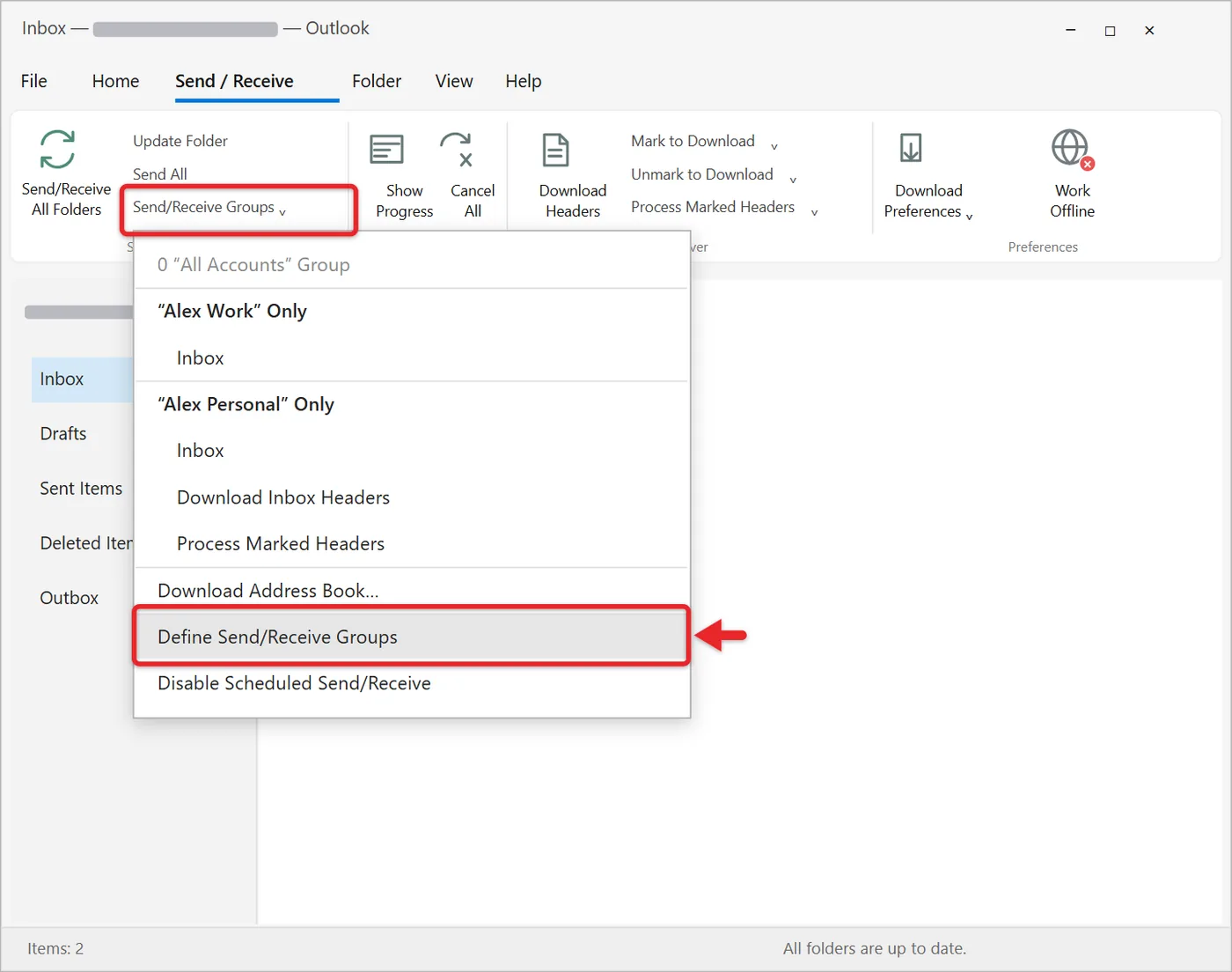
- Select All Accounts in the list (or your own group, if you’ve made one).
- Under When Outlook is Online, tick Schedule an automatic send/receive every and type the number of minutes. For example, type 10 to check every ten minutes, or 60 for once an hour.
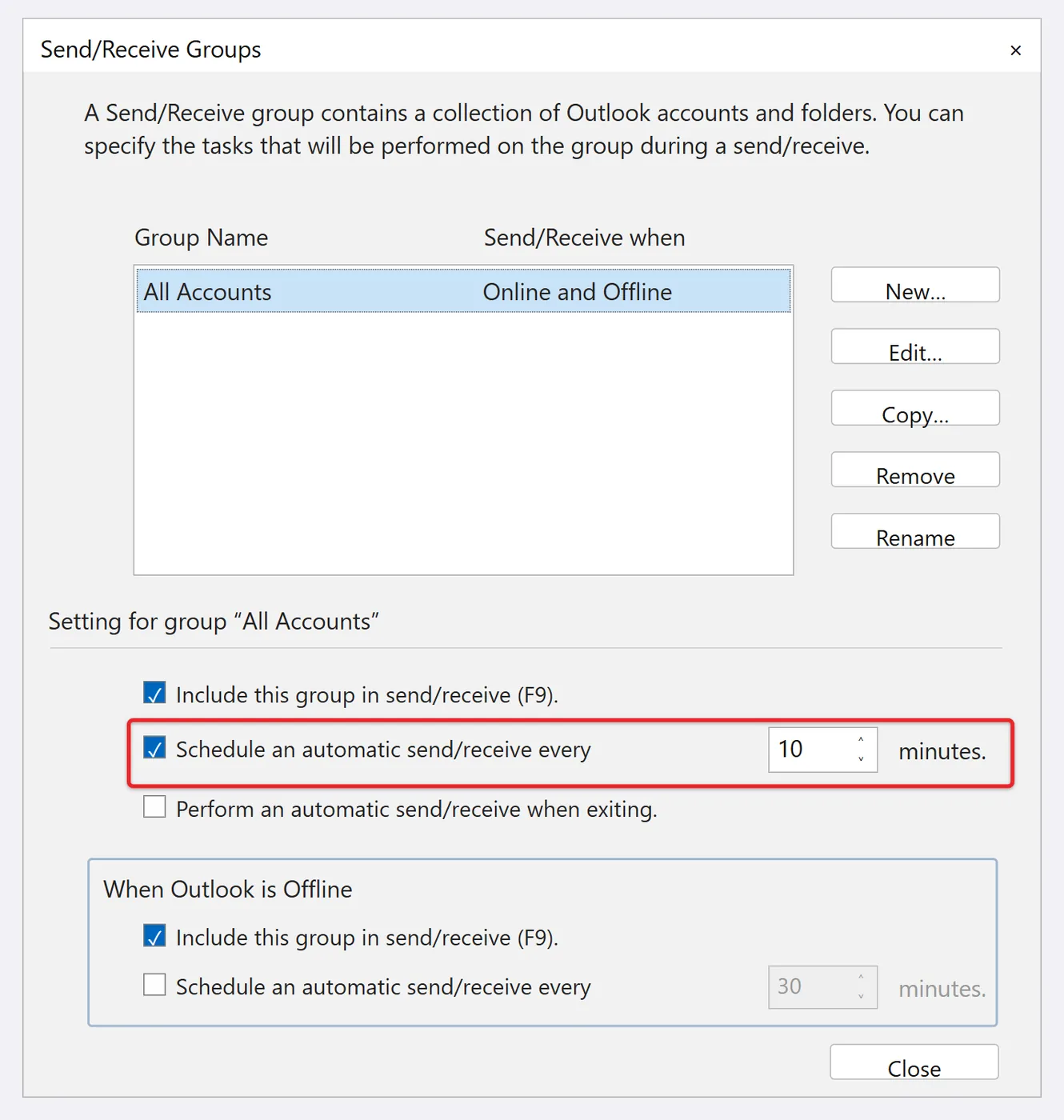
- Leave Include this group in send/receive (F9) ticked so the group still runs when you press F9.
- Optional: under When Outlook is Offline, there’s a second Schedule an automatic send/receive every box. Microsoft’s page on offline settings gives its range as 1 to 1440 minutes (1440 is once a day). Use it only if you often work offline but still want Outlook to connect now and then.
- Select Close. The new interval is used from the next scheduled check.
To check immediately at any time, press F9 or select Send/Receive All Folders on the Send / Receive tab.
What interval should you pick?
- 5 to 10 minutes suits most people who want POP or IMAP mail to feel prompt.
- 15 to 30 minutes is easier on a slow or metered connection and on a laptop running on battery.
- 1 to 2 minutes is possible, but some mail providers limit how often an app can connect. If downloads start failing with a very short interval, raise it.
Turn automatic send/receive off (manual checking only)
If you’d rather Outlook only checks when you ask, you have two options:
- Stop the schedule for everything: select Send / Receive > Send/Receive Groups > Disable Scheduled Send/Receive. Repeat the same step to turn it back on.
- Stop it for one group: in the Send/Receive Groups window, select the group and clear the first Schedule an automatic send/receive every box. Outlook then sends and receives for that group only when you press F9.
Use a different schedule for each account
Say Alex has a work IMAP account that should be checked often and a personal POP account that can wait. Create a group for the busy account and give it its own interval.
- Press Ctrl + Alt + S, select New, type a name such as Work, and select OK.
- In the settings window that opens, select the work account on the left and tick Include the selected account in this group.
- Choose what to download. For a large mailbox on a slow connection, Download headers only brings in just the sender and subject, and you can pick which folders are included so Outlook skips folders you rarely open. Select OK.
- Back in the Send/Receive Groups window, select Work and set its interval, for example 5 minutes.
- Select All Accounts > Edit, select the work account, clear Include the selected account in this group, and select OK. This stops the account from being checked twice.
- Set a longer interval on All Accounts for the personal account, then select Close.
Taking an account out of a group doesn’t stop it from sending or receiving manually. To check just one account, select Send / Receive > Send/Receive Groups, then that account’s name, then Inbox.
Make outgoing mail leave right away
If messages sit in the Outbox until the next scheduled check, the Send immediately when connected option is probably off.
- Select File > Options > Advanced.
- In the Send and receive section, tick Send immediately when connected.
- Select OK.
If the box is grayed out, your organization manages it through group policy, and only your IT administrator can change it. Microsoft explains this in its article on email staying in the Outbox. Messages you hold back with Delay Delivery also wait in the Outbox on purpose; scheduling an email in Outlook covers how that works and why a delayed message can leave a few minutes late.
New Outlook for Windows: sync instead of a schedule
The new Outlook doesn’t have Send/Receive groups or an interval setting, even for POP and IMAP accounts. Microsoft documents a manual Sync command for when you want to check right now:
- Select Mail in the navigation bar on the left.
- On the View tab, select Sync, or press F9.
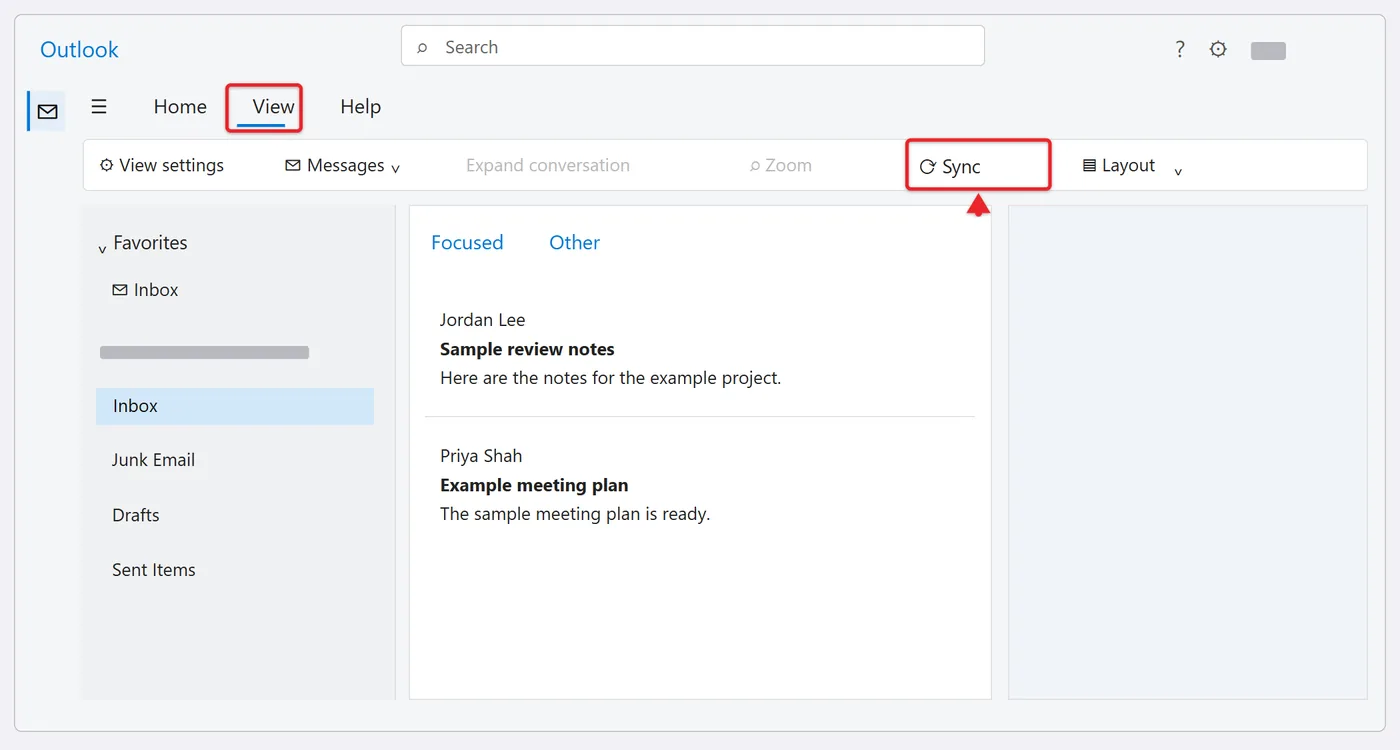
- A status message appears at the bottom of the message list while Outlook is syncing.
What you can adjust is how much mail the new Outlook keeps on your PC for offline use: select View > View settings > General > Offline, then choose the folders to save and how many days of email to keep. That changes storage, not how often mail is checked.
If you need a fixed checking interval, classic Outlook is the only Outlook for Windows that offers one. Outlook on the web also has no schedule setting.
Is there a “Download new content every 15 minutes” setting like the old Windows Mail app?
Not anymore. Support for the Windows Mail and Calendar apps ended on December 31, 2024, and Microsoft recommends the new Outlook or Outlook.com instead. Neither one has a sync-interval setting.
If the change doesn’t seem to work
The schedule box is grayed out
Check that Include this group in send/receive (F9) is ticked for that group. On a work PC, settings can be locked by your IT department.
New mail still arrives late
- Look at the Work Offline button on the Send / Receive tab. If it has a gray background, Outlook is offline; select it to go back online. You may also see Working Offline at the bottom of the window.
- Make sure the account is still in a group with a schedule. Open Ctrl + Alt + S, select the group, choose Edit, and confirm the account is included.
- Check the mail in your provider’s web mail. If it’s missing there too, the delay is on the server side, not in Outlook.
- Try clearing the Outlook cache and restarting Outlook. If it still won’t sync, repairing Outlook 365 includes a profile repair for sending and receiving problems.
Outlook slows down every few minutes
A very short interval combined with big folders can make Outlook busy all the time. Set a longer interval (15 or 30 minutes), switch large folders to Download headers only, or remove shared mailboxes and folders you don’t need from the group.
How to confirm the new schedule
Press Ctrl + Alt + S again and select your group. The number you typed should appear next to Schedule an automatic send/receive every, with the box ticked. For a POP or IMAP account, a quick real-world test is to send yourself a message from your phone or web mail and see whether it shows up in Outlook within that many minutes without pressing F9. To undo, type 30 to return to the default, or clear the box to go back to manual checking.
If you’re adding a POP or IMAP account before you tune the schedule, setting up classic Outlook in Windows 10 walks through the server settings, and the steps for adding email on Windows 11 cover both the new and classic apps.

Matt Jacobs writes and maintains the guides on Support Your Tech, which he started in 2017. He spent most of his career keeping small-business PCs running and still takes the occasional consulting job, so the steps here come from fixing the same problems on other people’s computers. Each guide follows Microsoft, Apple and Google’s own documentation and is updated when the steps change. Screenshots marked “Recreated” are illustrations of the real screens.