Select the speaker icon on the taskbar, select the arrow next to the volume slider, and pick your Speakers. You can also go to Start > Settings > System > Sound and choose them under Output. Then make sure the volume is up and not muted.
Applies to: Windows 11. Checked against Microsoft Support on September 29, 2026.
Before you start
- Plug the speakers in firmly. On many PCs the green jack is for speakers and the pink one is for a microphone.
- If the speakers have their own power switch or volume knob, turn them on and turn them up.
- Unplug headphones for a moment. Some PCs send sound only to headphones while they’re plugged in.
Pick your speakers in Quick Settings
- Select the speaker icon near the clock (or press Windows logo key + A).
- Select the arrow to the right of the volume slider.
- Select your Speakers in the Sound output list.

Pick your speakers in Settings
- Select Start > Settings > System > Sound.
- Under Output, select your speakers in Choose where to play sound.
- Drag the Volume slider up.
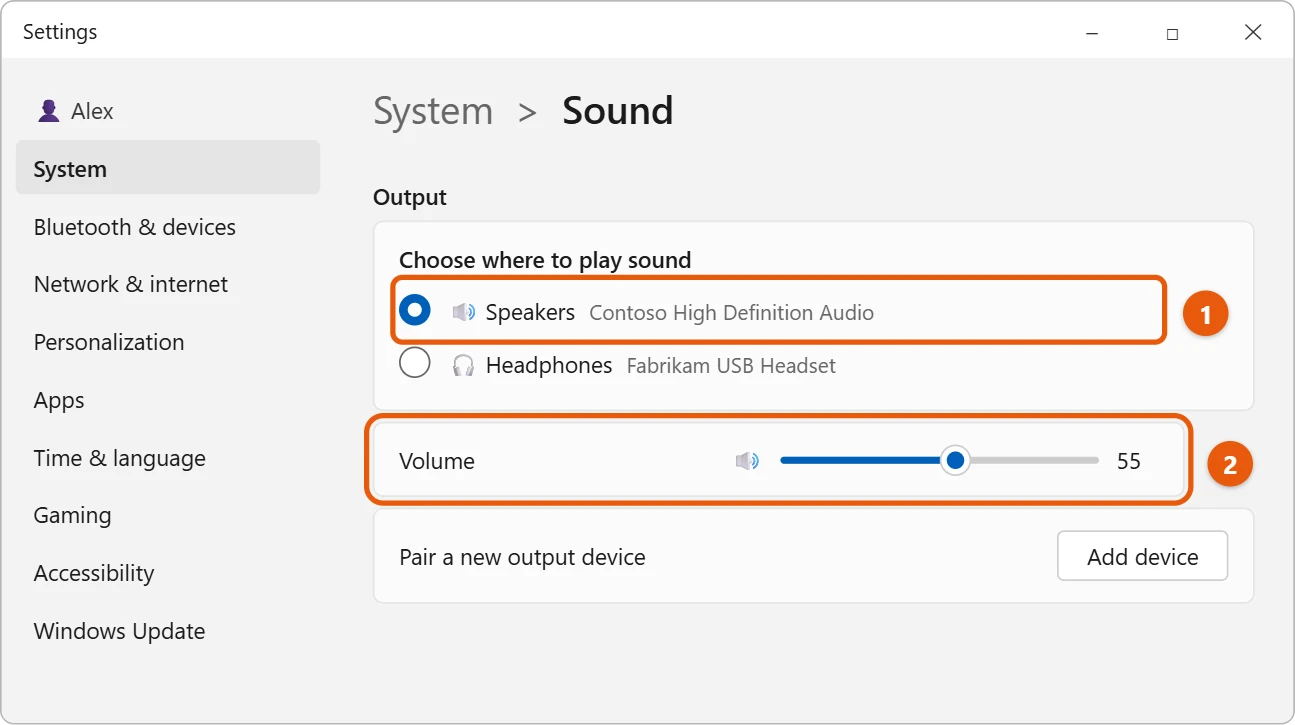
If an app is still silent, check its own volume in the volume mixer.
If the speakers don’t show up
- Try a different USB port or jack, and restart the PC.
- Run the audio troubleshooter: go to Settings > System > Troubleshoot > Other troubleshooters and select Run next to Audio.
- For Bluetooth speakers, turn on Bluetooth and pair them first.
If the speakers are selected but there’s no sound
Check the volume in more than one place
Windows has a main volume and a separate level for each app. Right-click the speaker icon on the taskbar, select Open volume mixer, and make sure neither your speakers nor the app you’re using is muted or turned down. Then check the knob on the speakers themselves.
Make sure it isn’t playing through your monitor
If your PC is connected to a monitor or TV with HDMI or DisplayPort, Windows may send sound there instead. In Quick Settings, select the arrow next to the volume slider and pick Speakers rather than the display’s name.
Turn off audio enhancements
Go to Settings > System > Sound, select your speakers, and set Audio enhancements to Off. Some enhancement software stops sound completely after an update.
Restart the audio service
Press Windows + R, type services.msc, and press Enter. Right-click Windows Audio and choose Restart.
Reinstall the sound driver
Right-click Start and select Device Manager. Expand Sound, video and game controllers, right-click your audio device (often Realtek or Intel), and choose Uninstall device. Restart the PC, and Windows reinstalls the driver automatically. If sound still doesn’t work, download the latest audio driver from your PC maker’s support site.
Frequently asked questions
Why is there sound in headphones but not speakers?
Windows plays sound to one output at a time. Pick Speakers in the list above, or unplug the headphones. If a single app still plays through the wrong device, you can reset all audio settings in Windows 11 to clear its saved output.
What if the sound is crackly or cuts out?
Open the speakers in Settings > System > Sound, and set Audio enhancements to Off under Advanced settings.
Do I need to install anything to use new speakers?
Usually not. Wired and USB speakers work with the drivers already in Windows, and Bluetooth speakers only need to be paired. Some USB speakers and sound bars offer an optional app for equalizer settings, but you don’t need it for sound.
How do I test my speakers?
Go to Settings > System > Sound, select your speakers, and select Test next to Output settings. You should hear a chime from each speaker in turn.
For more sound options, see how to open the Sound Control Panel in Windows 11.
If Bluetooth headphones sound muffled during calls or games, see how to disable hands-free audio in Windows 11.
Once your speakers work, see how to adjust bass on Windows 11.
Once your speakers or headphones work, you can add surround-style sound. See how to enable Dolby Atmos in Windows 11.
Microsoft’s reference is Fix sound or audio problems in Windows. More help is on our Windows Help & Guides page.

Matt Jacobs has been working as an IT consultant for small businesses since receiving his Master’s degree in 2003. While he still does some consulting work, his primary focus now is on creating technology support content for SupportYourTech.com.
His work can be found on many websites and focuses on topics such as Microsoft Office, Apple devices, Android devices, Photoshop, and more.