To use a WD My Passport drive on Windows 11, plug it into a USB port with the cable that came with it. Windows sets it up on its own, and the drive appears in File Explorer under This PC, usually with a name like My Passport and the next free drive letter. Open it to copy files to and from it, turn on File History if you want Windows to back up to it automatically, and eject it from the taskbar before you unplug it.
Applies to: Windows 11 and WD My Passport portable drives. Checked on September 30, 2026.
Connect the drive
- Plug the drive’s cable into the drive and then into a USB port on your PC. A My Passport draws power from USB, so it doesn’t need a power adapter.
- Wait a few seconds. The light on the drive comes on, and Windows may show a notification that the drive is ready.
For the most reliable connection, plug the drive directly into a port on the PC rather than a USB hub or a keyboard port. If your PC only has USB-C ports and the drive has a USB-A cable, use a USB-C adapter or a USB-C cable made for the drive.
You don’t need to install a driver. Windows 11 already includes the USB storage drivers the drive uses.
Open the drive in File Explorer
- Press Windows logo key + E to open File Explorer.
- Select This PC in the left pane.
- Under Devices and drives, double-click the drive to open it.
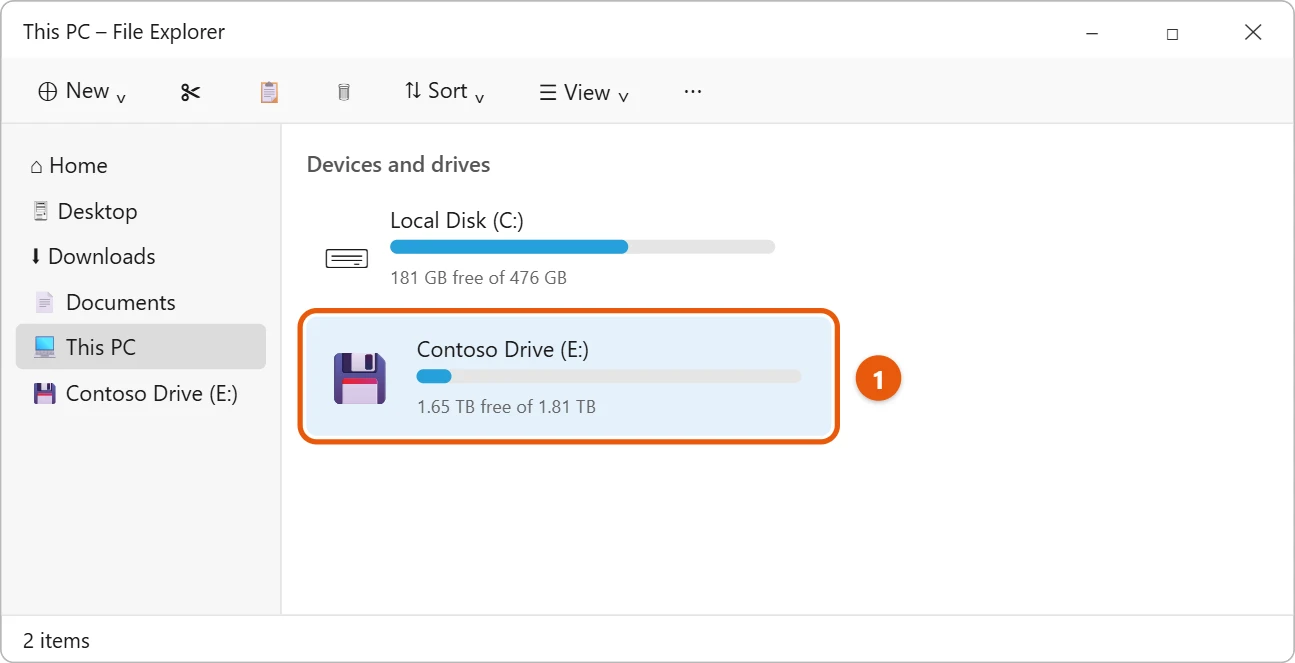
The drive also appears in the left pane of File Explorer, so you can open it from any folder window.
Copy files to and from the drive
- Drag and drop: open the drive in one File Explorer window and the folder you want in another, then drag files between them. Dragging between different drives copies the files and leaves the originals where they were.
- Copy and paste: select files, press Ctrl + C, open the drive, and press Ctrl + V.
- Move instead of copy: hold Shift while you drag. Only do this when you’re sure you don’t need the originals on your PC.
Large copies show a progress window. Leave the drive connected until it finishes.
Back up to the drive automatically
Windows 11 includes File History, which copies files from your libraries, desktop and other folders to an external drive on a schedule and keeps older versions.
- Connect the drive.
- Select Start, type Control Panel, and open it.
- Select System and Security > File History.
- Make sure your drive is listed under Copy files to. If it isn’t, select Select drive and choose it.
- Select Turn on.
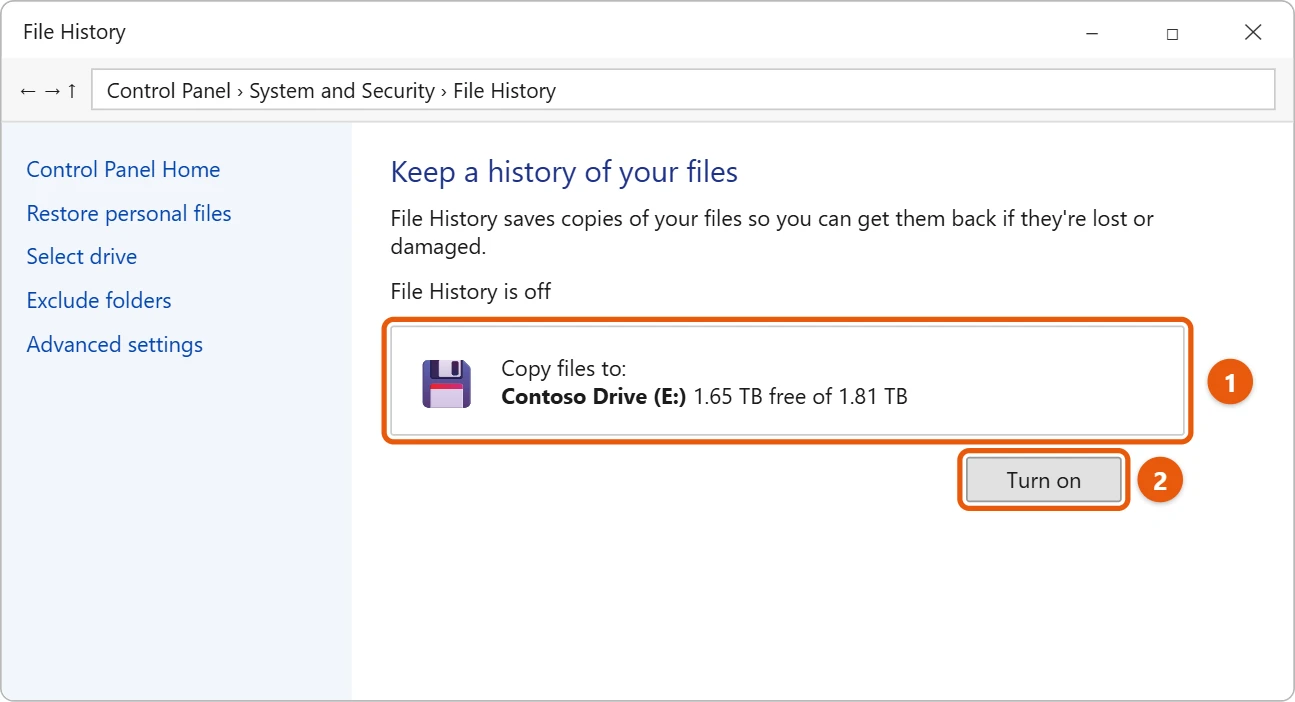
File History backs up whenever the drive is connected. For more backup options, including cloud backup with Windows Backup, see how to back up files in Windows 11.
Do you need WD’s software?
No. The drive works with File Explorer and File History on its own. The drive maker offers optional tools on its support site for things like checking the drive’s health and running its own backups. Some owners report that older versions of that software don’t run on Windows 11, so download the current version from the maker’s site if you want it, rather than using the installer stored on the drive.
Eject the drive before unplugging it
- Select the Show hidden icons arrow (^) on the taskbar.
- Select the USB drive icon, and then select Eject My Passport (the name matches your drive).
- Unplug the drive when Windows says it’s safe to remove.
For more ways to eject, see how to safely eject an external hard drive in Windows 11.
If the drive doesn’t show up
- Try another port and cable. Plug the drive straight into a different USB port on the PC. If you have another compatible cable, try that too.
- Restart your PC with the drive unplugged, then connect it again.
- Check the light. If the drive’s light doesn’t come on at all, the drive may not be getting power. Try a port on the back of a desktop PC, which often supplies more power.
- Check it on another computer. If it doesn’t work anywhere, the drive may need service from its maker.
- Look in Disk Management (administrator). If the drive lights up but has no drive letter, it may show in Disk Management. Opening Disk Management and assigning a drive letter need an administrator account. On a work or school PC, ask your IT administrator.
Frequently asked questions
Do I need to format a new My Passport drive?
Usually not. The drive comes formatted and ready to use. Formatting erases everything on it, so only format if you have a specific reason, such as a drive that won’t open. To see how your drive is formatted, see how to use a WD easystore drive on Windows 11.
Can I use the same drive on a Mac and a Windows PC?
Yes, if the drive uses the exFAT file system, which both can read and write. A drive formatted as NTFS is fully supported on Windows but read-only on a Mac without extra software.
Why is my drive smaller than the size on the box?
Drive makers count 1 TB as 1,000 GB, but Windows counts in larger binary units. A 2 TB drive shows about 1.81 TB in File Explorer. No space is missing.
Can I keep the drive plugged in all the time?
Yes. That’s how File History works best. Just eject it before you unplug it.

Matt Jacobs has been working as an IT consultant for small businesses since receiving his Master’s degree in 2003. While he still does some consulting work, his primary focus now is on creating technology support content for SupportYourTech.com.
His work can be found on many websites and focuses on topics such as Microsoft Office, Apple devices, Android devices, Photoshop, and more.