Last updated on November 9th, 2026 at 01:10 pm
To delete an app on Android, touch and hold the app’s icon on the home screen or in the app drawer, then tap Uninstall and confirm with OK. You can also go to Settings > Apps, choose the app and tap Uninstall. Apps that came with the phone often can’t be uninstalled, but you can Disable them so they disappear and stop running.
Applies to: Android 12 and later, including Samsung Galaxy (One UI), Google Pixel, Motorola and OnePlus phones. Menu names vary slightly by brand.
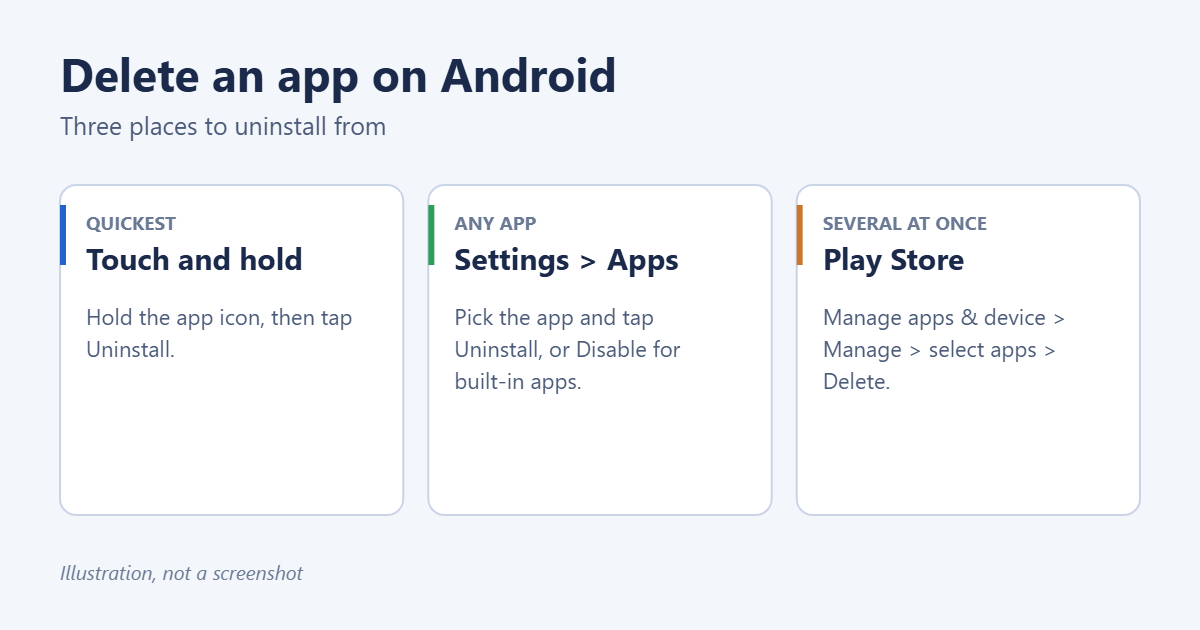
Method 1: From the home screen or app drawer
- Find the app on the home screen, or swipe up to open the app drawer.
- Touch and hold the app icon until a menu appears.
- Tap Uninstall. On some phones, drag the icon to Uninstall at the top of the screen instead.
- Tap OK.
If you only see Remove or Remove from Home, that just removes the shortcut. The app stays installed. The difference is explained in removing apps from the home screen in Android.
Can I delete widgets the same way?
Widgets are removed from the home screen, not uninstalled. Removing the weather widget on Android is a good example.
Method 2: From Settings
- Open Settings > Apps. On Pixel, tap See all apps.
- Tap the app you want to delete.
- Tap Uninstall, then OK.
This works for apps that don’t have an icon, such as ones you hid. On a Galaxy phone, uninstalling an app on a Samsung Galaxy shows the same steps in One UI.
Method 3: Delete several apps at once in the Play Store
- Open the Play Store and tap your profile picture.
- Tap Manage apps & device, then the Manage tab.
- Tick the apps you want to remove. Sort by Size or Least used to find good candidates.
- Tap the trash can icon and then Uninstall.
Apps you can’t uninstall
Built-in apps: disable them
For preinstalled apps like a carrier’s apps or some manufacturer apps, the button says Disable instead of Uninstall. Disabling hides the app, stops it running and removes its updates. Tap Enable on the same screen to bring it back. Disabling core apps such as Phone, Settings or Google Play services can break the phone, so leave those alone.
Device admin apps: deactivate first
If Uninstall is greyed out, the app may have device administrator rights, which is common for security, work and parental control apps. Go to Settings > Security & privacy > More security settings > Device admin apps (the path varies), turn the app off, and try again.
Work profile apps
Apps in a work profile are managed by your employer. Remove them by removing the work profile, or ask your IT team.
Archive an app instead of deleting it
On recent Android versions, the Play Store can archive an app: it removes the app to free space but keeps your data and the icon, which shows a cloud badge. Tap the icon to reinstall it with your data intact. Look for Archive when you touch and hold an app or on its page in Settings > Apps. Not all phones and apps support it yet.
Does deleting an app free up storage?
Yes, the app and its local data are removed. Clearing the Play Store’s cached data won’t free much more.
Will deleting my browser change the default?
Yes, Android asks you to pick another. You can set the default browser in Android again any time.
What happens when you delete an app
- The app’s data on the phone is deleted. Data stored in your online account, such as email or cloud notes, is not.
- Subscriptions keep billing. Cancel them in the Play Store under Payments & subscriptions > Subscriptions.
- You can reinstall any app you paid for without paying again, from Manage apps & device > Manage > Not installed.
Apps that come back or have no Uninstall
The app came back
Some carrier and manufacturer apps reinstall after system updates. Disable them again. If a third-party app keeps reappearing, run Google Play Protect from the Play Store menu.
No Uninstall option at all
It’s a system app (disable it), a device admin app (deactivate it), or your phone is managed by an organization.

Matt Jacobs writes and maintains the guides on Support Your Tech, which he started in 2017. He spent most of his career keeping small-business PCs running and still takes the occasional consulting job, so the steps here come from fixing the same problems on other people’s computers. Every guide is checked on his own Windows 11, Windows 10, Mac, iPhone and iPad before it goes up.