To add a signature in the new Outlook on Windows 10, select Settings (the gear icon) > Accounts > Signatures, type your signature, choose when to use it, and select Save. In classic Outlook, go to File > Options > Mail > Signatures instead.
Applies to: New Outlook for Windows and classic Outlook on Windows 10. Microsoft ended Windows 10 support on October 14, 2025, so a PC without Extended Security Updates no longer receives security fixes; that program runs until October 12, 2027.
Which Outlook do you have?
Windows 10 PCs can have two different Outlook apps, and the signature steps differ. The new Outlook has a New Outlook switch at the top right and a gear icon for Settings. Classic Outlook has a File tab at the top left. If you see File, use the classic steps below.
Add a signature in the new Outlook
- Select Settings (the gear icon) at the top right.
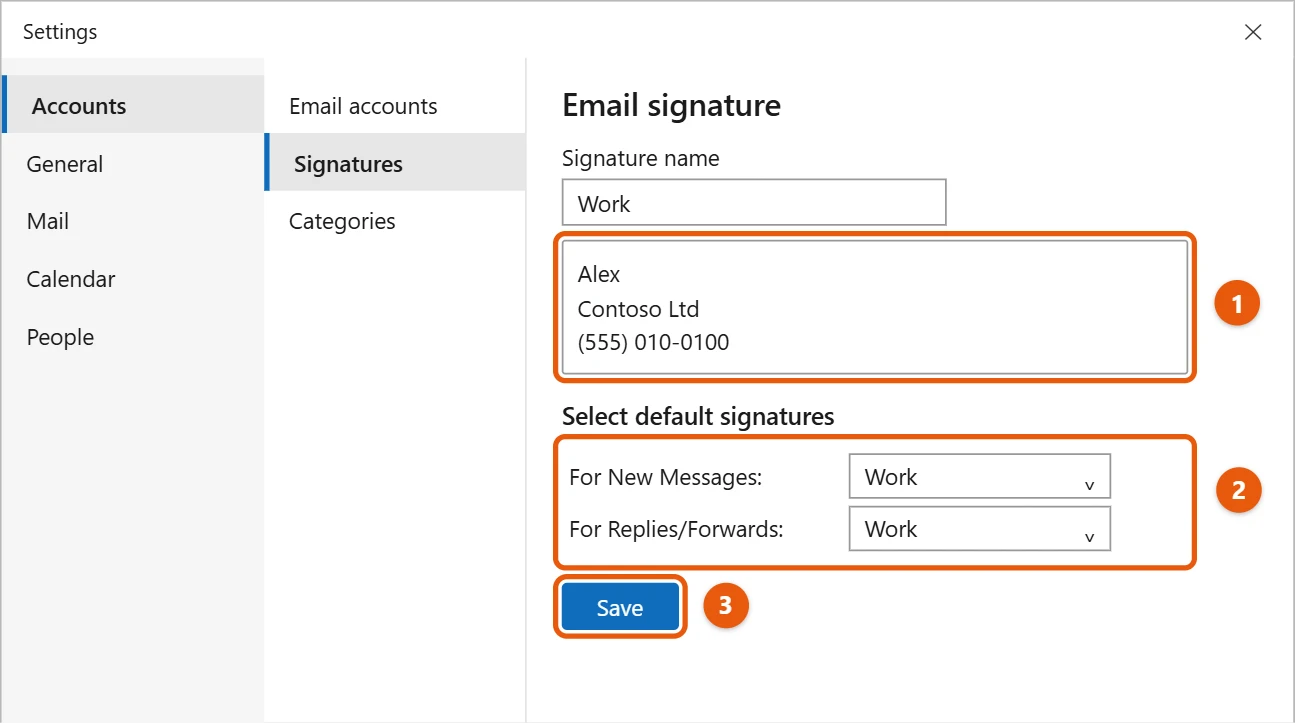
- Select Accounts > Signatures.
- If you have more than one email account, pick the one you want.
- Select Add signature, give it a name such as “Work”, and type your signature in the box. You can change the font, add a link, or add a small picture.
- Under Select default signatures, choose it for New messages and for Replies and forwards if you want it there too.
- Select Save.
Add a signature in classic Outlook
- Select File > Options > Mail.
- Select Signatures.
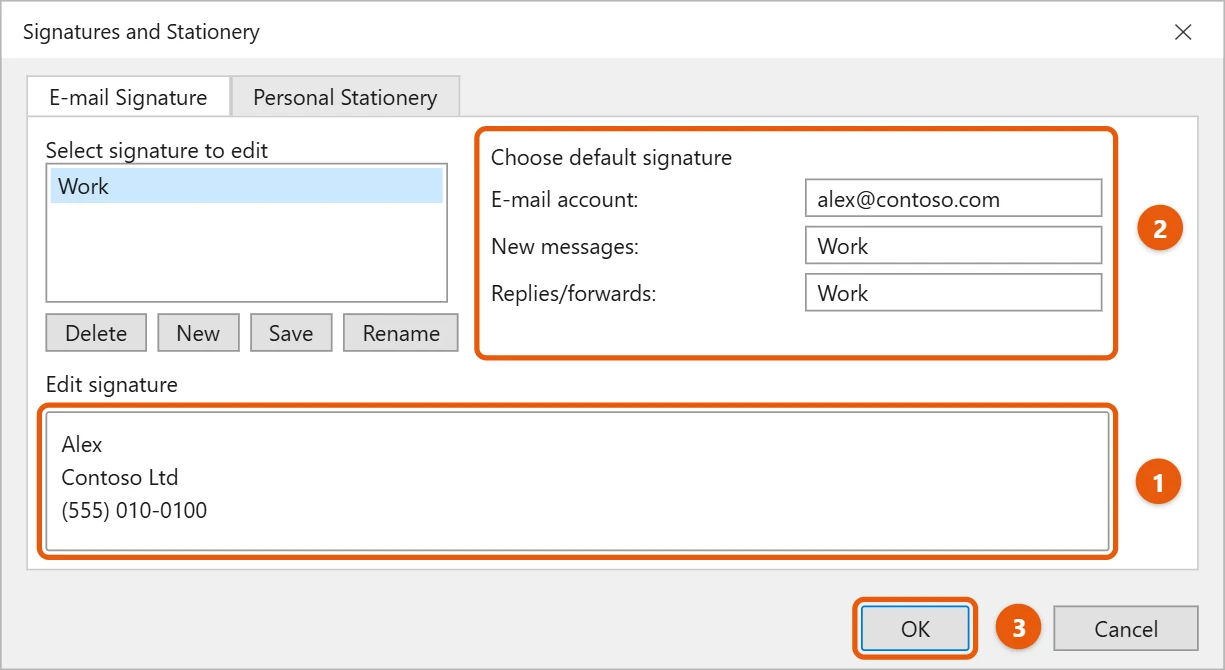
- On the E-mail Signature tab, select New, type a name, and select OK.
- Type your signature in the Edit signature box.
- Under Choose default signature, pick it for New messages and Replies/forwards.
- Select OK.
Add a logo or picture
In the signature editor, select the picture icon and choose an image file. Keep it small, ideally under 100 KB and no wider than about 300 pixels, so it loads quickly and doesn’t look huge on phones. Many email apps block images until the reader allows them, so put your name and phone number in text rather than inside the picture.
In either signature editor, select the text you want to link, such as your website or “LinkedIn”, then select the link button and paste the full web address. Keep it to two or three links. Small social icons are images, so they may be blocked like a logo; a plain text link always shows.
Copy or back up classic Outlook signatures
Classic Outlook saves each signature as files on your PC. To find them, press Windows logo key + R, type %appdata%\Microsoft\Signatures, and press Enter. Each signature has an .htm, .rtf and .txt file, plus a folder for any pictures.
To move signatures to a new PC, copy everything in that folder to the same folder on the new PC, then restart Outlook and set the defaults again. The new Outlook stores signatures with your account instead, so this folder doesn’t apply to it.
Troubleshooting
- The logo arrives as an attachment or a red X. The recipient’s app blocks images, or the image is too large. Make it smaller, or rely on a text signature.
- Formatting is lost. The message is in plain text. In classic Outlook, select Format Text > HTML in the message window. Plain text also greys out text effects in the message body, which is why strikethrough in Outlook needs HTML too.
- Your classic Outlook signature isn’t in the new Outlook. The two apps may store signatures separately. Copy the text and create it again in the new Outlook.
- The signature appears twice. You inserted it by hand on a message that already had a default signature. Delete one copy before sending.
Frequently asked questions
Why doesn’t my signature show up?
Check that it’s set as the default for New messages and Replies and forwards. You can also add it to one message: in a new email, select Signature on the Message tab (or Insert tab) and pick it.
Can I use a different signature for each account?
Yes. Pick the account first, then choose which signature it uses by default.
Where do I get Outlook?
It comes with Microsoft 365, and the new Outlook is free. Here is installing Outlook on Windows 10 from start to finish.
What should I put in an email signature?
Your name, job title or role, company and one or two ways to reach you are usually enough. Short signatures look better on phones and are less likely to be flagged as spam.
How do I edit or delete a signature?
Open the same Signatures page. Pick the signature from the list, change the text and select Save, or select the delete (trash can) button to remove it. If you also send from a Gmail address, Gmail keeps its own signature, and you can remove your signature in Gmail separately.
Can I add a signature in Outlook on the web?
Yes. Signatures you create in the new Outlook for an Outlook.com or Microsoft 365 account usually appear in Outlook on the web too, since both use the same settings.
Sent a message before your signature was right? You may be able to edit a sent email in Outlook. Going away? Type your sign-off directly into the message when you set up an out-of-office reply in Outlook.
More signature options are covered in Microsoft’s How to add and change an email signature in Outlook.
Still setting up the app? You can configure Outlook in Windows 10 next.

Matt Jacobs has been working as an IT consultant for small businesses since receiving his Master’s degree in 2003. While he still does some consulting work, his primary focus now is on creating technology support content for SupportYourTech.com.
His work can be found on many websites and focuses on topics such as Microsoft Office, Apple devices, Android devices, Photoshop, and more.