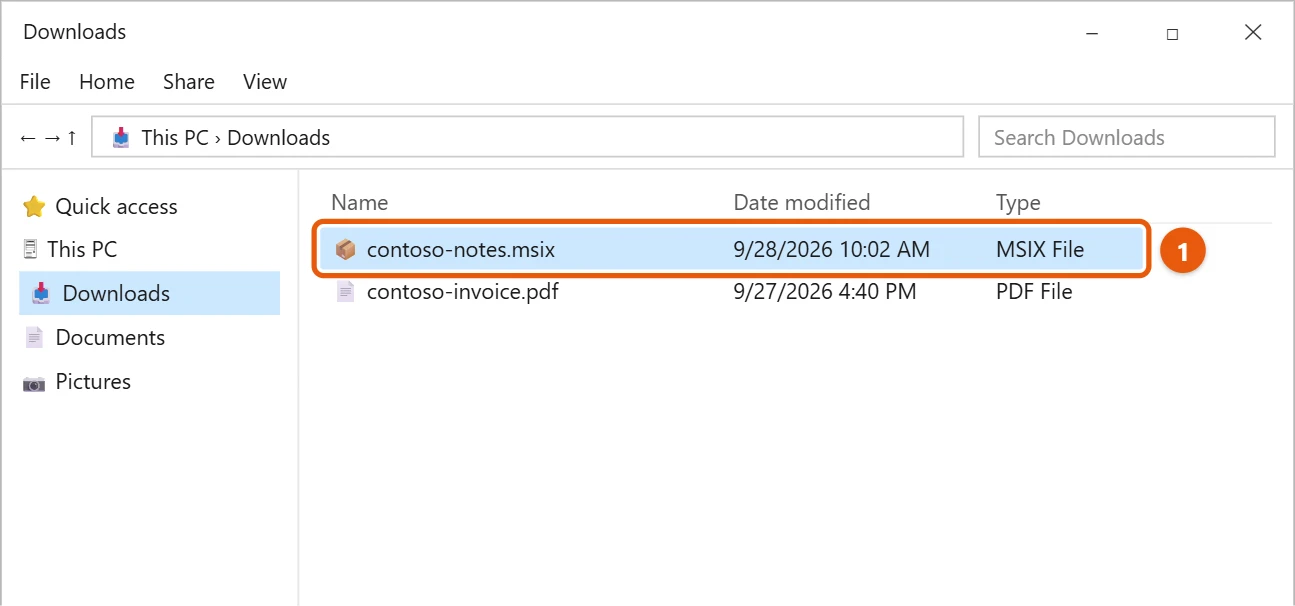
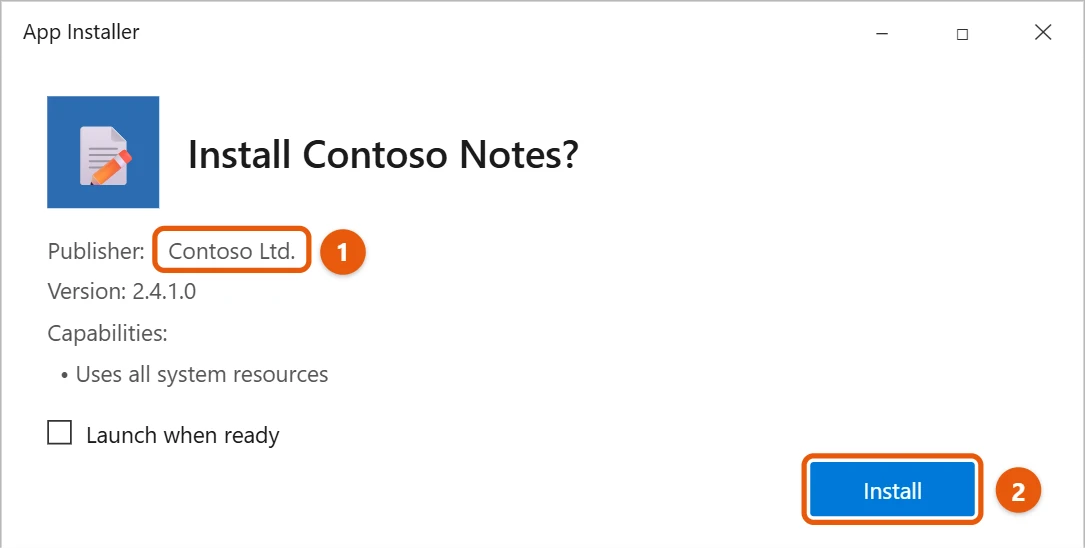
To install an MSIX app on Windows 10, double-click the .msix file. App Installer opens and shows the app’s name and publisher. Check that you trust the publisher, then select Install. The app shows up on the Start menu like any other app.
Applies to: Windows 10. Checked against Microsoft Learn on September 28, 2026.
Before you start
- Only install files from makers you trust. MSIX apps are signed, and App Installer shows who signed them.
- App Installer is built into Windows 10. If double-clicking does nothing, get App Installer from Microsoft Store.
- An .msixbundle file installs the same way.
Install the app
- Open File Explorer and find the .msix file, often in Downloads.
- Double-click the file.
- In App Installer, check the Publisher name.
- Select Install. Check Launch when ready if you want the app to open right away.
When it’s done, find the app on the Start menu. For other ways to add programs, see how to install apps and software in Windows 10.
Check the publisher before you install
- In App Installer, read the Publisher line and the list of things the app can do, such as using your camera or all system resources.
- For more detail, right-click the .msix file, select Properties, and open the Digital Signatures tab. It shows who signed the package and when.
- If the publisher name doesn’t match the company you expected, don’t install it.
Install from a website
Some sites used to offer an Install button that opened App Installer straight from the browser. Microsoft turned that link type off by default in December 2023 because it was misused to spread malware. Download the .msix or .appinstaller file instead, then double-click it.
Install with PowerShell
If App Installer won’t open, PowerShell can install the package. Open Windows PowerShell and type, with your file’s location:
Add-AppxPackage -Path "$env:USERPROFILE\Downloads\app.msix"
For an .appinstaller file, use Add-AppxPackage -AppInstallerFile followed by the file path instead. You don’t need an administrator window, because the app is installed for your own account.
If it won’t install
- “Ask the app developer for a new app package” or a certificate error: The file isn’t signed by a publisher your PC trusts. Get the app from the maker’s official site or Microsoft Store instead.
- “Sideloading” or developer setting message: Windows 10 version 2004 and later allow sideloading by default. On older versions, go to Settings > Update & Security > For developers and choose Sideload apps. Newer versions allow it already. See how to turn on Developer Mode in Windows 10 only if the app’s maker tells you to.
- Can’t see .msix at the end of the name: Turn on file name extensions. See how to show file extensions in Windows 10.
- Error 0x80073CF3 or a missing dependency: the app needs another package first, such as a Visual C++ runtime package. Get the dependency files from the maker, or install the app from Microsoft Store, which adds them for you.
- It installs but won’t open: restart the PC and install any Windows updates, then try again.
Frequently asked questions
How do I update an MSIX app?
Install the newer .msix file from the maker, or update it in Microsoft Store if it came from there. See how to update apps in Windows 10.
How do I remove it?
Uninstall it like any app. See how to uninstall programs on Windows 10.
What is an MSIX file?
It’s a modern app package format from Microsoft. Apps installed from MSIX files install and uninstall cleanly, without leaving files behind, and the package is signed so you can see who made it.
Where are MSIX apps installed?
In a protected folder, C:\Program Files\WindowsApps. You don’t need to open it; start the app from the Start menu.
Can I move an MSIX app to another drive?
Often, yes. Go to Settings > Apps > Apps & features, select the app, and choose Move if it’s offered.
Does this work on Windows 10 Home?
Yes. App Installer and MSIX work on every edition of Windows 10, including Home. In S mode, though, only apps from Microsoft Store can be installed.
Microsoft’s reference is Install Windows 10 apps with App Installer. More help is on our Windows Help & Guides page.

Matt Jacobs has been working as an IT consultant for small businesses since receiving his Master’s degree in 2003. While he still does some consulting work, his primary focus now is on creating technology support content for SupportYourTech.com.
His work can be found on many websites and focuses on topics such as Microsoft Office, Apple devices, Android devices, Photoshop, and more.