Windows 10 doesn’t have Live Captions. That feature is only in Windows 11. On Windows 10, captions come from the app or website playing the video, so you turn them off there, usually with the CC button. If Windows is reading text out loud instead, that’s Narrator, and you can turn it off in Settings.
Applies to: Windows 10. Windows 10 reached end of support on October 14, 2025, and only PCs enrolled in Extended Security Updates still get security fixes, through October 12, 2027.
Turn off captions in a video app
- Play the video and move your mouse over it to show the controls.
- Select the CC or subtitles button.
- Select Off.
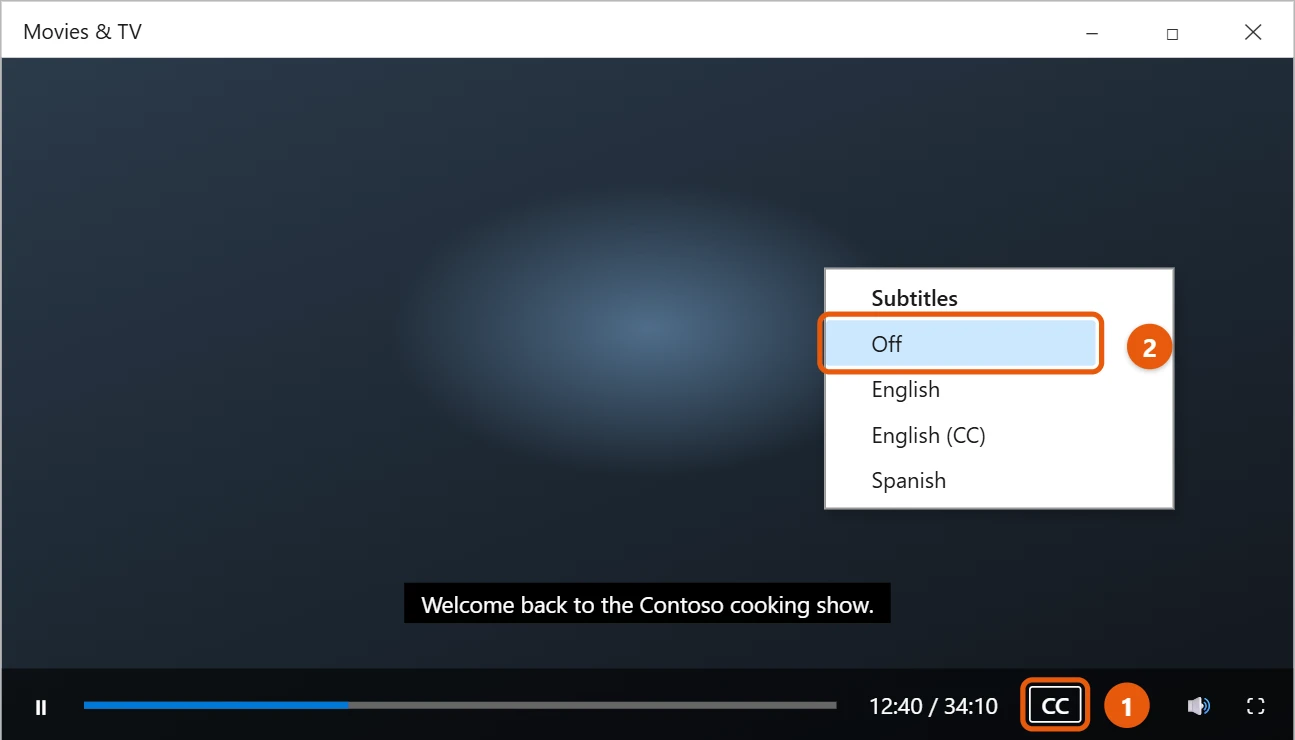
Most apps and websites remember this choice. If captions come back, check the app’s own settings for a subtitles or captions option.
Change how captions look
Windows 10 lets you change the color, size and background of captions in apps that use Windows’ caption settings.
- Select Start > Settings > Ease of Access.
- Select Closed captions.
- Change the font and background options, or set them back to Default.
These settings change how captions look. They don’t turn captions on or off.
If Windows is reading text out loud
That’s Narrator, not captions.
- Press Windows logo key + Ctrl + Enter to turn Narrator off right away. The shortcut is the same in Windows 11, where you can also turn off Narrator in Settings and stop it starting again.
- To keep it off, open Settings > Ease of Access > Narrator and turn off Turn on Narrator.
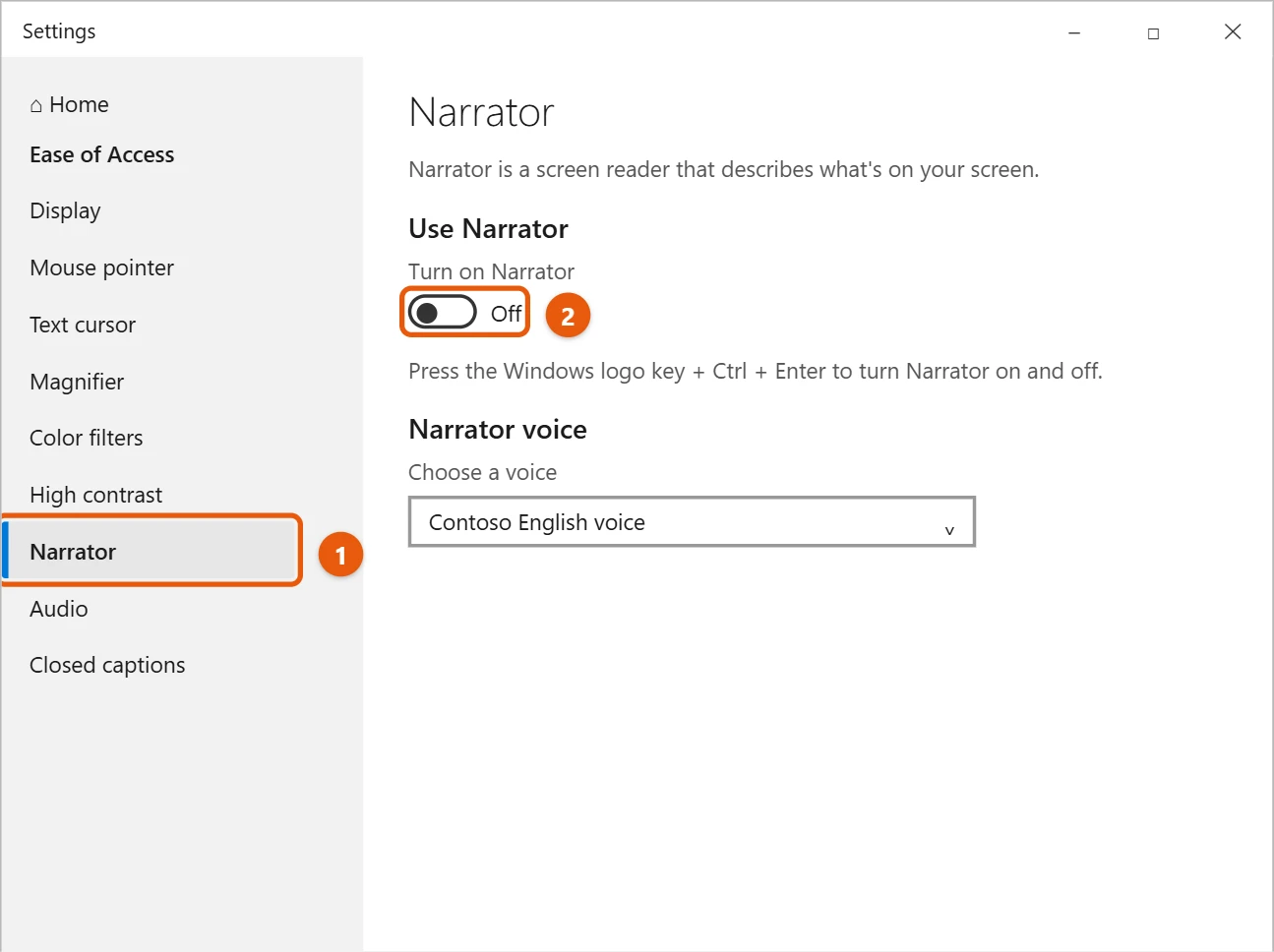
Narrator is useful when you want it, and turning on text-to-speech (Narrator) in Windows 10 explains the settings. Turned captions off but now the sound is hard to hear? You can make sound louder in Windows 10.
Turn off captions in popular apps
- YouTube: select the CC button below the video, or press the C key while the video is playing.
- Netflix: select the speech bubble icon (Audio & Subtitles) and choose Off under Subtitles.
- Microsoft Teams: during a meeting, select More (the three dots) > Language and speech > Turn off live captions.
- Zoom: select Show captions in the meeting controls and turn it off, or hide them from the captions menu.
- Movies & TV app: select the CC button in the player controls and choose Off.
If captions won’t go away
- They’re part of the picture. Some videos have captions burned into the image, often called open captions. They can’t be turned off; look for a version without them.
- They come back on every video. Streaming services save caption choices to your account or profile. Turn them off in the account’s playback or accessibility settings on the website.
- A browser extension adds them. Extensions for translation or accessibility can add captions. Turn extensions off one at a time to find it.
- Captions only appear in one browser. Check that browser’s accessibility settings. Chrome and Edge have a Live Caption option that captions any audio; turn it off in the browser’s accessibility settings.
Frequently asked questions
Does Windows logo key + Ctrl + L work on Windows 10?
No. That shortcut opens Live Captions in Windows 11 only.
Can I get captions for any audio on Windows 10?
Not built in. Windows 10 only shows captions that the app or video provides.
What’s the difference between captions and subtitles?
Subtitles usually show only the spoken words, often translated. Closed captions also describe sounds such as music or a door slamming, for people who can’t hear the audio. Most players use the same button for both.
Can I turn captions back on later?
Yes. Select the same CC or subtitles button and choose a language. Your caption style settings in Windows stay as you left them.
Why do captions look different in each app?
Only some apps use Windows’ caption settings. Websites and many streaming apps have their own caption style options in their settings.
Do captions slow down videos?
No. Captions are a tiny text track, so turning them off won’t make playback smoother or use less data.
If you later move to Windows 11, its Live Captions feature is explained in Use live captions to better understand audio.

Matt Jacobs has been working as an IT consultant for small businesses since receiving his Master’s degree in 2003. While he still does some consulting work, his primary focus now is on creating technology support content for SupportYourTech.com.
His work can be found on many websites and focuses on topics such as Microsoft Office, Apple devices, Android devices, Photoshop, and more.