Download the font, then right-click the font file (it ends in .ttf or .otf) and select Install. You can also drag the file onto Settings > Personalization > Fonts. The new font shows up in Word, PowerPoint, Paint, and most other apps right away.
Applies to: Windows 11. Checked against Microsoft Support on September 29, 2026.
Install a font from a file
- Download the font from a site you trust. Fonts often come in a .zip file.
- If it’s a .zip file, right-click it and select Extract All, then Extract. If the archive won’t open, see how to extract files on Windows 11.
- Open the extracted folder and right-click the font file.
- Select Install.
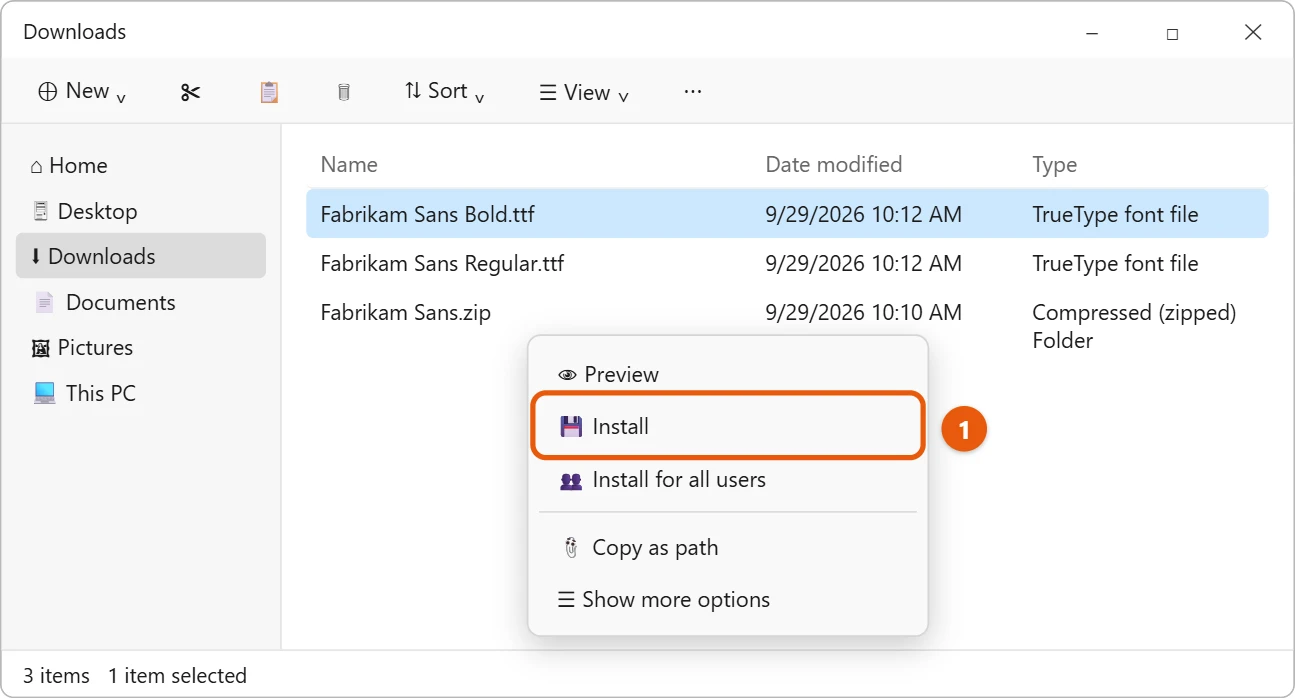
- Open your app and pick the new font from the font list. If the app was already open, close it and open it again.
If a font comes in several files, such as Regular and Bold, install each one. You can select them all, right-click, and select Install once.
Drag and drop in Settings
- Select Start > Settings > Personalization > Fonts.
- Drag the font file from File Explorer onto the Drag and drop to install box.
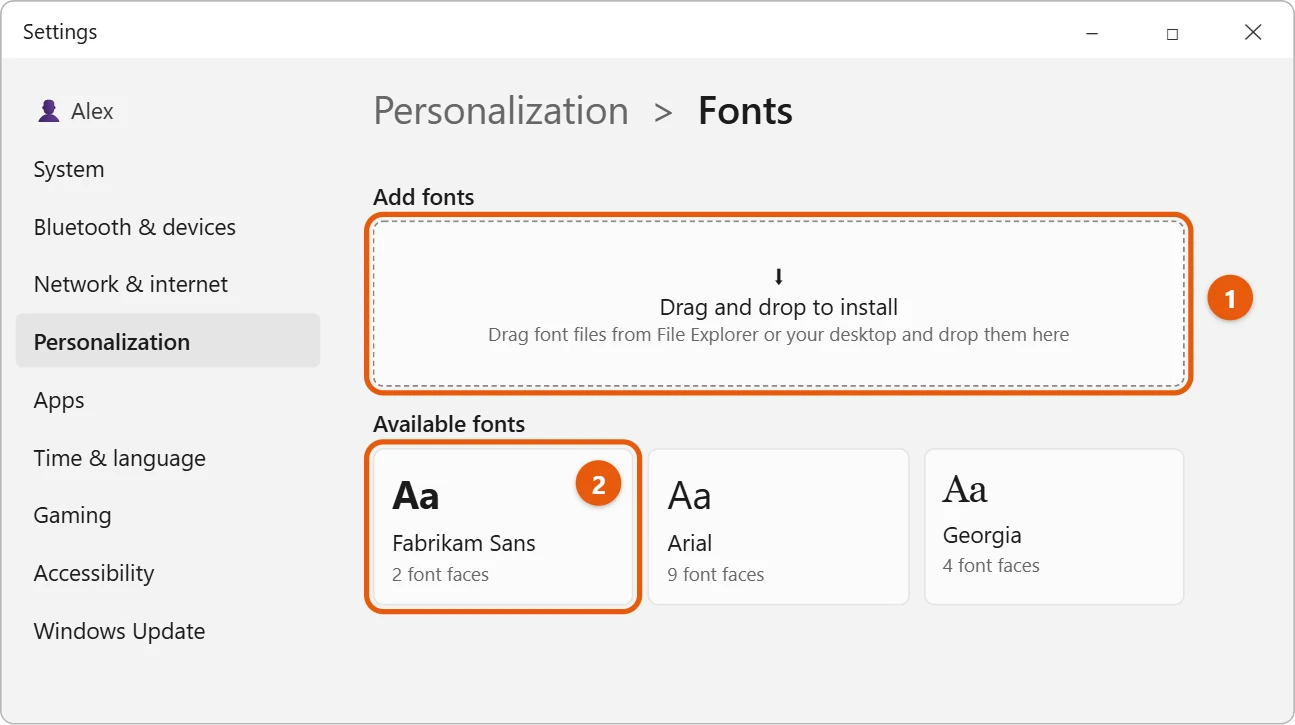
- Find the font under Available fonts to check that it installed.
Get free fonts from Microsoft Store
On the Fonts page, select Get more fonts in Microsoft Store. Pick a font and select Get. It installs by itself.
Remove a font
- Go to Settings > Personalization > Fonts.
- Select the font under Available fonts.
- Select Uninstall.
Frequently asked questions
Why doesn’t my new font show up in an app?
Close the app completely and open it again. Some apps only show certain font types, so try the font in another app, such as Word or Paint.
Can I install fonts for everyone on the PC?
The Install for all users option needs an administrator. Install adds the font for your account, which is all most people need.
Which font files work?
TrueType (.ttf) and OpenType (.otf) files work best. If you downloaded a .zip file, see how to zip and unzip files in Windows 11. On an older PC, see how to install fonts in Windows 10.
Microsoft’s reference is Manage Fonts in Windows. More help is on our Windows Help & Guides page.

Matt Jacobs has been working as an IT consultant for small businesses since receiving his Master’s degree in 2003. While he still does some consulting work, his primary focus now is on creating technology support content for SupportYourTech.com.
His work can be found on many websites and focuses on topics such as Microsoft Office, Apple devices, Android devices, Photoshop, and more.