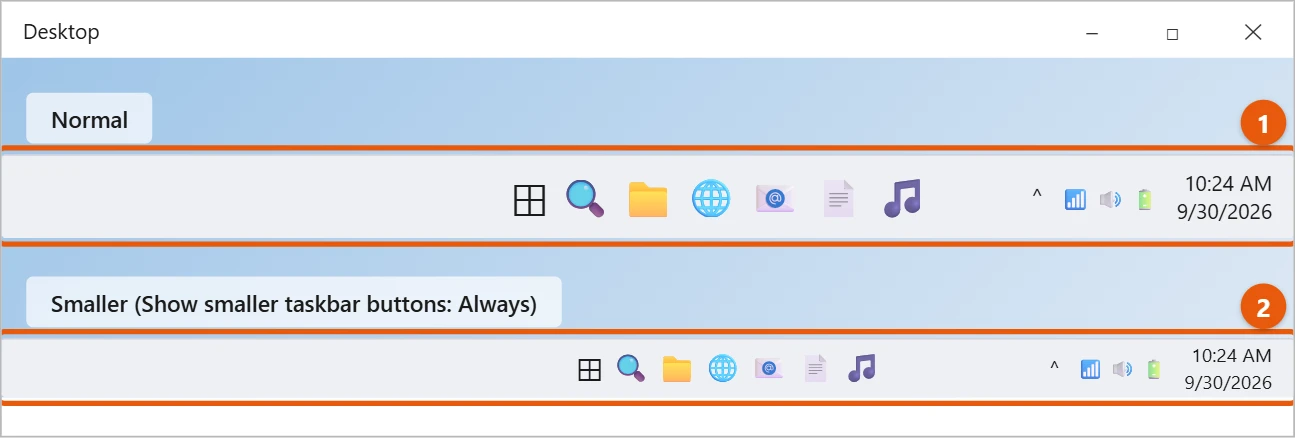
To make the taskbar smaller in Windows 11, right-click an empty part of the taskbar and select Taskbar settings. Expand Taskbar behaviors, and next to Show smaller taskbar buttons, choose Always. The taskbar icons shrink right away. On PCs with the newest Windows 11 update, the taskbar also gets shorter.
Applies to: Windows 11. No downloads or administrator rights needed. Checked against Microsoft on September 30, 2026.
What “smaller” can mean
There are a few ways to make the taskbar take up less room. Pick the one that fits:
- Smaller icons, or a shorter taskbar. Use Show smaller taskbar buttons (Method 1).
- Less clutter. Hide the search box, Task view and Widgets, and unpin apps you don’t use (Method 2).
- No taskbar until you need it. Turn on auto-hide (Method 3).
- Everything smaller, not just the taskbar. Lower the display scale (Method 4).
- Right-click an empty part of the taskbar and select Taskbar settings. You can also go to Start > Settings > Personalization > Taskbar.
- Select Taskbar behaviors to expand it.
- Next to Show smaller taskbar buttons, choose Always.
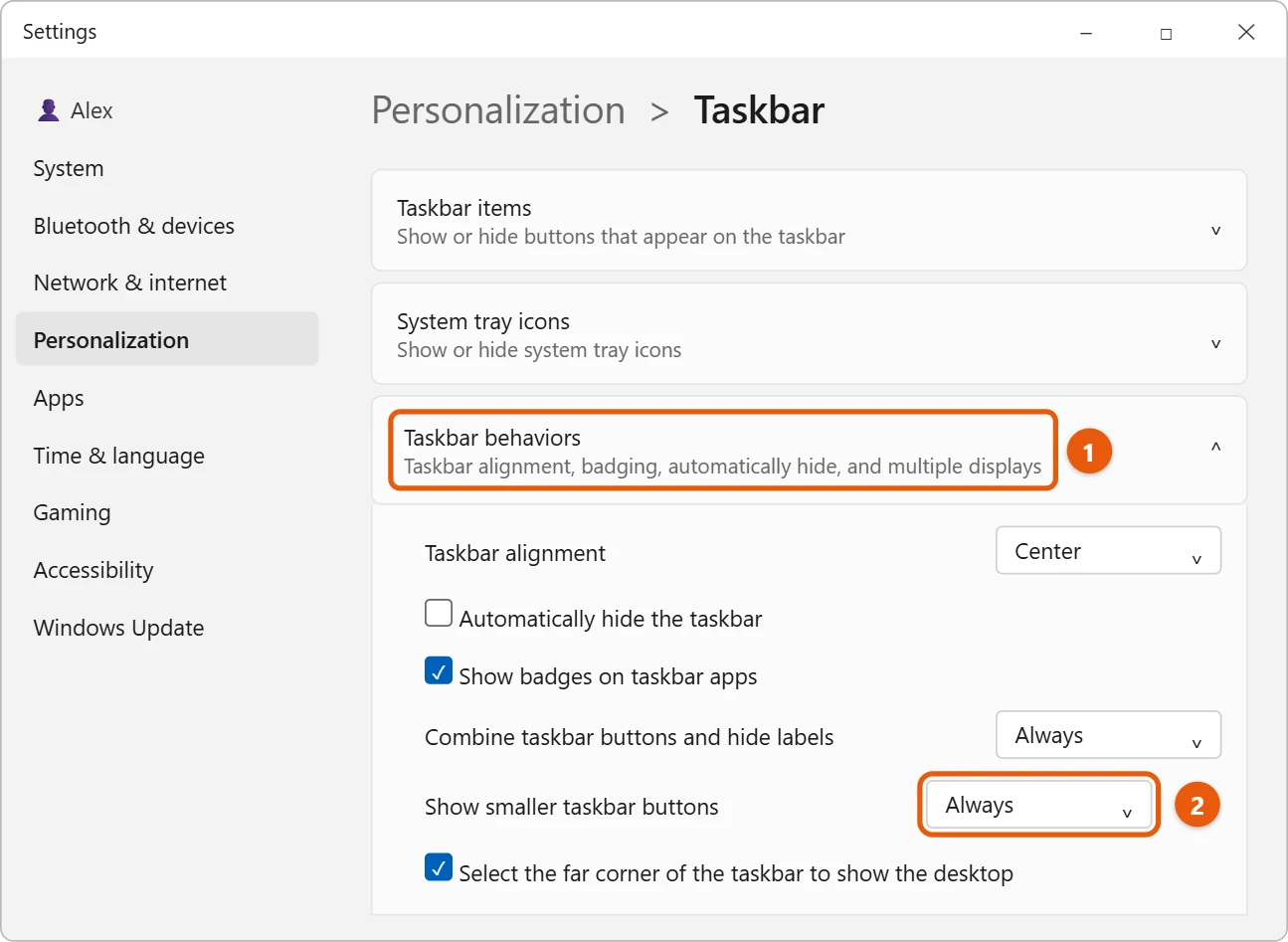
The change happens right away. You don’t need to restart or sign out.
The setting has three options:
- Always keeps the icons small all the time.
- When taskbar is full uses normal icons until the taskbar runs out of room, then shrinks them. This is the default.
- Never always uses normal-size icons.
Why your taskbar may not get shorter
To resize the icons on your desktop instead, see how to change desktop icon size in Windows 11.
Microsoft first added this setting to make the icons smaller so more of them fit. The taskbar stayed the same height. In 2026, Microsoft updated the setting so that Always makes both the icons and the taskbar smaller, which gives you more room for your apps. Microsoft is rolling out this change in stages, so it may not have reached your PC yet.
To check for it, select Start > Settings > Windows Update > Check for updates. Turning on Get the latest updates as soon as they’re available on the same page can help you get new features sooner.
Method 2: Remove items you don’t use
A taskbar with fewer items looks and feels smaller, even at the same height.
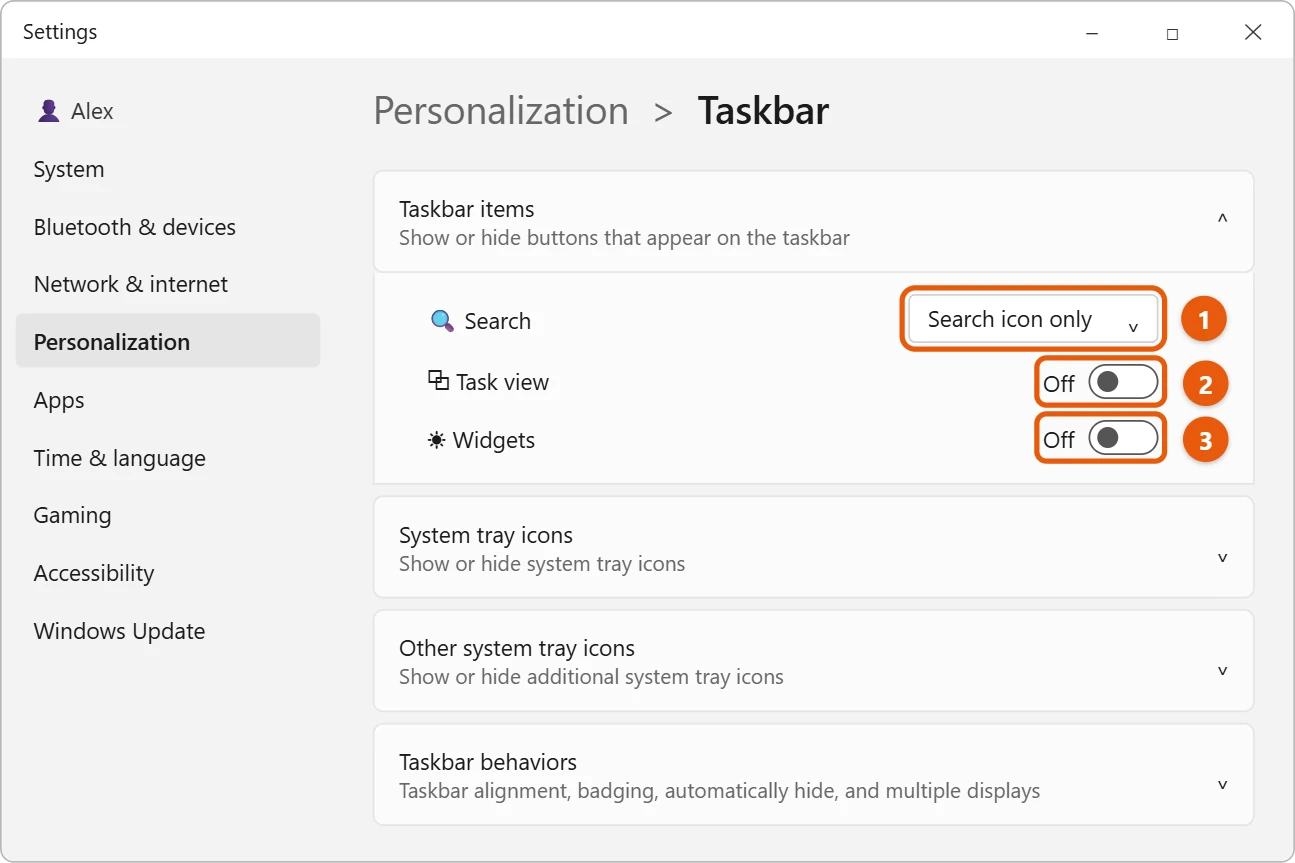
- Open Settings > Personalization > Taskbar.
- Under Taskbar items, set Search to Search icon only or Hide. The full search box takes up the most space.
- Turn off Task view and Widgets if you don’t use them.
To remove an app you rarely open, right-click its icon on the taskbar and select Unpin from taskbar. You can still open it from Start.
You can also tidy up the right end of the taskbar. Expand Other system tray icons on the same Settings page and turn off icons you don’t need to see. They move to the Show hidden icons arrow.
Method 3: Hide the taskbar automatically
If you want the taskbar out of the way completely:
- Open Settings > Personalization > Taskbar and expand Taskbar behaviors.
- Check Automatically hide the taskbar.
The taskbar slides out of view. Move your pointer to the bottom of the screen, or press the Windows logo key, to bring it back. See how to hide the taskbar in Windows 11 for more.
Method 4: Lower the display scale
Display scale changes the size of text, apps and the taskbar together. It’s useful if everything on your screen looks too big, not just the taskbar.
- Select Start > Settings > System > Display.
- Under Scale & layout, open the Scale list and choose a smaller percentage, such as 125% instead of 150%.
Windows marks one option as Recommended for your screen. Going lower makes text smaller too, so pick a size you can read comfortably. To change only the text, use Settings > Accessibility > Text size instead.
Move the taskbar to save space
On wide screens, a taskbar on the left or right side can leave more height for your apps. With the newest Windows 11 update, you can choose Top, Bottom, Left or Right in Taskbar behaviors. See how to move the taskbar in Windows 11.
What about the TaskbarSi registry trick?
Many older guides say you can shrink the taskbar by adding a TaskbarSi value in Registry Editor. That trick worked in early versions of Windows 11, but it doesn’t work in current versions, and some people report the taskbar breaking or going back to normal. Registry edits can also cause problems if you make a mistake. Use the built-in settings above instead.
You’ll also see guides that recommend third-party apps or mods to set an exact taskbar height. We don’t recommend them, because they change how Windows works and can stop working after updates.
If the taskbar won’t get smaller
- You can’t find Show smaller taskbar buttons. Your PC may be missing recent updates. Check Windows Update.
- The icons are smaller, but the taskbar is the same height. Your PC doesn’t have the newest update yet. See “Why your taskbar may not get shorter” above.
- The taskbar looks bigger on a touch screen. On 2-in-1 PCs, Windows can show a touch-friendly taskbar when you fold back or remove the keyboard. It collapses again when you open an app.
- You can’t change taskbar settings. Your work or school may manage them. Ask your IT department.
Frequently asked questions
Can I drag the taskbar to resize it like in Windows 10?
No. Windows 11 doesn’t let you drag the edge of the taskbar to change its size. Use Show smaller taskbar buttons instead. For Windows 10, see how to change the taskbar size in Windows 10.
Can I make the taskbar bigger?
Set Show smaller taskbar buttons to Never to keep normal-size icons, or raise the display scale. Windows 11 doesn’t have a setting for a taller taskbar.
Will smaller taskbar buttons make the icons hard to see?
They’re smaller, but the icons stay the same, and you can switch back at any time. If you find them hard to read, choose When taskbar is full or Never.
Does making the taskbar smaller affect Start or search?
No. Start, search and your pinned apps work the same way.
How do I make desktop icons smaller instead?
Right-click the desktop, select View, and choose Small icons.
Next steps
For more ways to change how Windows looks, see how to customize Windows 11 and how to get rid of the search bar in Windows 11. Microsoft explains every taskbar setting in Customize the Taskbar in Windows.

Matt Jacobs has been working as an IT consultant for small businesses since receiving his Master’s degree in 2003. While he still does some consulting work, his primary focus now is on creating technology support content for SupportYourTech.com.
His work can be found on many websites and focuses on topics such as Microsoft Office, Apple devices, Android devices, Photoshop, and more.