Windows 11 doesn’t have a Tablet mode switch like Windows 10. It changes the layout by itself when you fold back or remove the keyboard on a 2-in-1 PC. To stop that, right-click the taskbar, select Taskbar settings > Taskbar behaviors, and clear Optimize taskbar for touch interactions when this device is used as a tablet.
Applies to: Windows 11. Checked against Microsoft Support on September 29, 2026.
Turn the tablet layout off or on
- Right-click the taskbar and select Taskbar settings.
- Select Taskbar behaviors to expand it.
- Clear Optimize taskbar for touch interactions when this device is used as a tablet to turn it off. Check it to turn it back on.
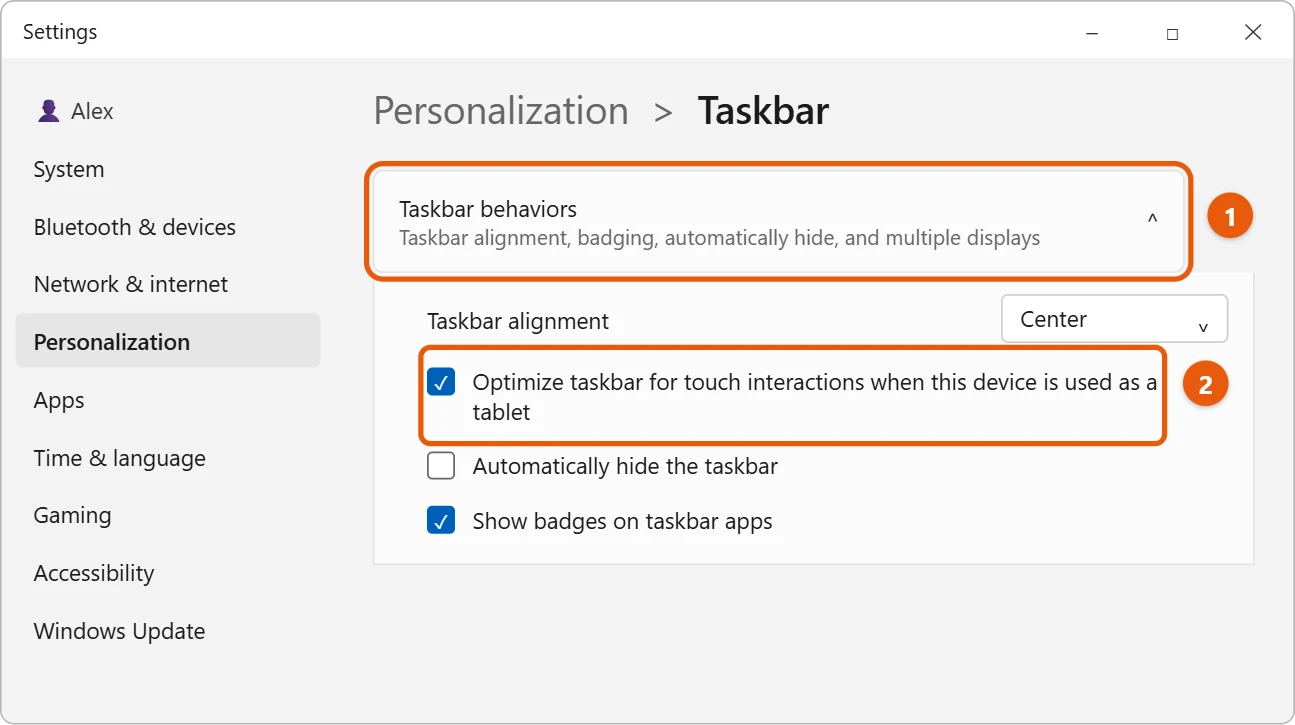
You only see this option on PCs that can be used as a tablet, such as 2-in-1 laptops with a touch screen.
What the tablet layout looks like
When your 2-in-1 is used as a tablet, the taskbar shrinks to a thin bar that shows only the time and status icons. Swipe up from the bottom of the screen to see the full taskbar with larger, touch-friendly icons. It shrinks again when you open an app.
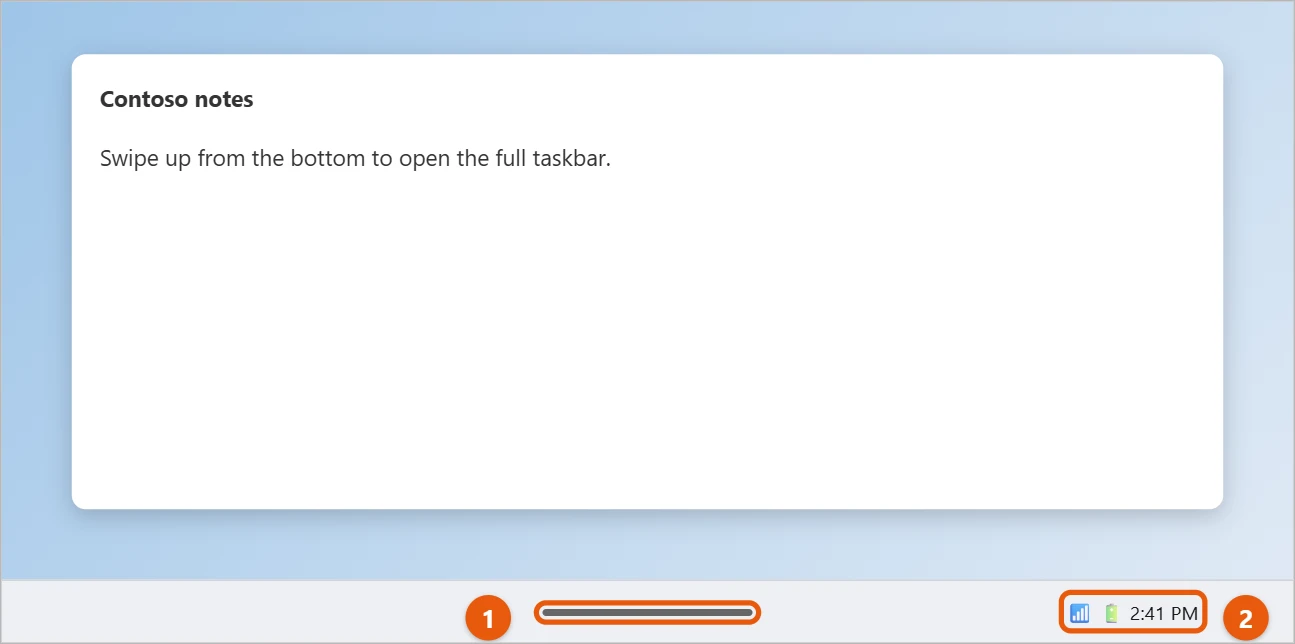
To switch back to the normal layout, attach or fold the keyboard back into place.
Other tablet settings
- Screen rotation: Open Quick Settings (Windows logo key + A) and select Rotation lock to stop the screen from turning.
- On-screen keyboard: Select the keyboard icon on the taskbar, or go to Settings > Personalization > Text input.
- Touch gestures: Go to Settings > Bluetooth & devices > Touch.
Make a non-tablet PC easier to use with touch
Without a tablet layout, you can still make things easier to tap:
- Make everything bigger: go to Settings > System > Display and raise Scale to 125% or 150%.
- Show the touch keyboard when you need it: go to Settings > Time & language > Typing > Touch keyboard and set Show the touch keyboard to Always or When no keyboard attached.
If the tablet layout doesn’t switch
Windows decides when to use the tablet layout from signals your PC sends when you fold back the screen or remove the keyboard. If it gets stuck one way:
- Fold or reattach slowly. On 2-in-1 laptops, fold the screen all the way back, wait a few seconds, then fold it back again. On detachable PCs, take the keyboard off and reattach it firmly.
- Update drivers from your PC maker. The hinge and keyboard signals come from chipset and “virtual buttons” or “HID event filter” drivers. Get the latest ones from your PC maker’s support site or app, such as Lenovo Vantage or HP Support Assistant.
- Check the touch screen is enabled. Right-click Start, open Device Manager, expand Human Interface Devices, and make sure HID-compliant touch screen isn’t disabled.
- Restart. A restart resets the posture detection and fixes most stuck layouts.
If the taskbar option is missing completely, Windows doesn’t see your PC as convertible. That’s normal on regular laptops and desktops, even ones with a touch screen.
Frequently asked questions
Why can’t I find Tablet mode in Settings?
Microsoft removed the Tablet mode switch in Windows 11. The tablet layout now turns on and off by itself, and the taskbar option above is the only control.
How do I change other taskbar settings?
See how to customize the taskbar in Windows 11.
How does this work in Windows 10?
Windows 10 still has a switch. See how to turn off tablet mode in Windows 10.
Does turning off the tablet layout disable the touch screen?
No. Touch keeps working. You just keep the normal taskbar and desktop layout when the PC is folded into a tablet.
Can I use a pen in the tablet layout?
Yes. Pens work in both layouts. To change what the pen button does or which hand you write with, go to Settings > Bluetooth & devices > Pen & Windows Ink.
Microsoft’s reference is Customize the Taskbar in Windows. More help is on our Windows Help & Guides page.
Related: how to turn on the touch screen in Windows 11.

Matt Jacobs has been working as an IT consultant for small businesses since receiving his Master’s degree in 2003. While he still does some consulting work, his primary focus now is on creating technology support content for SupportYourTech.com.
His work can be found on many websites and focuses on topics such as Microsoft Office, Apple devices, Android devices, Photoshop, and more.