Windows 10 has no built-in way to put a password on a PDF, so you need an app that can encrypt the file. If you’re making the PDF from a Word document, Word can do it for free: save as PDF, select Options, tick Encrypt the document with a password, and type the password. For a PDF you already have, use the free LibreOffice suite or a paid copy of Adobe Acrobat. Either way, anyone who opens the new file has to type the password before they see a single page.
Applies to: Windows 10 (Home and Pro) with Word for Microsoft 365, Word 2024, 2021, 2019 or 2016, current LibreOffice releases, or Adobe Acrobat (Standard or Pro). The same steps work on Windows 11. Windows 10 itself reached end of support on October 14, 2025, and consumer Extended Security Updates run through October 12, 2027.
Which method should you use?
| Your situation | Best method | Cost |
|---|---|---|
| You wrote the document in Word and haven’t made the PDF yet | Word’s Save as PDF | Included with Word |
| You already have a PDF (a scan, a bank statement, a form you received) | LibreOffice | Free |
| The PDF has forms, signatures or a complex layout that must not change, or you want detailed permissions | Adobe Acrobat | Subscription |
| You just need to email one or more PDFs safely | An encrypted 7-Zip archive | Free |
Two kinds of PDF password
PDF tools use slightly different names, but they all offer the same two passwords:
- Open password (also called a document open, user or viewing password). Nobody can view the file without it. This is the one that actually protects your information.
- Permissions password (also called an owner or editing password). Anyone can open the file, but printing, copying or editing is restricted. Many PDF readers ignore these restrictions, and LibreOffice’s own help notes they’re only honored by readers that follow the PDF 1.5 rules, so treat them as a polite request, not a lock.
Every method below makes a new, protected copy. The unprotected original stays on your PC until you delete it.
Method 1: Add a password when you save from Word
Use this when the document started in Word. These steps follow Microsoft’s guide to saving Office files as PDF.
- Open the document in Word and select File.
- Select Save a Copy (Microsoft 365, when AutoSave is on) or Save As (older versions), then choose Browse or More options so the classic Save As window opens.
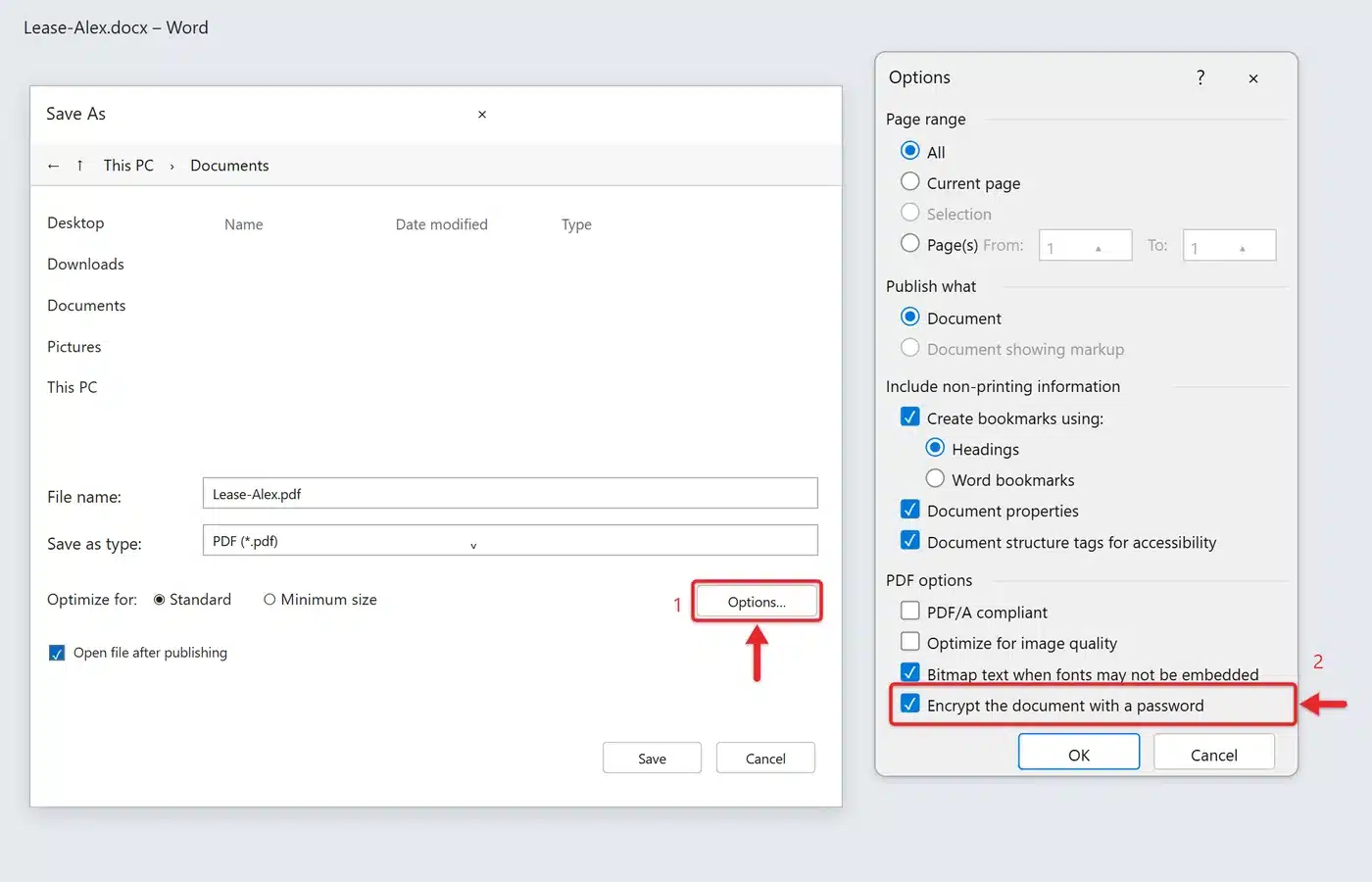
- Pick a folder, type a file name, and set Save as type to PDF (*.pdf). New buttons appear at the bottom of the window.
- Select Options.
- Near the bottom of the Options box, tick Encrypt the document with a password and select OK. The Encrypt PDF Document box opens.
- Type the password, type it again in the second box, and select OK. If Word refuses it, check the length requirement shown in the box.
- Select Save. Word keeps your .docx file and writes a separate, protected PDF.
Word only sets an open password; it has no permissions option. Excel and PowerPoint don’t offer the encrypt checkbox at all, so save those files as PDF first and protect the PDF with Method 2 or 3. For more on the other choices in that Options box, see how to convert Word to PDF in Windows 10.
Word can also open an existing PDF (File > Open), convert it into an editable document, and then save it back out with a password. Expect shifted text and images in anything more complex than a simple letter.
Method 2: Protect an existing PDF with LibreOffice (free)
- Download LibreOffice from libreoffice.org and install it.
- Open LibreOffice, select Open File, and choose your PDF. It opens in LibreOffice Draw, with each page shown as editable objects.
- Choose File > Export As > Export as PDF. Don’t use plain Save, which would save a Draw file instead of a PDF.
- In the PDF Options window, open the Security tab and select Set Passwords.
- Under the open password section, type a password to view the PDF and confirm it. Optionally fill in the permission password section, then pick limits for Printing, Changes and copying on the Security tab.
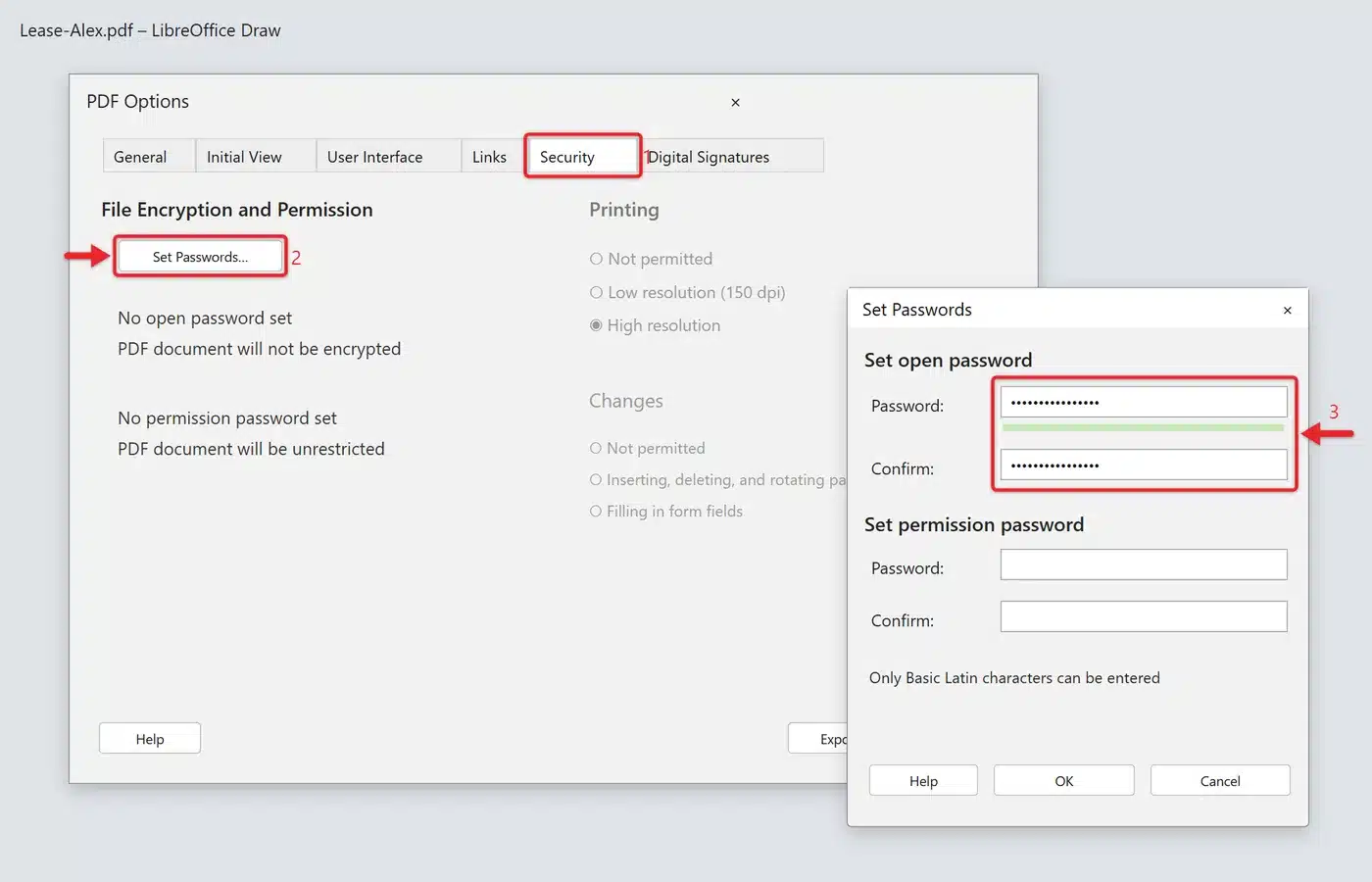
- Select OK, then Export, and save the file under a new name such as Lease-Alex-protected.pdf.
All the options are described on LibreOffice’s PDF export Security tab help page. Before you delete the original, flip through the new file: Draw rebuilds each page, and fonts or spacing in complex PDFs can come out slightly different.
Method 3: Use Adobe Acrobat (paid)
Acrobat edits the PDF directly instead of rebuilding it, so layouts, forms and bookmarks stay exactly as they were. The free Acrobat Reader can open protected PDFs but can’t add a password.
- Open the PDF in Acrobat.
- Select All tools > Protect a PDF > Protect using password. In older versions of Acrobat, the path is Tools > Protect > Encrypt > Encrypt with Password.
- Choose Viewing to require a password to open the file (or Editing for a permissions password).
- Type the password, retype it in the confirm box, and select Apply.
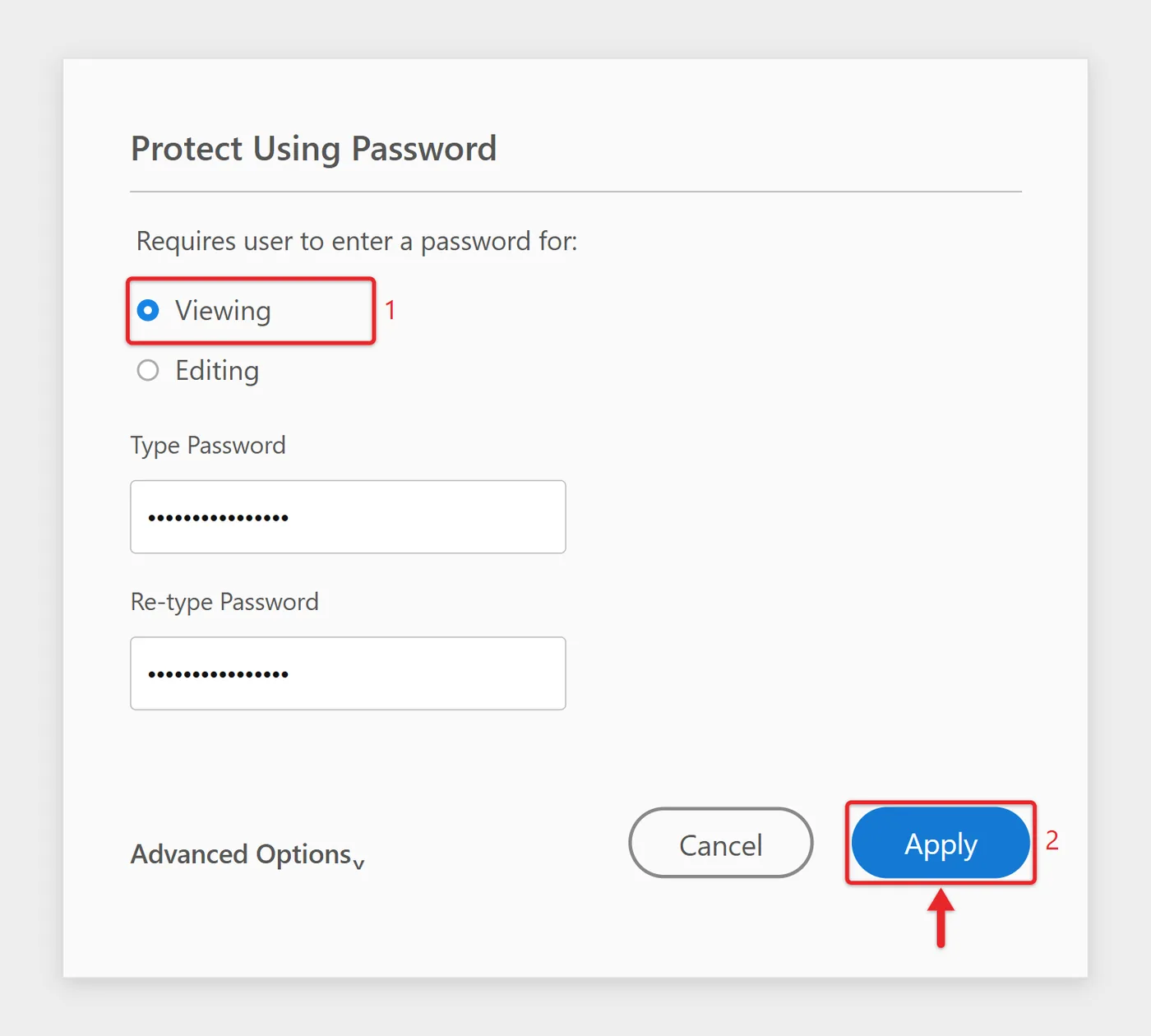
- Save the file. The password takes effect once it’s saved.
Adobe’s help page on adding passwords to PDFs in Acrobat covers the advanced encryption and compatibility settings. Adobe also runs a browser-based Protect PDF tool, but it uploads your file to Adobe’s servers.
Alternative: send the PDF inside an encrypted archive
If the goal is getting a PDF to someone safely, you don’t have to change the PDF at all. The free 7-Zip archiver from 7-zip.org supports AES-256 encryption in both 7z and ZIP formats. Right-click the PDF, choose 7-Zip > Add to archive, type a password, and for ZIP files set Encryption method to AES-256. The steps are the same as when you password protect a ZIP file in Windows 10. The recipient needs the password to extract the file, but once extracted, the PDF itself has no protection.
What won’t add a password
- Microsoft Print to PDF and the PDF viewer in Microsoft Edge have no encryption option. Edge is good for filling in forms, though, if you need to type on a PDF in Windows 10 before protecting it.
- Folder locks, EFS and BitLocker protect files only while they sit on your PC. Copy or email the PDF and it travels unprotected. Those options are covered in how to put a password on a folder.
- Free “protect PDF” websites do add a real password, but your file passes through someone else’s server first. Skip them for tax returns, medical records, ID scans and contracts.
Check that the password works
- Close the PDF in every app.
- Double-click the new file in File Explorer. Your default PDF reader (Edge, Acrobat Reader or another app) should ask for a password before showing anything.
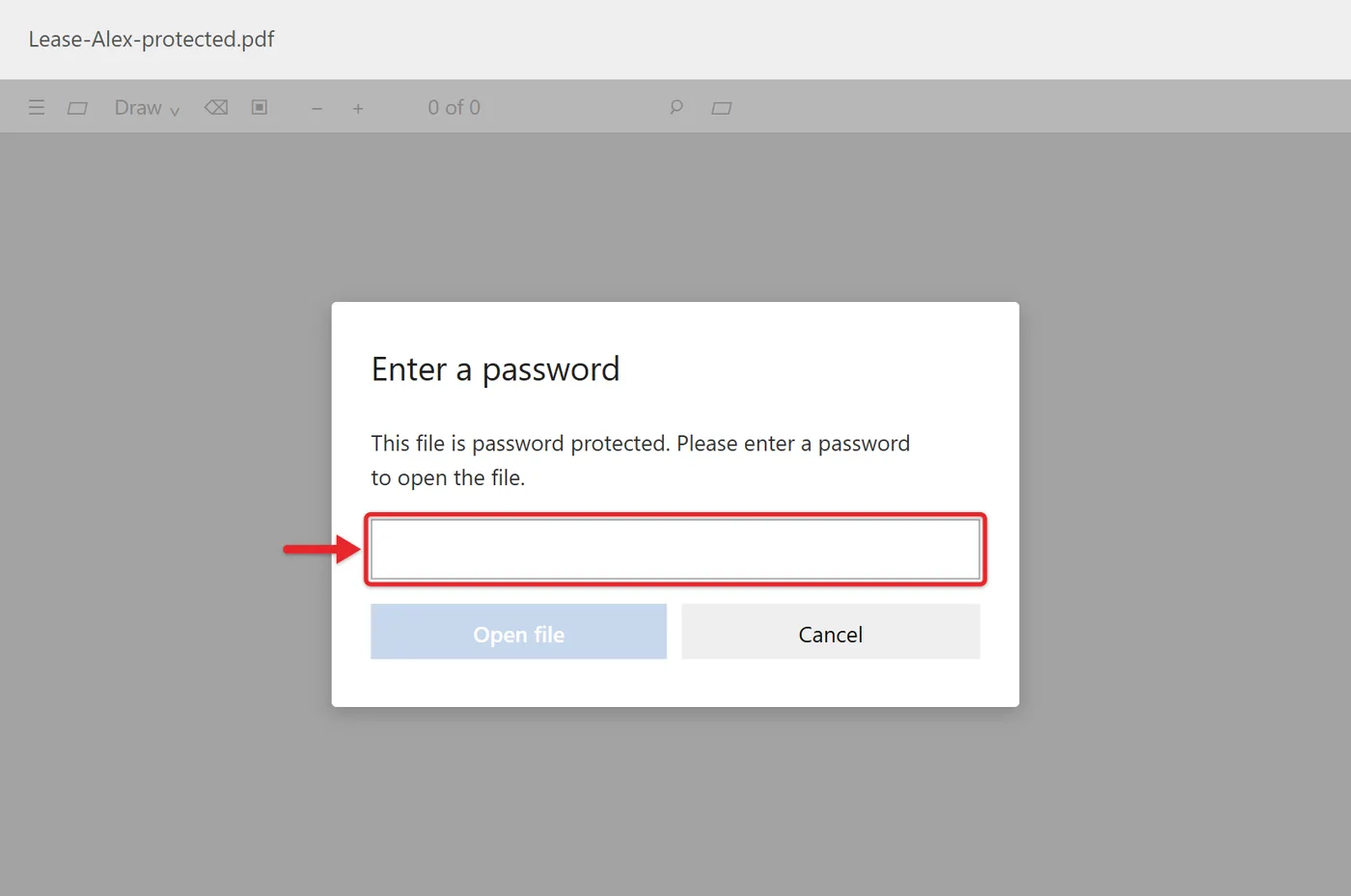
- Type a wrong password once to confirm the file stays locked, then type the right one.
If the file opens without a prompt, you’re probably opening the original copy. Look at the file name and folder you chose when saving.
Change or remove the password
- Word: export the .docx again with the checkbox cleared, or with a new password.
- LibreOffice: open the protected PDF (you’ll be asked for the password), then export again with new or no passwords on the Security tab.
- Acrobat: open the file, go to File > Properties > Security, set Security Method to No Security, and save. You’ll need the password to do this.
Troubleshooting
- No Options button in Word: the button only appears after Save as type is set to PDF. If you see a simplified save panel, select More options first.
- The checkbox is grayed out: make sure you’re in Word, not Excel or PowerPoint, and clear the ISO 19005-1 compliant (PDF/A) option if it’s ticked, because the PDF/A archive format doesn’t allow encryption.
- Recipient can’t open the file: check for typos and caps lock, and confirm their app supports encrypted PDFs. Very old readers may not handle the stronger AES-256 setting.
- Forgot the password: there’s no reset or recovery link. Protect a fresh copy from your original document, which is a good reason to keep the original somewhere safe.
Frequently asked questions
How strong should a PDF password be?
Aim for at least 12 characters, or three or four random words such as maple-orbit-tulip-42. A short password on a PDF can be guessed by cracking software running offline, with no lockout after failed attempts.
What’s the safest way to share the password?
Send it a different way from the file. If you email the PDF to Priya, text her the password or tell her by phone. Sending both in the same email defeats the purpose.
Can I protect several PDFs with one password?
Word and LibreOffice work one file at a time. To protect a batch, either combine the PDF files into one and then add the password, or put them all in a single encrypted 7-Zip archive.
Is password protection the same as signing a PDF?
No. A password controls who can open the file. A digital signature proves who approved it and shows whether it changed afterward. If a file needs both, use one tool that handles signatures and passwords (such as Acrobat), and reopen the file afterward to confirm the signature still shows as valid. Government and military users can apply that kind of signature with a smart card, as shown in signing a PDF with a CAC card on Windows 10.
Once your PDF is protected, do the same for the source file: here’s how to password protect a Word document so the editable version is locked too.

Matt Jacobs has been working as an IT consultant for small businesses since receiving his Master’s degree in 2003. While he still does some consulting work, his primary focus now is on creating technology support content for SupportYourTech.com.
His work can be found on many websites and focuses on topics such as Microsoft Office, Apple devices, Android devices, Photoshop, and more.