In Microsoft Edge, select Settings and more (…) > Settings > Reset settings > Restore settings to their default values, then select Reset. You can also type edge://settings/reset in the address bar. Your favorites, history, and saved passwords stay.
Applies to: Microsoft Edge on Windows 11. Checked on September 29, 2026.
What a reset does
A reset puts your startup page, new tab page, search engine, and pinned tabs back to normal. It turns off your extensions and clears cookies and other temporary data. It’s a good fix when the browser opens strange pages, shows a different search engine, or is full of pop-ups.
It keeps your favorites, browsing history, and saved passwords.
Reset Microsoft Edge
- Open Microsoft Edge.
- Type edge://settings/reset in the address bar and press Enter. Or select … in the top-right corner, then Settings, then Reset settings.
- Select Restore settings to their default values.
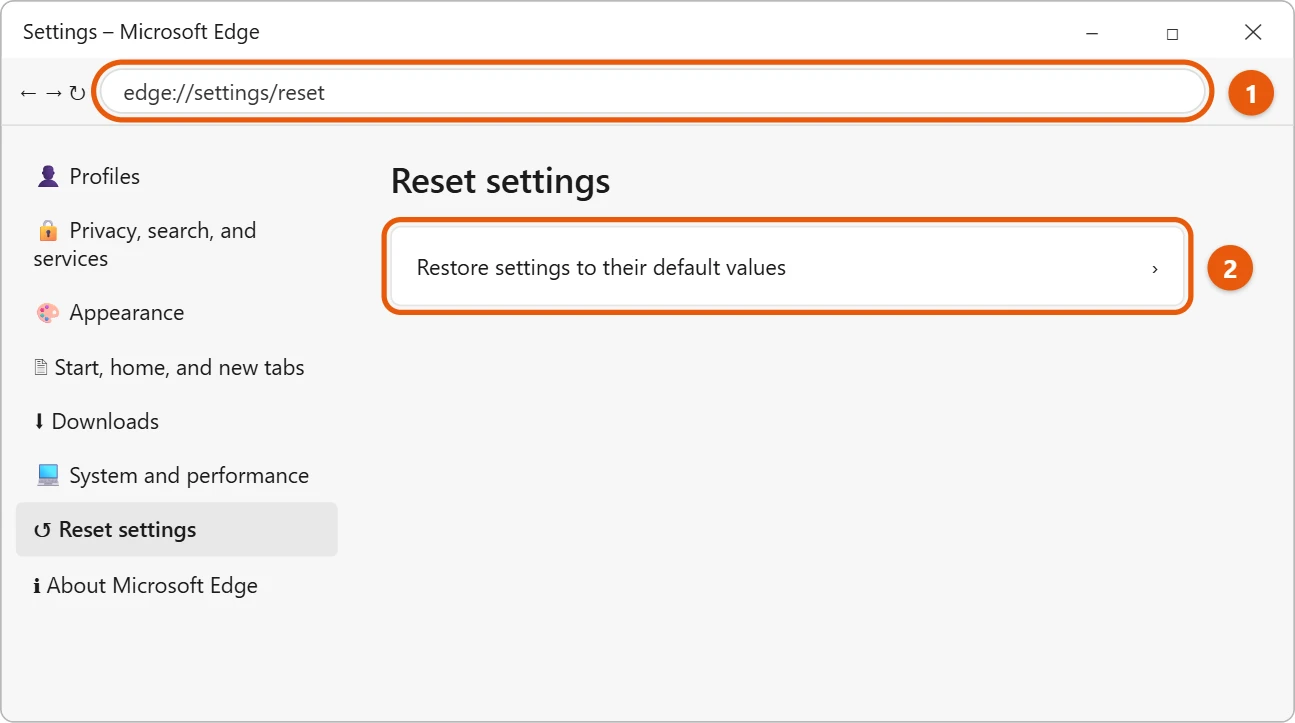
- Read the message, then select Reset.
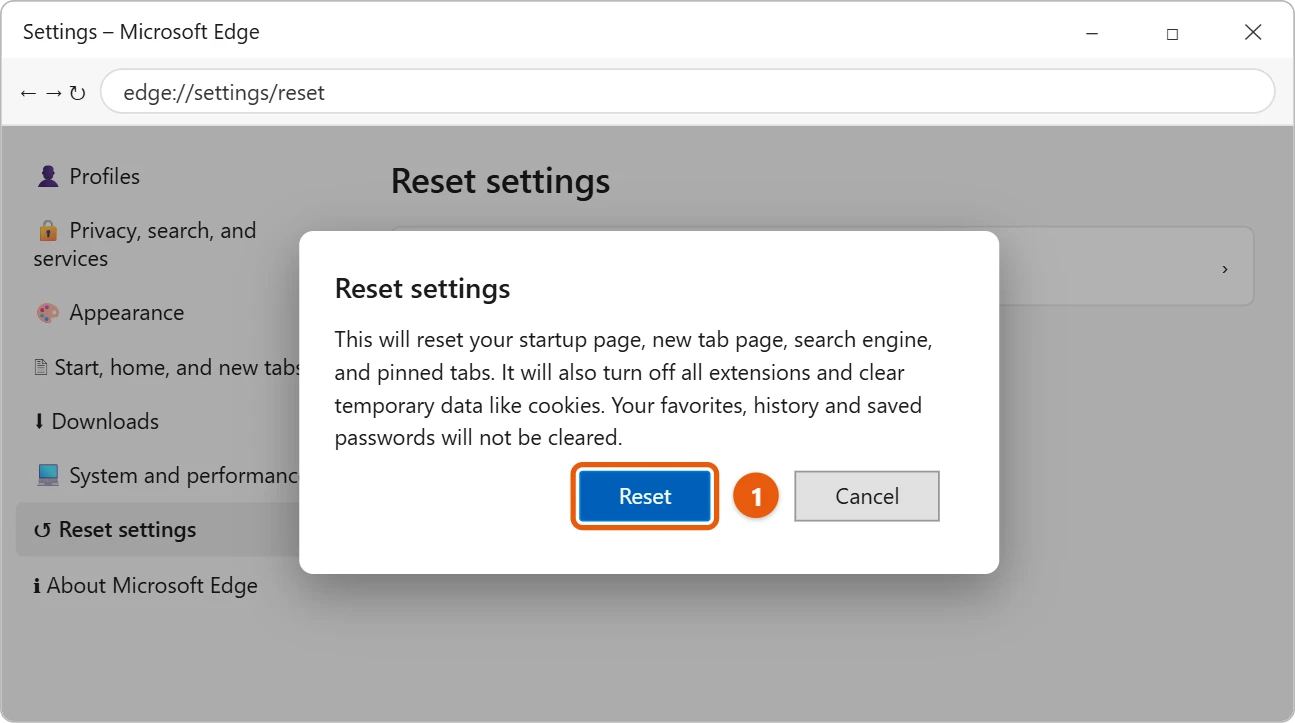
- Turn back on only the extensions you trust. Go to … > Extensions > Manage extensions.
Other browsers
Other browsers have their own reset option in their settings. Search their settings page for reset. The idea is the same: settings go back to normal and extensions are turned off.
Frequently asked questions
Will I have to sign in to websites again?
Probably. A reset clears cookies, so many sites will sign you out. Your saved passwords stay, so signing back in is quick.
The problem came back after the reset. What now?
An extension or a program on the PC may be changing the settings again. Remove extensions you don’t recognize, and run a scan with Windows Security. To just empty stored files, see how to clear cache in Windows 11.
How do I make Edge my default browser, or stop it from being the default?
See how to change the default browser in Windows 11.
The steps match Microsoft’s answer on resetting Edge in Microsoft Q&A. More help is on our Windows Help & Guides page.

Matt Jacobs has been working as an IT consultant for small businesses since receiving his Master’s degree in 2003. While he still does some consulting work, his primary focus now is on creating technology support content for SupportYourTech.com.
His work can be found on many websites and focuses on topics such as Microsoft Office, Apple devices, Android devices, Photoshop, and more.