Last updated on November 17th, 2026 at 03:02 pm
Open File Explorer, go to where you want the folder, and select New > Folder. Type a name and press Enter. The quickest way is Ctrl + Shift + N.
Applies to: Windows 11.
Create a folder in File Explorer
- Press Windows logo key + E to open File Explorer.
- Go to the place where you want the new folder, such as Documents.
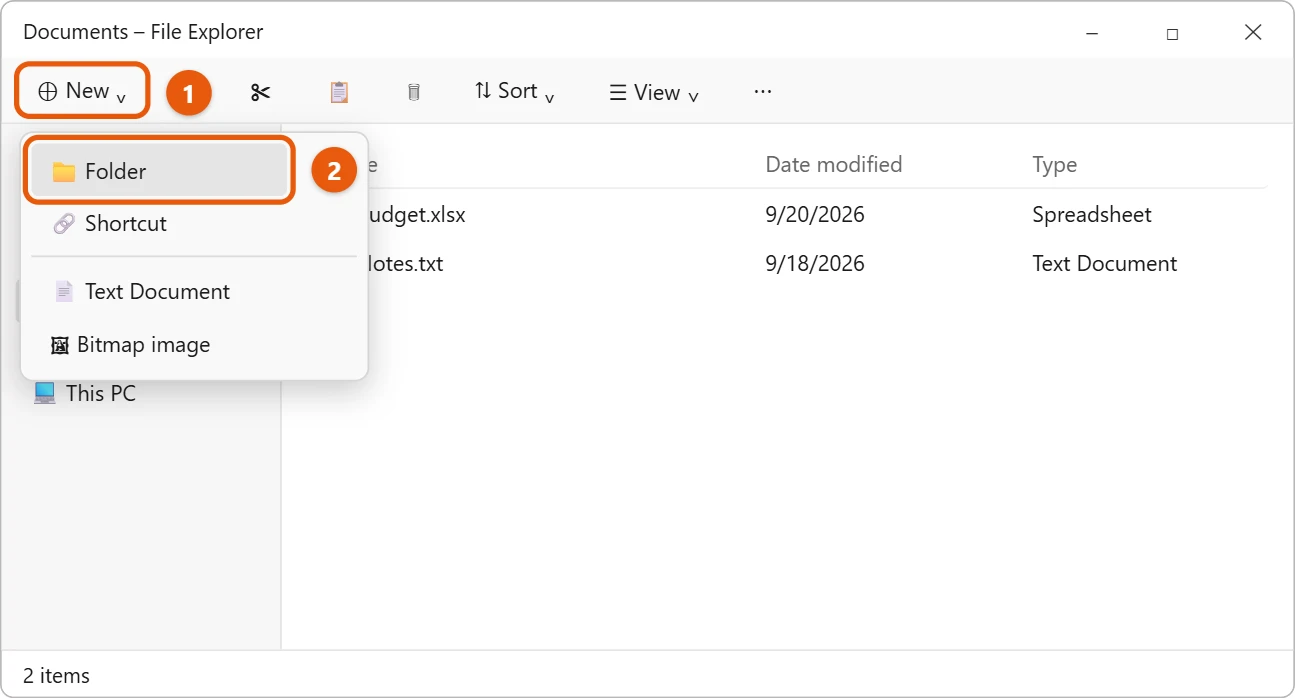
- Select New at the top, then select Folder.
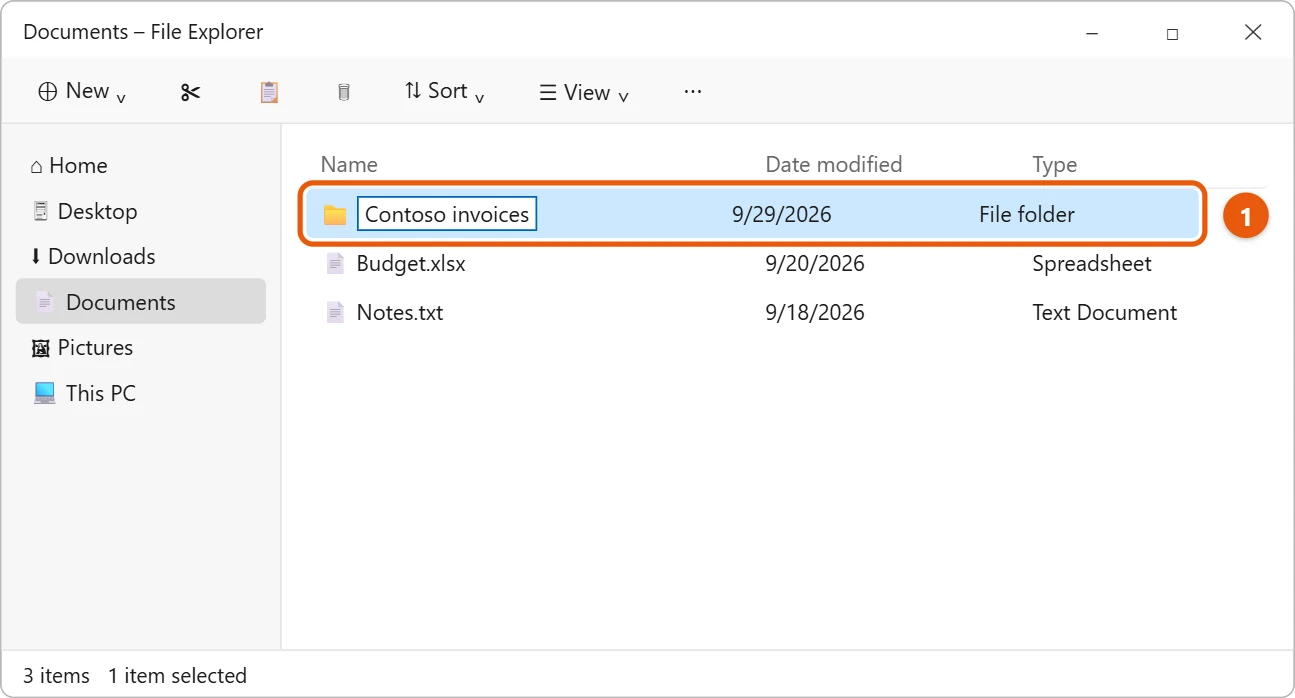
- Type a name for the folder and press Enter.
Other ways
- Keyboard: press Ctrl + Shift + N in File Explorer.
- Right-click: right-click an empty space in the folder or on the desktop, select New > Folder.
- In an app: many Save as windows have a New folder button.
A new folder starts out called New folder, or New folder (2) if that name is taken. If you click away before typing a name, it keeps that name until you rename it.
There’s no single-click New folder button on the Windows 11 toolbar like the one in Windows 10. Ctrl + Shift + N is the fastest replacement.
Can I undo creating a folder?
Yes. Press Ctrl + Z straight away, or select the folder and press Delete to send it to the Recycle Bin.
If a folder you created seems to have disappeared, it may be hidden, and you can show hidden folders in Windows 11 to find it. To send a folder to someone, zip it first.
For a tour of the rest of File Explorer, open File Explorer in Windows.
Rename a folder later
Select the folder and press F2, or right-click it and select the Rename icon. Type the new name and press Enter.
Make folders with a command
Commands are handy when you need several folders, or folders inside folders. Open Terminal, go to the right place with cd, and use mkdir: When the names are already in a spreadsheet, it is quicker to create the folders from an Excel list.
mkdir "Project Files"makes one folder. Use quotation marks when the name has spaces.mkdir January, February, Marchmakes three folders at once in PowerShell. In Command Prompt, leave out the commas.mkdir "2026\Receipts\January"makes all three levels in one go, even if none of them exist yet.
In PowerShell you can also use New-Item -ItemType Directory "Project Files". Some guides add -p to mkdir to make nested folders; that’s a Mac and Linux habit, and in Command Prompt it creates an extra folder called -p. Windows’ mkdir makes the whole path without it.
Is there a limit to how deep folders can go?
By default, the full path, including every folder name and the file name, can’t be longer than 260 characters. If you get “path too long” errors, use shorter folder names or fewer levels.
Pin a folder so it’s easy to find
Right-click the new folder and select Pin to Quick access. It then appears under Quick access on File Explorer’s Home page and in the left pane, wherever you are. To put it on the Start menu instead, select Pin to Start.
If you can’t create a folder
- New is grayed out. You’re looking at a view rather than a real folder, such as Home, This PC, Recent, or a search results list. Open an actual folder, like Documents or a drive, first.
- Windows asks for administrator permission. Places like the top of the C: drive, Program Files, and Windows are protected. Make your folder inside your own user folders instead.
- Windows reports that the folder already exists. Another file or folder in that location has the same name. Pick a different name or check for hidden items.
- An app can’t create a folder, but File Explorer can. Windows Security’s Controlled folder access may be blocking the app. Open Windows Security > Virus & threat protection > Manage ransomware protection and allow the app you trust.
Can I hide a folder?
Yes. Right-click it, select Properties, check Hidden, and select OK. It disappears unless someone turns on View > Show > Hidden items, so it’s for tidiness, not security.
Can I put a password on a folder?
Windows doesn’t have a folder password option. On Windows 11 Pro, you can encrypt it: right-click the folder, select Properties > Advanced, and check Encrypt contents to secure data. Only your account can then open the files. On any edition, you can also put files in a password-protected ZIP file using a free tool such as 7-Zip.

Matt Jacobs writes and maintains the guides on Support Your Tech, which he started in 2017. He spent most of his career keeping small-business PCs running and still takes the occasional consulting job, so the steps here come from fixing the same problems on other people’s computers. Each guide follows Microsoft, Apple and Google’s own documentation and is updated when the steps change. Screenshots marked “Recreated” are illustrations of the real screens.