Last updated on November 12th, 2026 at 04:08 pm
With YouTube Premium, sign in to youtube.com on Windows 11 in Edge, Chrome, Firefox or Opera, open the video and click Download under the player. It then plays offline from the browser’s Downloads page, as YouTube’s page on watching videos offline on a computer with YouTube Premium describes. Your own uploads can be saved as a real MP4 file for free from YouTube Studio. On Windows 10? See the Windows 10 version of these steps.
Pick the right method
There are three supported ways to get YouTube videos onto your PC, and which one you use depends on who made the video and what you want to do with it.
- Someone else’s video, to watch offline: use YouTube Premium downloads. You get offline playback inside youtube.com, not a file.
- Your own upload, as a file you can edit or back up: use YouTube Studio. You get an MP4 in your Downloads folder.
- Every video on your channel at once: use Google Takeout. You get one or more archive files with your uploads.
YouTube’s Terms of Service only allow downloads through features YouTube provides (or with written permission from YouTube and the rights holders), so this guide doesn’t cover downloader websites, apps or extensions. The risks section explains why. Streaming services set their own rules, and Disney Plus movies can’t be downloaded on Windows 11 at all, only on phones and tablets.
Is there a free way to watch YouTube offline on a PC?
Not for other people’s videos. On a computer, offline viewing is a Premium feature, and YouTube may offer new members a free trial. Your own uploads are free to download from Studio.
Method 1: Download videos with YouTube Premium
You need an active YouTube Premium membership in a country where it’s offered, and one of the four supported browsers: Edge (built into Windows 11), Chrome, Firefox or Opera. YouTube says it hopes to add other browsers later. To open YouTube in its own window from Start instead of a browser tab, see how to install YouTube on Windows 11 as an app.
- Sign in. Open your browser, go to youtube.com and click Sign in in the top-right corner. Use the Google account that has Premium. Your profile picture replaces the Sign in button when it works.
- Open the video. Search for it or click it from your feed so it opens on its watch page (the page with the player and the title underneath).
- Click Download. The Download button is in the row of buttons below the player. On a narrow window, it may be tucked behind the three-dot More button at the end of that row. A progress indicator appears while the video saves, and the icon turns solid when it’s finished. If your connection drops, the download resumes on its own once you’re back online.
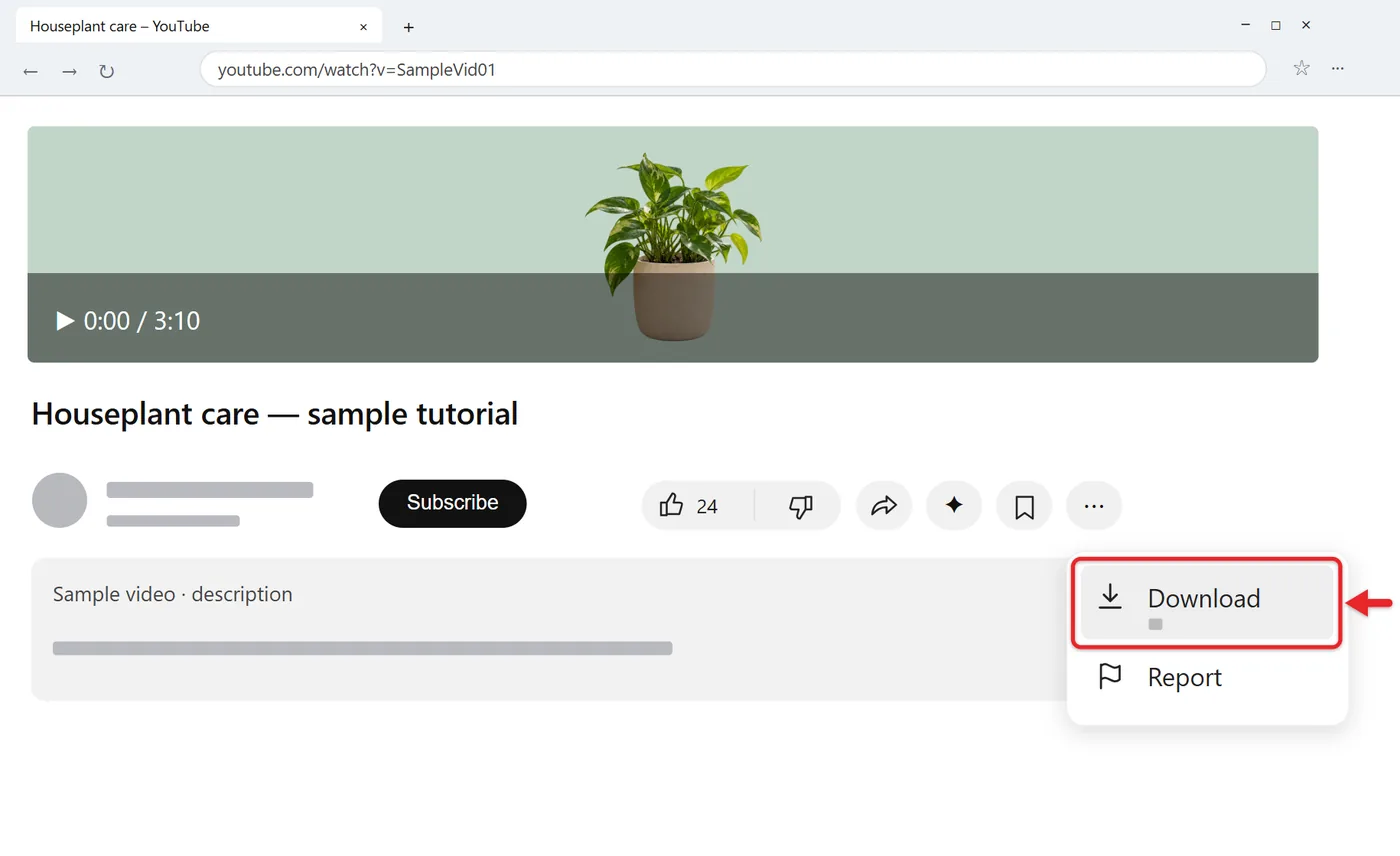
- Find your downloads. Click Downloads in the left menu. If you only see icons, click the three-line menu button in the top-left corner first. Every video you saved in this browser is listed there.
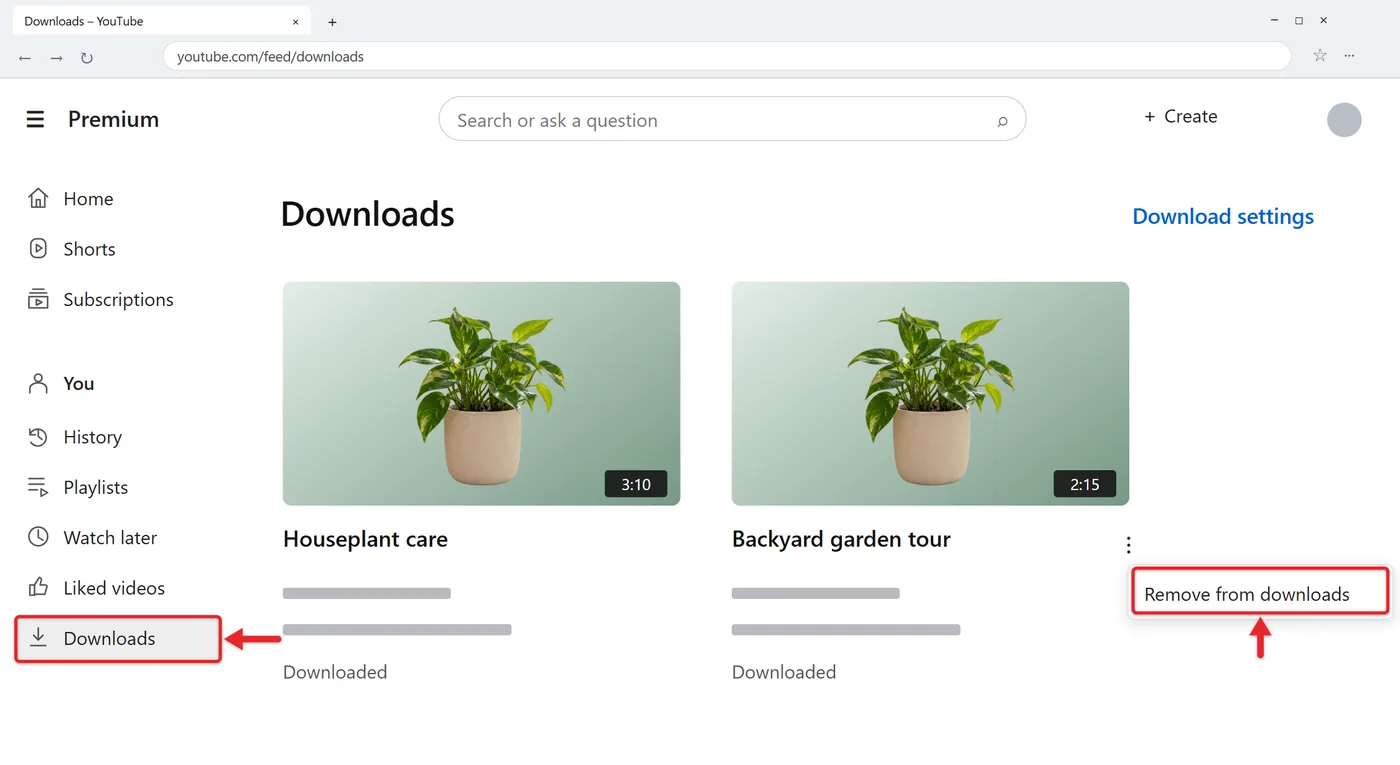
- Watch offline. Open youtube.com in the same browser and profile while offline and go to Downloads. Click any video to play it.
Comments and likes still need a connection, so you can’t interact with a video until you’re back online.
Set the download quality
Higher quality takes longer to download and uses more space on your drive. To choose a default, click your profile picture, select Settings, then Downloads, and change Download quality. On a laptop with a small SSD, a lower setting lets you keep more videos; the Windows 11 disk space cleanup steps help if you’re running short.
Remove downloads
- One video from its watch page: click Downloaded under the player, then Delete.
- One video from the list: on the Downloads page, click the three-dot More button next to it, choose Remove from downloads and confirm with Delete.
- Everything: on the Downloads page, open Download settings, choose Delete all downloads and confirm.
What Premium downloads can’t do
- They aren’t files. Downloads are stored encrypted for YouTube and only play on youtube.com in that browser. You can’t open them in the Media Player app, edit them or copy them to a USB drive.
- They need a check-in. Videos play offline for up to 29 days. After that, connect to the internet so YouTube can check whether the video has changed or been removed. In some countries and regions the offline window is only 48 hours.
- They belong to one browser. A video saved in Edge doesn’t appear in Chrome. Clearing site data for youtube.com, or signing out, can also remove them.
- Not every video qualifies. The Download button doesn’t appear when downloads aren’t available for that video.
- Travel matters. If you travel somewhere Premium isn’t offered, you lose membership benefits, but videos you downloaded beforehand stay available offline for 30 days.
YouTube also sells a cheaper Premium Lite plan in some countries, and its help page now lists downloads for most videos (not Shorts or music). Google’s page doesn’t say whether those downloads work in a desktop browser, so check for the Download button before you rely on it.
Can I move downloads from my phone to my PC?
No. Downloads in the YouTube mobile app are stored encrypted on that phone and only play in the app there. Download the video again on your PC. Downloads don’t change your account history, and if you also watch on your phone you can remove old YouTube searches on an iPhone from the app’s Manage all history screen.
Method 2: Download your own videos from YouTube Studio
This is the only way to get an actual video file of an upload, and it’s free. It works only for videos on a channel you own or manage.
- Go to studio.youtube.com and sign in with the account that owns the channel.
- Click Content in the left panel. Your uploads appear in a list.
- Point at the video you want, click the three-dot menu that appears (labeled Options) and choose Download.
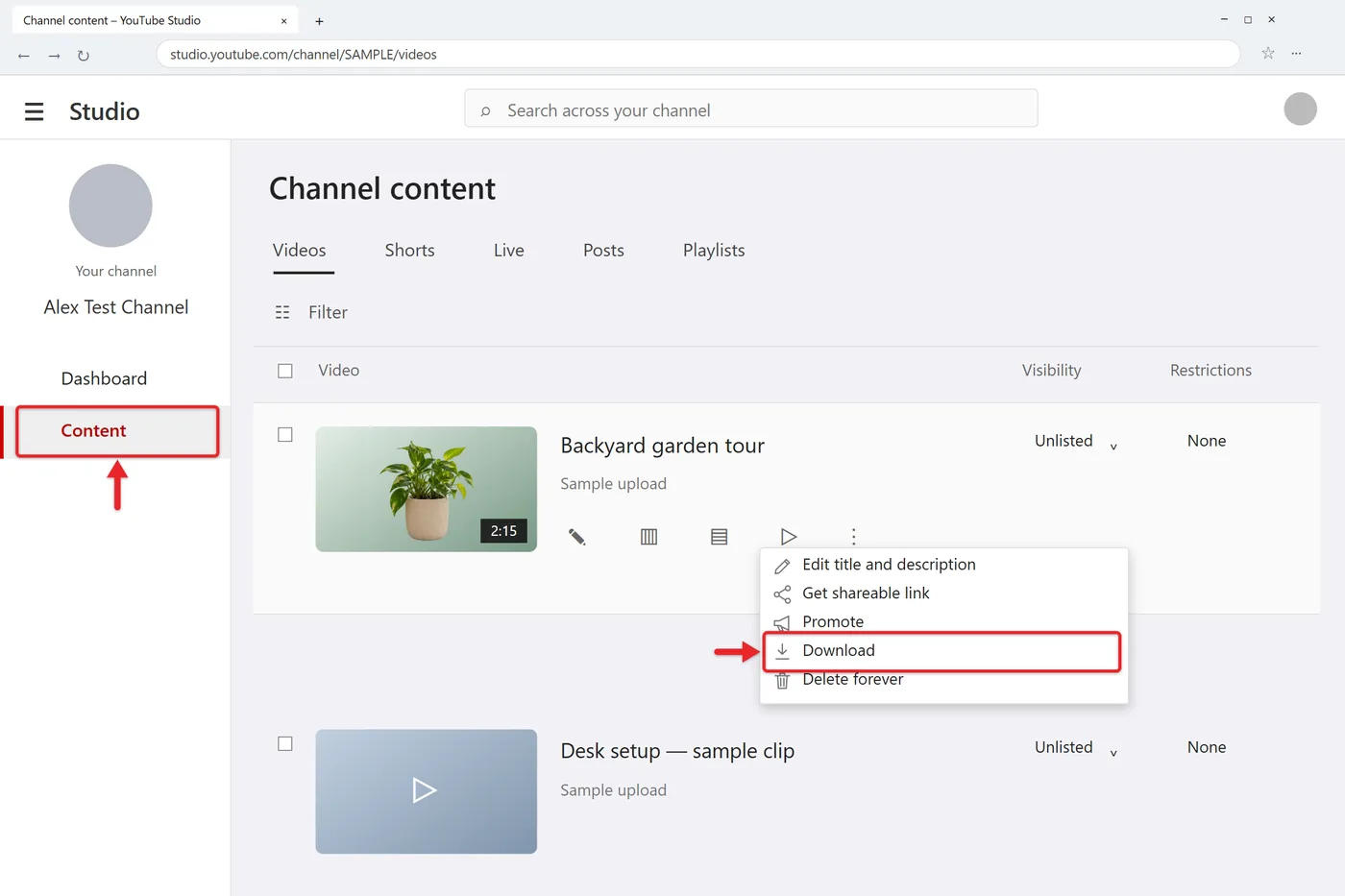
- Windows saves an MP4 file to your Downloads folder. Open File Explorer and check there, or click the download notice in your browser.
Things to know before you start, from YouTube’s help page on downloading your own uploads:
- Files download at 720p or 360p, depending on the video’s size. That’s fine for a quick backup, but it may be lower than the original you uploaded. For full quality, keep your original file or use Takeout.
- You can download each video up to five times per day. The option returns after 24 hours.
- Download isn’t available for a removed video, a video with a copyright or Community Guidelines strike, or a video that uses a preapproved audio track.
- If you blurred or trimmed a video in Studio, downloading it and uploading it again is one way to publish those edits as a new video.
Method 3: Export your whole channel with Google Takeout
Takeout is better when you want every upload, for example before closing a channel. Google says Takeout delivers YouTube videos in their original format, or as MP4 files (H.264 video with AAC audio).
- Go to takeout.google.com and sign in. Products you use are already selected, so uncheck everything except YouTube and YouTube Music.
- Under YouTube, use the All YouTube data included button to limit the export to videos if you don’t need history, comments and other data. Select Next step.
- Choose how to receive it: an email download link, or Google Drive, Dropbox, OneDrive or Box.
- Choose .zip as the file type (Windows 11 opens it without extra software; .tgz may need another app) and a maximum archive size. The 50 GB option reduces the chance of your export being split into several files.
- Select Create export. You may be asked for your password or a 2-Step Verification code.
The export can take minutes or days depending on how much you’ve uploaded, though most arrive the same day. The download link expires after about seven days, and each archive can be downloaded up to five times. Google’s Takeout help page has the full details.
If some videos are missing, your channel may belong to a Brand Account. Sign in with the Google account that manages it, switch to the Brand Account in Takeout and export again.
Why downloader sites and apps are a bad idea
Search results for this topic are full of converter websites, desktop downloaders, command-line tools and browser extensions that promise MP4 or MP3 files from any link. Here’s why this guide leaves them out.
- They break YouTube’s terms. The Terms of Service forbid downloading content except through features YouTube offers or with prior written permission. Accounts that break the terms can be restricted.
- Copyright still applies. Saving someone else’s video without permission can infringe the creator’s rights, whatever a tool’s website says about “personal use.”
- Many are unsafe. Free converter sites are often packed with misleading ads and redirects, and some installers bundle extra programs that are easy to accept by accident.
- They break often. YouTube changes its site regularly, and these tools can stop working without warning.
If you’ve already installed one and your browser now shows pop-ups or a new homepage, uninstall it from Settings > Apps > Installed apps, remove any extension you don’t recognize, and run a malware scan in Windows Security.
For other legitimate options, ask the creator for the original file (many share clips for school or work), check whether a course or talk is sold for download on the creator’s own site, or use licensed stock footage for projects. Recording your screen is fine for showing your own work, and Windows 11 lets you record the screen with Snipping Tool, but don’t use it to copy other people’s videos.
- There’s no Download button. Check that your profile picture shows the Premium account, that you’re in Edge, Chrome, Firefox or Opera, and that the window is wide enough (or look under More). If other videos show the button, downloads simply aren’t available for that one.
- Downloads disappeared. They may have passed the 29-day offline limit, been removed by the creator, or been wiped when the browser’s site data was cleared. Go online and download again.
- A video won’t play offline. Make sure you’re in the same browser, the same browser profile and the same Google account you used to download.
- A download is stuck. Check your connection and free space in Settings > System > Storage, then remove the download and start it again.
- Studio’s Download option is missing or greyed out. The video may still be processing, have a strike, use a preapproved audio track, or have hit the five-downloads-per-day limit.
If you have Premium, download the videos you want for your next trip in Edge or Chrome while you’re on Wi-Fi, then check the Downloads page to confirm everything saved. If you’re a creator, run a Takeout export so you have a full backup of your channel.

Matt Jacobs writes and maintains the guides on Support Your Tech, which he started in 2017. He spent most of his career keeping small-business PCs running and still takes the occasional consulting job, so the steps here come from fixing the same problems on other people’s computers. Every guide is checked on his own Windows 11, Windows 10, Mac, iPhone and iPad before it goes up.