To install Steam on Windows 11 or Windows 10, open Valve’s Steam download page, click Install Steam, run the downloaded SteamSetup.exe, click Yes on the permission prompt, and click through the setup wizard. Steam updates itself the first time it opens, then asks you to sign in or create a free account. On a normal connection the whole job takes about five minutes.
Applies to: Windows 11 (including version 26H2) and 64-bit Windows 10, with the current Steam desktop client. The steps are the same on both versions; the few places where Windows 10 differs are called out as you go. Valve’s own short version is on its Installing Steam support page.
Before you start
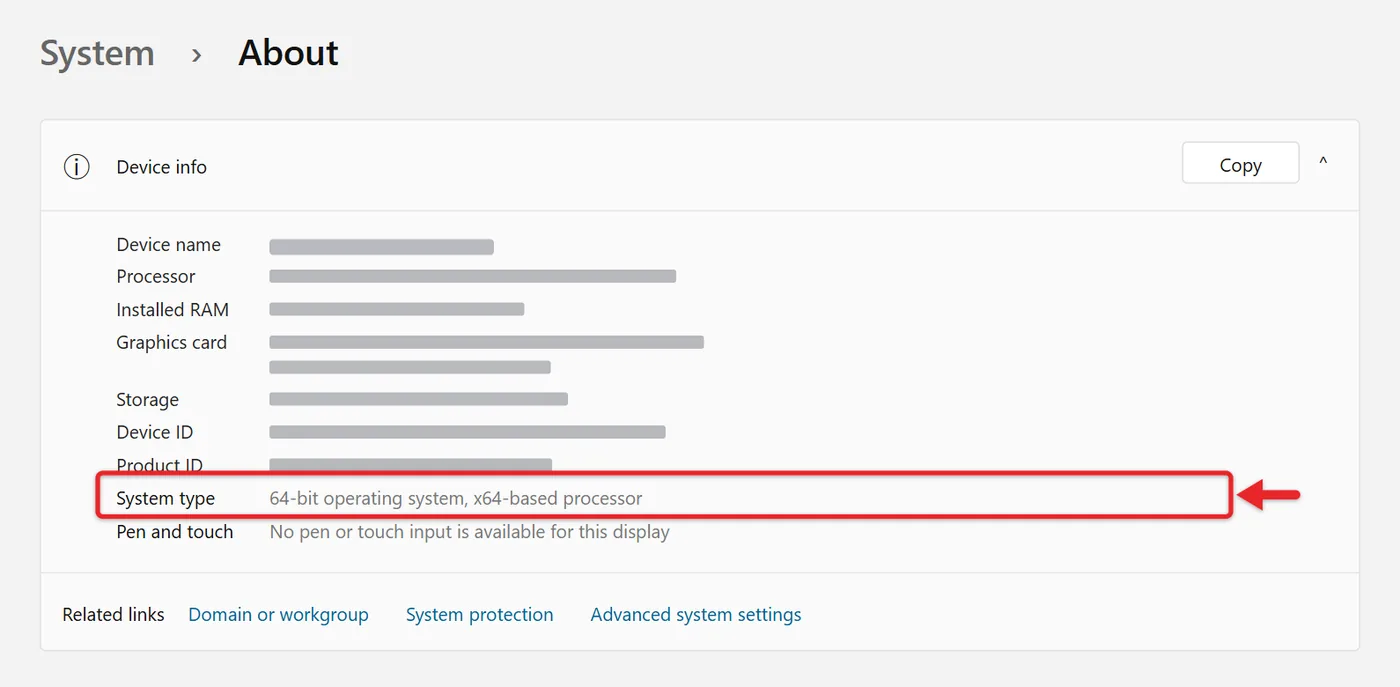
- 64-bit Windows. Windows 11 is always 64-bit. Windows 10 came in 32-bit and 64-bit versions, and Steam ended support for 32-bit Windows on January 1, 2026 (see Valve’s Windows 32-bit OS support page). To check, open Settings > System > About and look at System type under Device specifications. It should say “64-bit operating system.” There’s more detail in checking whether Windows 10 is 32-bit or 64-bit.
- Not in S mode. S mode only installs apps from Microsoft Store, and Steam isn’t one of them. Look for “S mode” on the Activation page: Settings > System > Activation on Windows 11, or Settings > Update & Security > Activation on Windows 10. Switching out is free but can’t be undone, according to Microsoft’s S mode FAQ. Follow the steps to switch out of S mode in Windows 11 if you need to.
- An administrator account, or the password for one. The installer writes to the Program Files folder, so Windows asks for permission.
- Free space. Steam itself needs a few gigabytes once it has updated. Games are much bigger, often 50 GB to more than 150 GB each, so check the size on a game’s store page before you buy.
- Download only from Valve. Steam is free. Sites that offer bundled “Steam installers,” cracked clients or free game keys are a common way to spread malware and steal accounts.
A note for Windows 10 users
Steam still installs and runs on 64-bit Windows 10, and the steps below are identical. Keep in mind that Windows 10 reached end of support on October 14, 2025. Only PCs enrolled in Extended Security Updates still get security fixes, and the consumer program runs through October 12, 2027. Valve sets its own minimum Windows version and can raise it, so if you plan to stay on Windows 10 for a long time, check Steam’s requirements now and then.
Install Steam from Valve’s website
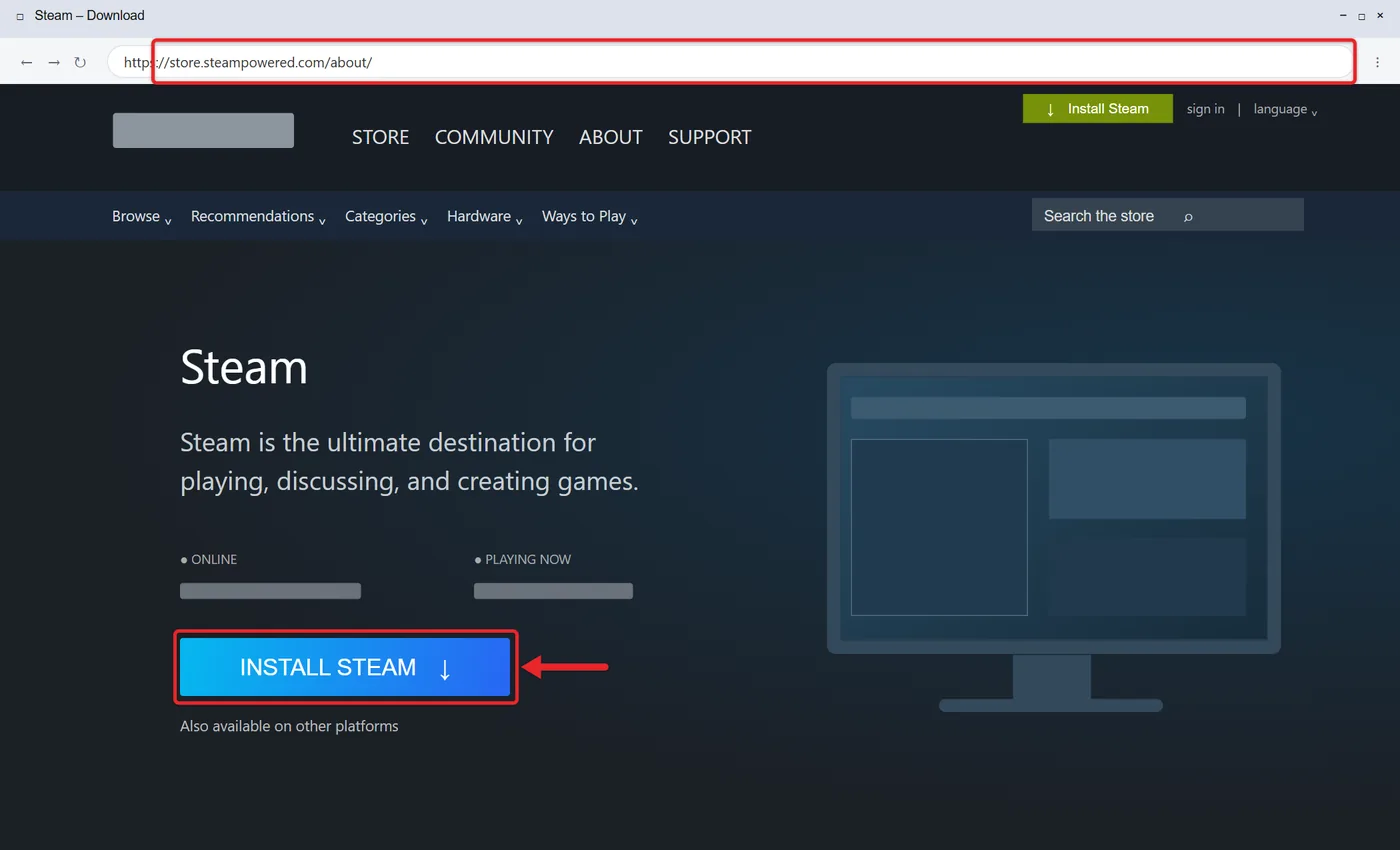
- Open the download page. In Edge, Chrome or any other browser, go to store.steampowered.com/about. Check the address bar before you click anything: the site should be store.steampowered.com.
- Download the installer. Click the green Install Steam button. Your browser saves SteamSetup.exe to your Downloads folder. The file is only a few megabytes because it fetches the rest of Steam later.
- Run it. Click the file in your browser’s download list, or open File Explorer, go to Downloads and double-click SteamSetup.exe.
- Approve the prompt. A User Account Control box asks whether to let the app make changes. The verified publisher should be Valve. Click Yes. On a standard account, an administrator types their password here.
- Start the wizard. The Steam Setup window opens. Click Next, choose your language, and click Next again.
- Choose the install folder. The default is
C:\Program Files (x86)\Steam. Keep it unless your C: drive is nearly full. Games don’t have to live in this folder, because you can add a game library on another drive later.
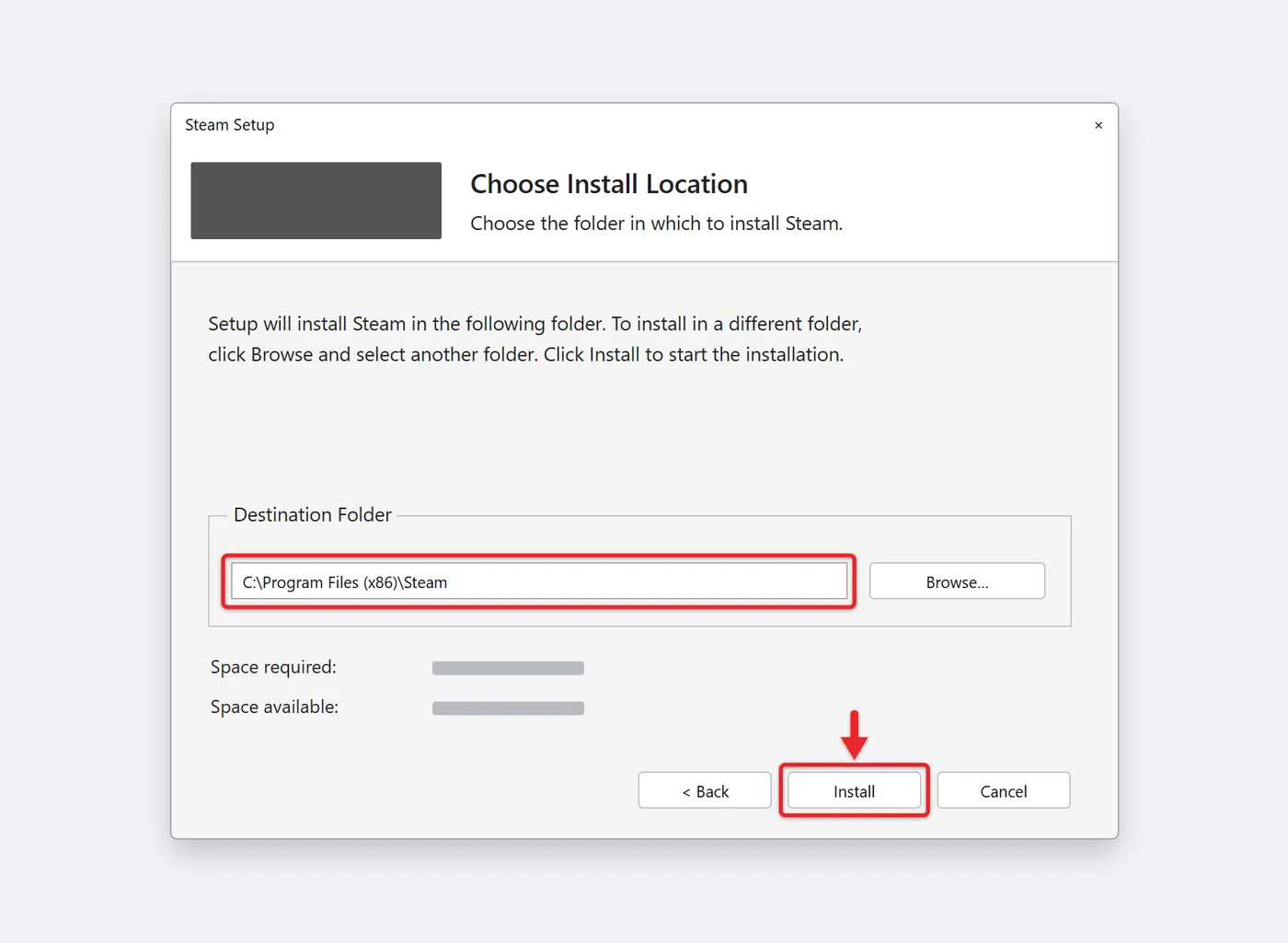
- Finish. Click Install, wait a few seconds, then leave Run Steam checked and click Finish.
You should now see a small “Updating Steam” window. That’s expected; the next section covers it.
Alternative: install Steam with winget
If you set up PCs often, Windows Package Manager can do the same job from a command line. It’s part of App Installer on Windows 11 and on Windows 10 version 1809 or later, according to Microsoft’s winget documentation.
- Right-click Start and choose Terminal (Windows 11) or Windows PowerShell (Windows 10).
- Type
winget install -e --id Valve.Steamand press Enter. - Type Y if winget asks you to accept the source agreement, and click Yes on the User Account Control prompt.
The winget package comes from a community-maintained catalog rather than from Valve, so for a one-time install the website method above is the simpler and more direct choice. Either way, you end up with the same Steam client, and it keeps itself updated afterward.
Let Steam update and sign in
The first launch downloads the full client. Leave the “Updating Steam” window alone until it closes; it can take a minute or two. When it’s done, the sign-in window appears.
- You have an account: enter your account name and password, or scan the QR code with the Steam Mobile app on your phone.
- You’re new to Steam: click Create a free account. A sign-up form opens in your browser. You’ll enter an email address, confirm it from your inbox, and pick an account name and password. Then go back to Steam and sign in.
The first time you sign in on a new PC, Steam Guard asks for a code from your email or from the Steam Mobile app. This step protects your account if someone else learns your password. If you plan to save a payment method, moving Steam Guard to the mobile app is worth the extra minute.
Install your first game
- Click Store at the top of Steam to buy a game or claim a free-to-play one, or click Library to see games you already own. Looking for something nostalgic? The Sims: Legacy Collection is on Steam as well, and the walkthrough for getting The Sims 1 running on Windows 10 explains the EA account you’ll need to link.
- Select the game and click Install.
- Choose a drive. If you have an SSD, use it; loading times are much shorter than on a hard drive. Click Install again.
- Watch progress under Downloads at the bottom of the Steam window. When the button changes to Play, the game is ready.
To keep games on a second drive, open Steam > Settings > Storage, add the drive and make it the default. Games you bought on an old PC show up in your Library as soon as you sign in, because purchases belong to your account. If you ever need the game files, here’s how to find the Steam folder on Windows 11 (the locations are the same on Windows 10).
How to tell it worked
- Steam appears in the Start menu, and a Steam icon shows in the notification area near the clock while it’s running.
- Steam opens to the Store or your Library with your account name in the top-right corner, not the sign-in window.
- A small free game downloads and the button switches to Play.
Settings worth checking after you install
In Steam
| Setting | Where | Why change it |
|---|---|---|
| Run Steam at startup | Steam > Settings > Interface | Turn it off if you don’t play every day. Windows starts a little faster. |
| Download region | Steam > Settings > Downloads | Pick the nearest region if downloads are slow. |
| Download restrictions | Steam > Settings > Downloads | Limit bandwidth or schedule updates for off-hours. |
| Steam Overlay | Steam > Settings > In Game | Shift + Tab opens chat and screenshots in games. Turn it off for a game that stutters. |
In Windows
| Setting | Windows 11 | Windows 10 |
|---|---|---|
| Game Mode | Settings > Gaming > Game Mode | Settings > Gaming > Game Mode |
| Graphics preference per game (laptops with two GPUs) | Settings > System > Display > Graphics | Settings > System > Display > Graphics settings |
| Auto HDR | Settings > System > Display > HDR | Not available |
| Power mode while plugged in | Settings > System > Power & battery | Battery icon slider, or Settings > System > Power & sleep |
Also get the latest graphics driver from NVIDIA, AMD or Intel, since the driver Windows Update installs is often older. Updating graphics drivers walks through each option. A game that won’t fill the screen usually needs its display mode changed; see making a game full screen on Windows 11.
Troubleshooting
The installer won’t open or closes right away
- A message saying this mode of Windows only runs verified apps from the Store: the PC is in S mode. See the S mode note in Before you start.
- “Windows protected your PC” (blue box): click More info, check that the publisher is Valve, then click Run anyway. If the publisher is anything else, delete the file and download it again from Valve’s page.
- Blocked by Smart App Control (Windows 11 only) or antivirus: check Windows Security > App & browser control, or your antivirus quarantine list. Restore the file only if you got it from store.steampowered.com.
- Nothing happens: download a fresh copy, right-click it and choose Run as administrator.
“Steam needs to be online to update”
Steam can’t reach Valve’s servers. Restart your router, turn off any VPN or proxy, and allow Steam through the firewall in Windows Security > Firewall & network protection > Allow an app through firewall. Then open Steam again.
Steam is stuck on “Updating” or keeps reinstalling itself
Close Steam completely (right-click its icon near the clock and choose Exit Steam), restart the PC, and open Steam again. If the update still stalls, a security app may be blocking files in the Steam folder. Add an exception for that folder in your antivirus, then try again.
Steam won’t update on a 32-bit Windows 10 PC
Steam no longer supports 32-bit Windows, so it can’t install or update normally there. Microsoft notes in its 32-bit and 64-bit Windows FAQ that moving from 32-bit to 64-bit requires a clean install, which erases the drive. Back up your files first. If the PC’s processor is 64-bit capable, you can then install 64-bit Windows 10 or, if the hardware qualifies, Windows 11.
A game won’t launch after installing
Right-click the game in your Library and choose Properties > Installed Files > Verify integrity of game files. If that doesn’t fix it, update your graphics driver, then try running the Steam game as administrator as a test.
How to undo it
To remove Steam, go to Settings > Apps > Installed apps on Windows 11 or Settings > Apps > Apps & features on Windows 10, find Steam and choose Uninstall. This also deletes the games stored in the Steam folder, so copy the steamapps folder somewhere safe first if you want to keep them. Your account and purchases stay with Valve. The full process, including saves and leftover files, is in uninstalling Steam.
Frequently asked questions
Does Steam cost anything?
No. The Steam app and an account are free. You pay only for games, add-ons and in-game items, and the Store has a large free-to-play section.
Is Steam in the Microsoft Store?
No. Valve distributes the Windows version from its own website. That’s why a PC in S mode can’t install it, and why any “Steam” listing elsewhere deserves suspicion.
Will my games and saves come back on a new PC?
Your purchases show up in your Library as soon as you sign in. You’ll need to download the games again, or you can copy the old steamapps folder across to skip the download. Games that use Steam Cloud bring their saves back on their own; others keep saves in your Documents or AppData folders, so check the game’s store page.
Can I play offline?
Many games work offline once they’re installed and you’ve signed in on that PC at least once. Games that need a server, such as most multiplayer titles, won’t.
Does Steam work on Windows 11 laptops with Arm (Snapdragon) chips?
Steam installs on Windows on Arm, and games built for regular PCs run through Windows’ built-in emulation. Results vary by game: many play fine, while some, especially those with kernel-level anti-cheat, may not start. Check a game’s support or compatibility notes before buying it for an Arm PC.
Once Steam is set up, connecting a controller is a natural next step. Steam Input makes many controllers work in games, and connecting a PS5 controller to Windows 11 shows how. If you have a Steam Deck, you can also install Windows 11 on the Steam Deck.

Matt Jacobs writes and maintains the guides on Support Your Tech, which he started in 2017. He spent most of his career keeping small-business PCs running and still takes the occasional consulting job, so the steps here come from fixing the same problems on other people’s computers. Every guide is checked on his own Windows 11, Windows 10, Mac, iPhone and iPad before it goes up.