To remove a printer in Windows 10, select Start > Settings > Devices > Printers & scanners. Select the printer, select Remove device, and then select Yes. To remove its driver too, use Print server properties on the same page.
Applies to: Windows 10. Checked against Microsoft Support on September 27, 2026.
Remove the printer
- Select Start > Settings > Devices > Printers & scanners.
- Select the printer you want to remove.
- Select Remove device, then Yes.
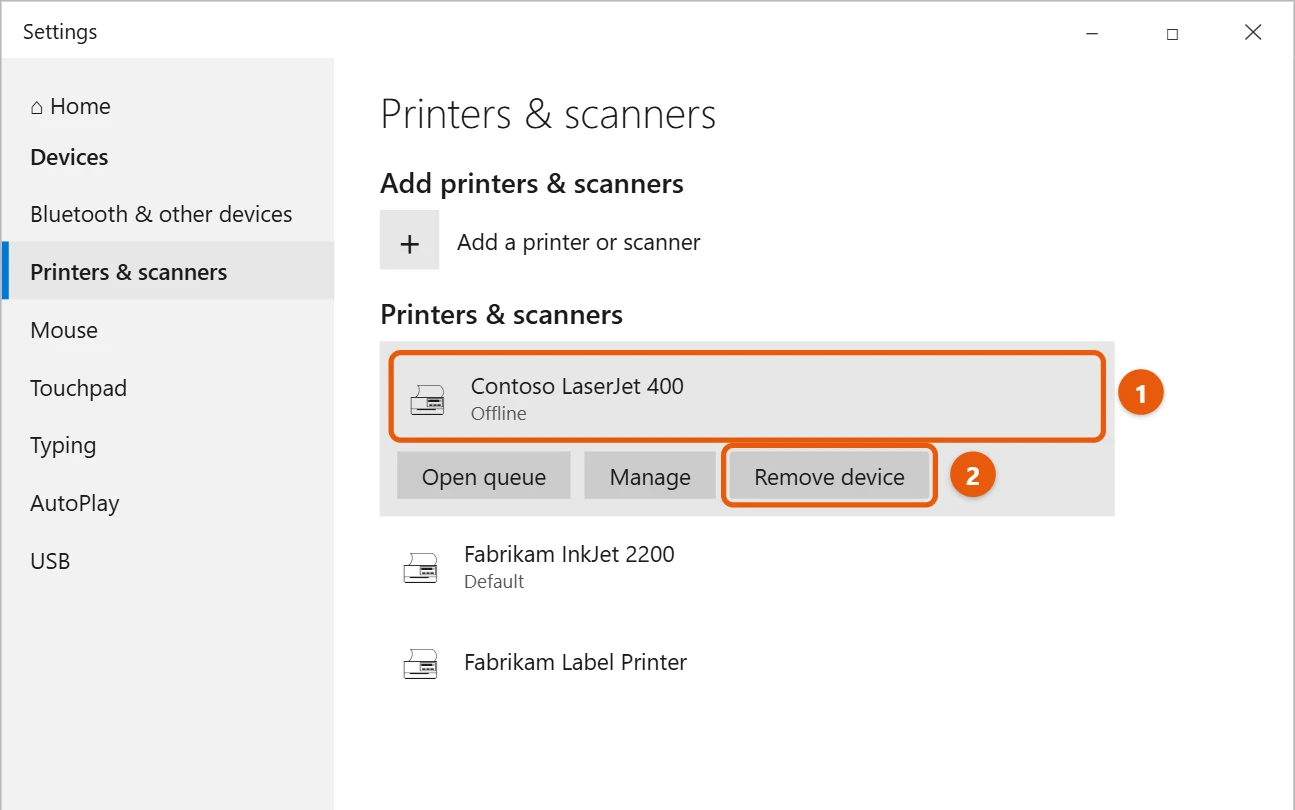
If it won’t go away, cancel any stuck print jobs first: select the printer, select Open queue, then Printer > Cancel All Documents.
You can also remove a printer in Control Panel: go to Hardware and Sound > Devices and Printers, right-click the printer, and select Remove device.
Remove the printer’s driver
Removing a printer leaves its driver on the PC. To remove the driver too:
- On the Printers & scanners page, select Print server properties under Related settings.
- Select the Drivers tab, then Change Driver Settings if it’s there.
- Select the driver and select Remove.
- Choose Remove driver and driver package, and select OK.
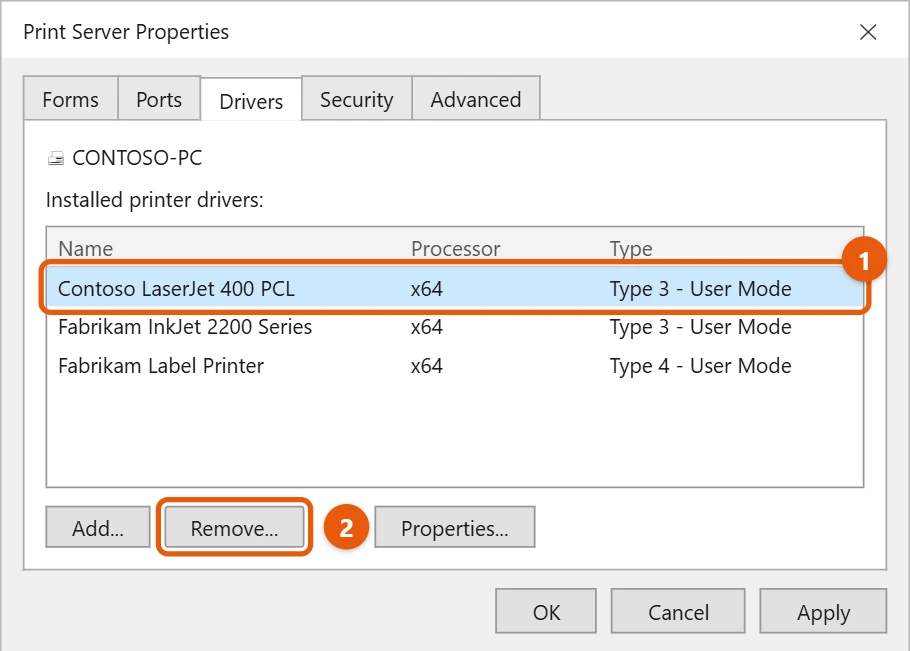
If Windows says the driver is in use, restart the PC and try again.
Stop a network printer from coming back
Windows can add network printers by itself. To stop that, open Control Panel > Network and Internet > Network and Sharing Center > Change advanced sharing settings, and clear Turn on automatic setup of network connected devices.
Frequently asked questions
How do I add the printer again?
See how to add a printer in Windows 10.
Should I remove the printer to fix a driver problem?
It can help. After removing it, install the latest driver. See how to install or update printer drivers in Windows 10.
My printer shows as offline. Should I remove it?
Try the other fixes first. See how to get a printer back online in Windows 10.
To see a list of what was printed, see how to check print history in Windows 10.
On Windows 11, see how to remove a printer in Windows 11.
Microsoft’s reference is Add or install a printer in Windows (Remove a printer). More help is on our Windows Help & Guides page.

Matt Jacobs has been working as an IT consultant for small businesses since receiving his Master’s degree in 2003. While he still does some consulting work, his primary focus now is on creating technology support content for SupportYourTech.com.
His work can be found on many websites and focuses on topics such as Microsoft Office, Apple devices, Android devices, Photoshop, and more.