To use OneDrive on Windows 10, open the OneDrive app from the Start menu and sign in with your Microsoft account. A OneDrive folder appears in File Explorer. Anything you save there syncs to the cloud automatically, so you can open it on other devices or at OneDrive.com.
Applies to: Windows 10. Checked against Microsoft Support on September 27, 2026.
Set up OneDrive
- Select Start, type OneDrive, and open it. If it’s not installed, download it from Microsoft. See how to reinstall OneDrive on Windows 10.
- Sign in with your Microsoft account, or a work or school account.
- On This is your OneDrive folder, select Next to keep the usual location. Select Change location only if you want it on another drive, because this is the best time to change it.
- Finish the setup screens.
You’ll see a cloud icon near the clock on the taskbar. Select it to check sync progress.
Sync files
Open File Explorer and select OneDrive on the left. Save or move files into this folder to sync them. When you add, change, or delete a file here, the same change happens in the cloud, and the other way round. See how to open File Explorer in Windows 10.
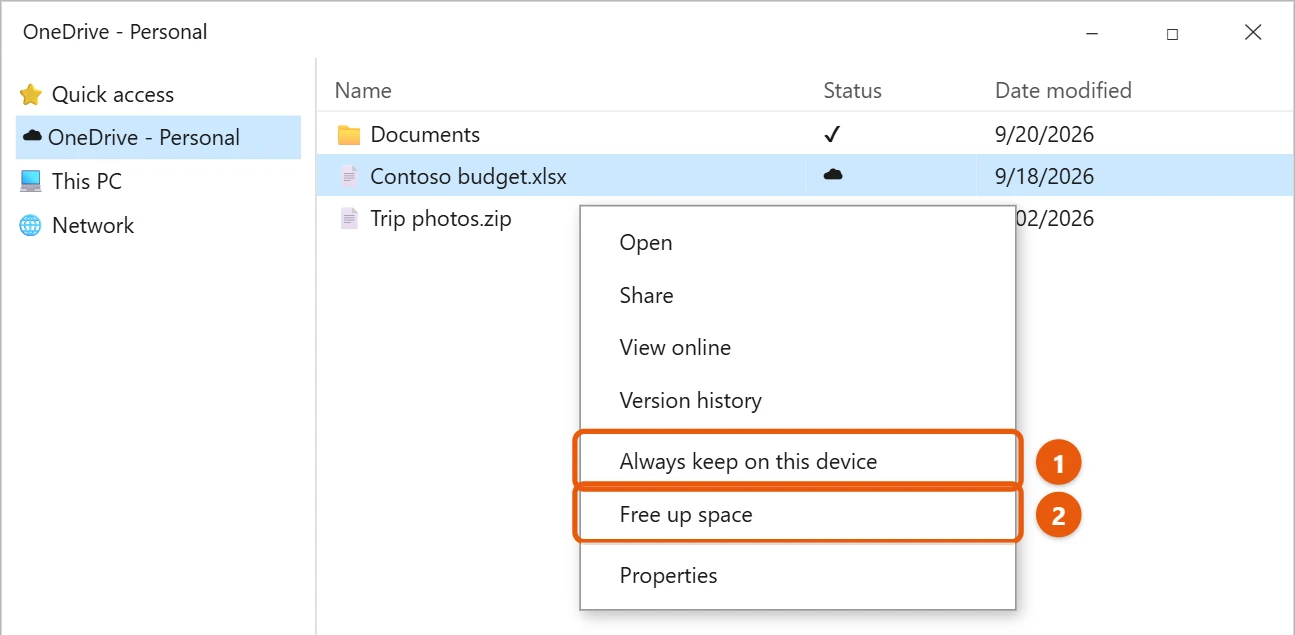
The Status column shows where each file is:
- Cloud icon: online-only. It opens when you’re connected to the internet.
- Green check mark: available on this PC, even offline.
Free up space with Files On-Demand
Right-click a file or folder in your OneDrive folder and choose:
- Always keep on this device to download it and keep it offline.
- Free up space to remove the local copy but keep it in the cloud.
Back up your Desktop, Documents, and Pictures
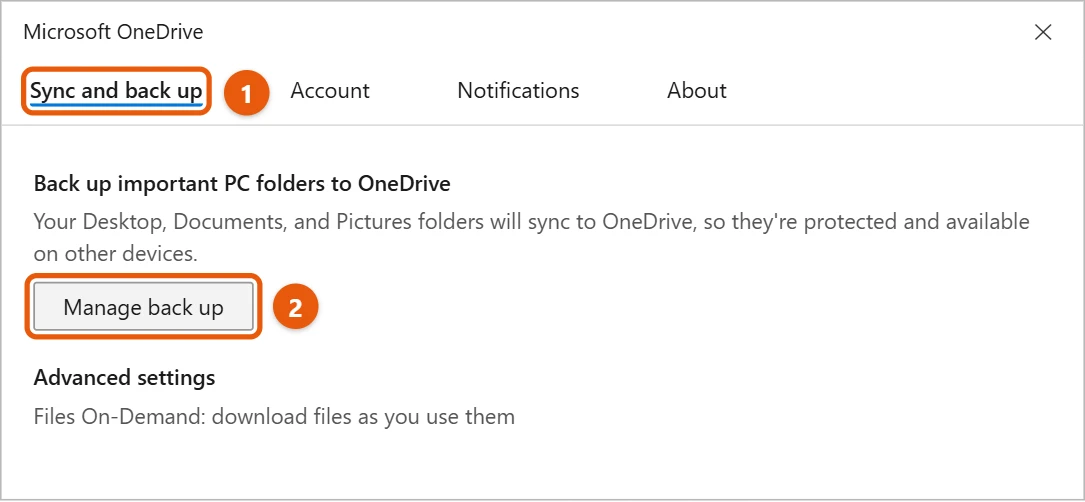
- Select the OneDrive cloud icon near the clock, then Help & Settings (gear) > Settings.
- Select Sync and back up, then Manage back up.
- Turn on the folders you want and select Start backup.
After this, those folders are part of OneDrive and sync automatically.
Pause or stop syncing
- Pause: select the cloud icon > Help & Settings > Pause syncing and pick a time.
- Choose folders: in Settings > Account, select Choose folders to sync only some folders to this PC.
- Stop completely: see how to turn off OneDrive in Windows 10.
Frequently asked questions
Why isn’t a file syncing?
Check that you’re online and OneDrive isn’t paused. If it’s still stuck, reset OneDrive. See how to reinstall OneDrive on Windows 10.
If I delete a file from my OneDrive folder, is it gone everywhere?
Yes. It’s deleted from the cloud and your other devices too. You can usually restore it from the OneDrive recycle bin at OneDrive.com.
How much space do I get?
Free Microsoft accounts include a limited amount of storage. Check the cloud icon’s settings to see how much you’ve used.
To back up your Desktop, Documents and Pictures folders automatically, see how to back up files to OneDrive on Windows 10.
Microsoft’s references are Sync your computer’s files and folders with OneDrive, Save disk space with OneDrive Files On-Demand for Windows, and Back up your folders with OneDrive. More help is on our Windows Help & Guides page.
Related: How to unsync two computers in Windows 11.
Related: how to sign in to OneDrive on Windows 10.

Matt Jacobs has been working as an IT consultant for small businesses since receiving his Master’s degree in 2003. While he still does some consulting work, his primary focus now is on creating technology support content for SupportYourTech.com.
His work can be found on many websites and focuses on topics such as Microsoft Office, Apple devices, Android devices, Photoshop, and more.