To turn off the passcode on your iPhone, open Settings > Face ID & Passcode (or Touch ID & Passcode), enter your passcode, scroll down and tap Turn Passcode Off, then tap Turn Off and enter the passcode again. If the option is greyed out, turn off Stolen Device Protection first, or check whether a work or school profile requires a passcode.
Applies to: iPhone with iOS 17 and later, including iOS 26. Last reviewed October 8, 2026.
Before you do it: without a passcode, anyone who picks up your phone can open your messages, photos, email and saved passwords. Apple also removes your Apple Pay cards and turns off Face ID or Touch ID. If you just want to unlock faster, consider a shorter passcode or a longer auto-lock time instead.
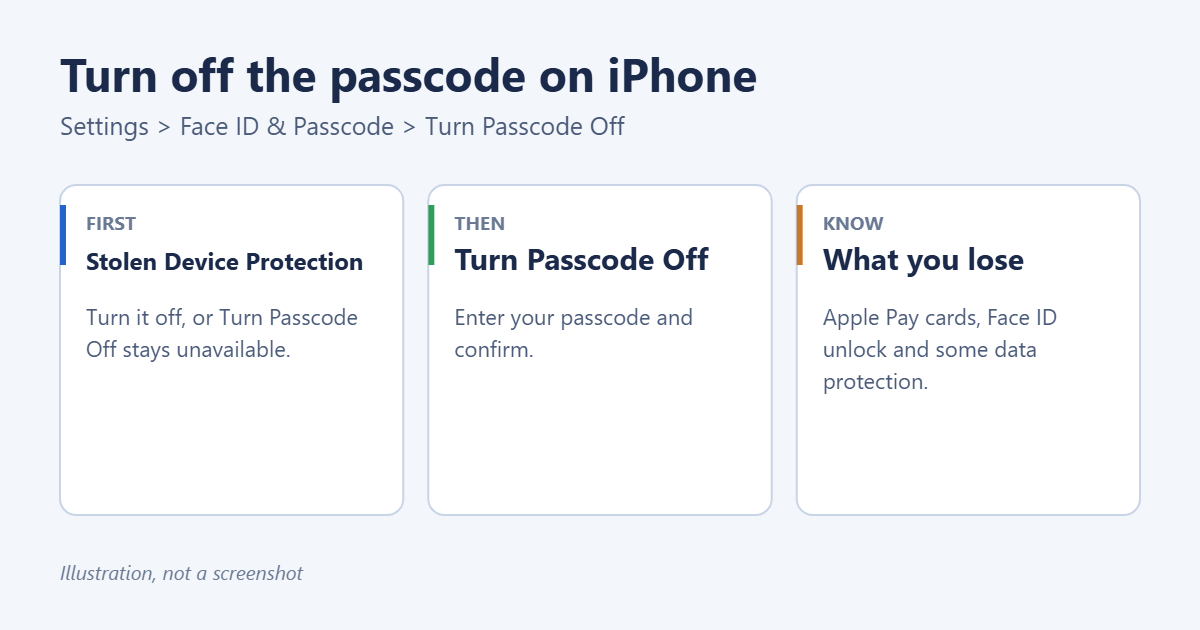
Step 1: Turn off Stolen Device Protection (if it’s on)
- Open Settings > Face ID & Passcode and enter your passcode.
- Scroll to Stolen Device Protection and tap it.
- Turn it off. Use Face ID or Touch ID to confirm.
Away from a familiar location such as home or work, iOS adds a one-hour security delay before you can turn it off. Wait for the timer, then confirm with Face ID again.
Step 2: Turn off the passcode
- In Settings > Face ID & Passcode, scroll down and tap Turn Passcode Off.
- Read the warning and tap Turn Off.
- Enter your passcode. You may also be asked for your Apple Account password.
Your iPhone now opens with a swipe up, or by pressing the Home button on models that have one.
What changes when the passcode is off
- Apple Pay: cards in Wallet are removed. You’ll need to add them again after setting a passcode.
- Face ID or Touch ID: stops working for unlocking, App Store purchases and passwords.
- Data protection: iPhone encryption relies on the passcode, so the data is less protected if the phone is lost.
- Some apps and features, such as banking apps, work email, and Apple Watch unlock, may require a passcode and stop working.
Turn the passcode back on
- Go to Settings > Face ID & Passcode.
- Tap Turn Passcode On and enter a new 6-digit passcode. Tap Passcode Options for a 4-digit code or a custom alphanumeric one.
- Set up Face ID or Touch ID again; see how to set up Face ID on iPhone.
To change the code instead of removing it, see how to change the passcode on iPhone.
Alternatives that keep your phone protected
- Rely on Face ID: with Face ID set up, you rarely type the passcode at all.
- Use a 4-digit passcode: quicker to type, still better than none.
- Change Auto-Lock: Settings > Display & Brightness > Auto-Lock sets how long before the screen locks. See also how to change iPhone sleep settings.
Turn off the passcode on an iPad
The steps are the same: Settings > Face ID & Passcode or Touch ID & Passcode > Turn Passcode Off. iPads that use Family Sharing or a school account often have the option locked by a profile.
Turn off the passcode for apps only
If the passcode prompt you want to stop is inside an app rather than on the lock screen, that’s a separate setting. For example, App Store purchases use Face ID or your Apple Account password, set under Settings > [your name] > Media & Purchases > Password Settings. Banking apps have their own security settings in the app.
Who should keep the passcode on
Keep it on if the phone holds work email, banking or health apps, or if it ever leaves the house. Turning it off makes most sense for a phone that stays at home as a music player or for a young child with nothing personal on it, and even then a simple 4-digit code is a safer middle ground.
Troubleshooting
Turn Passcode Off is greyed out
- Stolen Device Protection is on: turn it off first (Step 1).
- A profile requires a passcode: go to Settings > General > VPN & Device Management. A work, school or email profile may enforce a passcode. Removing it may remove that account’s email and apps, so check with your IT team.
- Screen Time restrictions: check Settings > Screen Time > Content & Privacy Restrictions > Passcode Changes and set it to Allow.
I forgot my passcode
You can’t turn it off without the current passcode. On iOS 17 and later, tap Forgot Passcode? on the lock screen within 72 hours of changing it to use your previous code. Otherwise you’ll need to erase the iPhone and restore it from a backup.
Frequently asked questions
Can I turn off the passcode but keep Face ID?
No. Face ID and Touch ID need a passcode as a fallback.
Will turning off the passcode delete anything?
It removes Apple Pay cards and some saved security keys, but not your photos, apps or messages.
How do I lock the screen without a passcode?
Press the side button. The phone locks but opens with a swipe.
You can also watch this video about how to disable the passcode on your iPhone.
Related: how to stop your iPhone screen from turning off.
Related: how to turn off Attention Aware features on iPhone.

Matt Jacobs has been working as an IT consultant for small businesses since receiving his Master’s degree in 2003. While he still does some consulting work, his primary focus now is on creating technology support content for SupportYourTech.com.
His work can be found on many websites and focuses on topics such as Microsoft Office, Apple devices, Android devices, Photoshop, and more.