To change the network name in Windows 10 Pro, press Windows + R, type secpol.msc, and open Network List Manager Policies. Double-click your network, such as Network 2, choose Name, type a new name, and select Apply. To rename your Wi-Fi network for every device, change its name (SSID) on your router instead.
Applies to: Windows 10 Pro, Enterprise, and Education (Local Security Policy). Checked against Microsoft Learn on September 27, 2026.
Which name do you want to change?
- The name Windows shows, like Network or Network 2, in Network & Internet settings. This only changes the label on your PC. Use the steps below.
- Your Wi-Fi network’s name that every device sees. This is set on your router, not in Windows. Sign in to your router’s settings page or app, and change the SSID or Wi-Fi name. Check your router’s instructions.
Rename the network in Local Security Policy
You need an administrator account.
- Press Windows + R, type
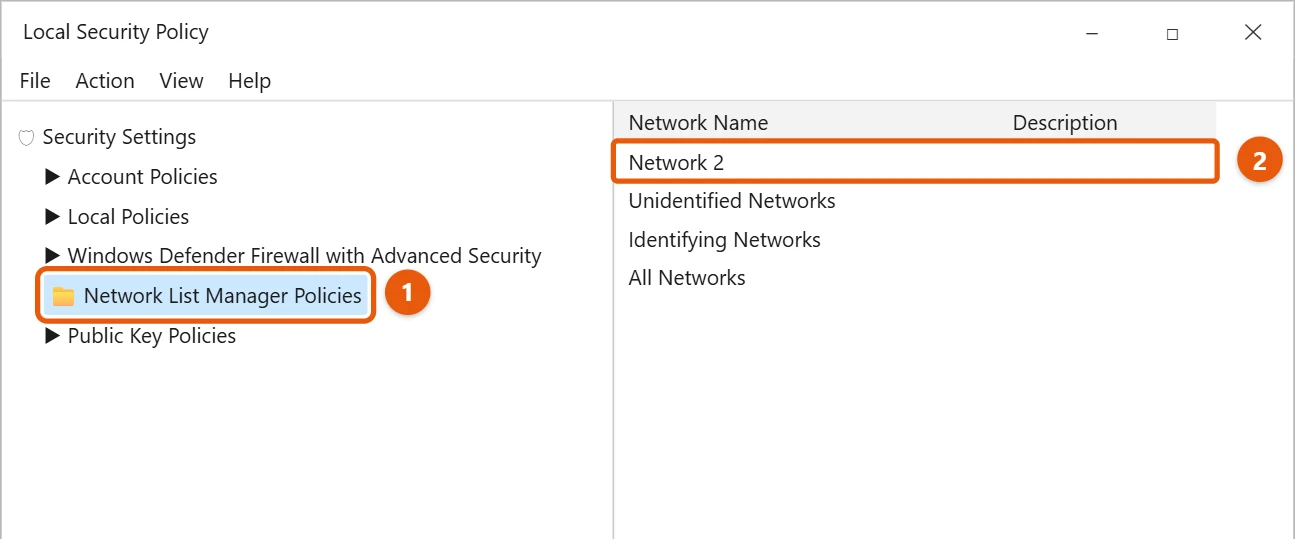
secpol.msc, and select OK. - Select Network List Manager Policies on the left.
- Double-click your network on the right. It has the name Windows shows now, such as Network 2.
- On the Network Name tab, select Name and type the new name.
- Select Apply and OK.
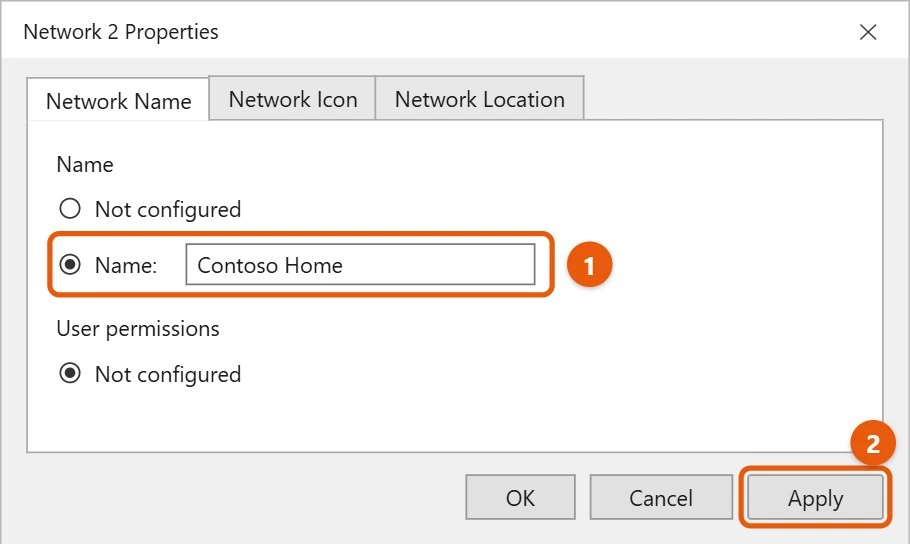
The new name shows in Settings > Network & Internet right away. To undo it, choose Not configured.
On Windows 10 Home
Local Security Policy isn’t included in Home. The only built-in way is to edit the registry, which is risky. If you do, back up the registry first. The name is the ProfileName value under HKEY_LOCAL_MACHINE\SOFTWARE\Microsoft\Windows NT\CurrentVersion\NetworkList\Profiles, in the subkey for your network. Microsoft doesn’t document this for home users, so for most people it’s not worth the risk.
Rename the network adapter instead
If you want “Ethernet” or “Wi-Fi” to have a clearer name, for example when you have several adapters, rename the adapter. This works on every Windows 10 edition, including Home.
- Press Windows + R, type
ncpa.cpl, and press Enter. - Right-click the adapter and select Rename.
- Type the new name and press Enter.
In PowerShell as an administrator, Rename-NetAdapter -Name "Ethernet" -NewName "Office LAN" does the same thing.
Change the name other devices see for your PC
On a home network, other computers see your PC by its device name, not the network name. To change it, select Start > Settings > System > About > Rename this PC, type a name without spaces, and restart.
Remove old Wi-Fi network names
Old networks you no longer use stay in the list. Go to Settings > Network & Internet > Wi-Fi > Manage known networks, select one, and choose Forget.
Troubleshooting
- The new name doesn’t show. Disconnect from the network and connect again, or restart the PC.
- The name went back to Network 2 later. Windows created a new profile, often after a router or adapter change. Rename the new one the same way.
- Windows can’t find secpol.msc. You’re on Windows 10 Home. Use the registry method above, or rename the adapter instead.
Frequently asked questions
Why does my network say “Network 2”?
Windows adds a number when it sees what it thinks is a new network, for example after you replace your router or adapter. It doesn’t cause problems.
How do I switch between Public and Private?
Go to Settings > Network & Internet > Wi-Fi (or Ethernet), select your network, and choose Public or Private under Network profile.
My network isn’t working at all. What should I do?
See how to fix Wi-Fi and network problems in Windows 10 or how to reset network settings in Windows 10.
Microsoft’s reference is Network List Manager policies. The Home registry location follows Windows 10 and isn’t a Microsoft-documented method, as the article says. More help is on our Windows Help & Guides page.
Does renaming the network change my Wi-Fi password?
No. The network name in Windows, the adapter name and the Wi-Fi password are all separate. Your password only changes if you change it on the router.
Can other people see the name I give the network in Windows?
No. The Windows network name is only a label on your PC. Other devices see the router’s Wi-Fi name (SSID).

Matt Jacobs has been working as an IT consultant for small businesses since receiving his Master’s degree in 2003. While he still does some consulting work, his primary focus now is on creating technology support content for SupportYourTech.com.
His work can be found on many websites and focuses on topics such as Microsoft Office, Apple devices, Android devices, Photoshop, and more.