To reduce data usage on a Windows 11 laptop, open Settings > Network & internet > Wi-Fi, select the network you’re on and turn on Metered connection. That one switch tells Windows Update, the Microsoft Store and many apps to hold back. Then set a data limit for the same network, check which apps are using the most data, and turn down the biggest offenders (usually updates, cloud sync, game launchers and video).
Applies to: Windows 11 Home and Pro, including the current version, 26H2. The settings names below match Microsoft’s support pages. Work or school laptops may have some of these settings locked by your organization.
When these settings matter
Windows doesn’t always know your connection is limited. A cellular SIM inside the laptop is treated as metered automatically, but Wi-Fi is not, so a phone hotspot, a travel router, a hotel connection or a capped home plan all look “unlimited” to Windows until you say otherwise. If you share your phone’s connection, it’s worth doing Step 1 for that hotspot network the first time you join it. (Going the other way, sharing the laptop’s connection with other devices, is covered in turning on Mobile hotspot in Windows 11.)
Two terms used below: a metered connection is a label that asks Windows and apps to cut back on one network (it doesn’t block anything by itself), and a data limit is an amount, such as 20 GB a month, that Windows tracks for that network and warns you about.
Find out what is using your data
A minute spent here saves you from switching off things that weren’t the problem.
- Open Settings (press Windows key + I) and select Network & internet.
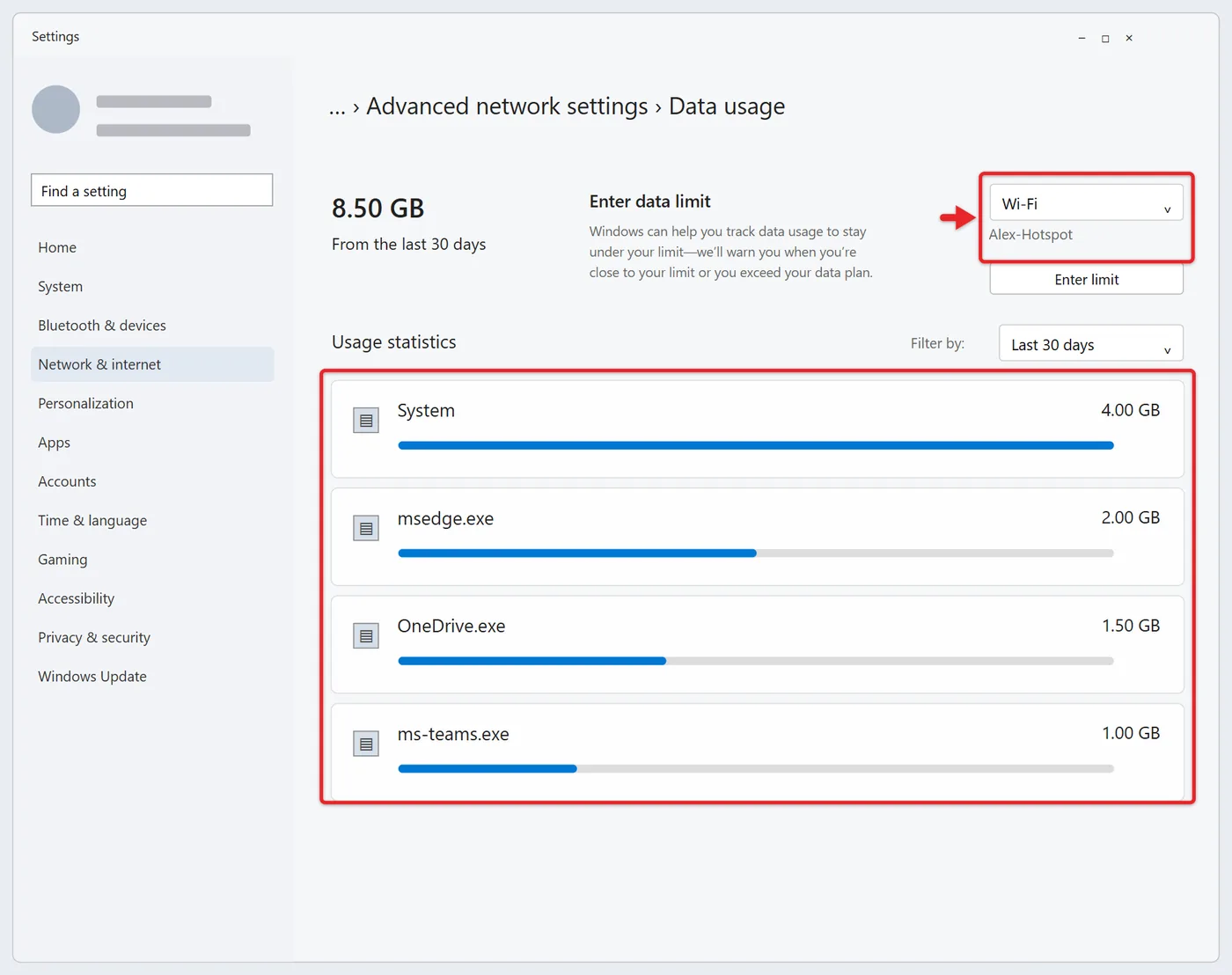
- Select Advanced network settings, then Data usage.
- If you use more than one network, pick the right one from the drop-down at the top right. Usage is counted separately for each network.
- Read the list: Windows shows total usage for the last 30 days and each app’s share, largest first.
For a second view, open Task Manager with Ctrl + Shift + Esc (see other ways to open Task Manager in Windows 11), go to App history and look at the Network and Metered network columns. Delete usage history on that page starts a fresh count, and Reset usage stats on the Data usage page clears the 30-day totals for that network.
If an entry called System is near the top, that usually means Windows itself: updates, Delivery Optimization and sync services. Steps 1, 3 and 4 below target those.
Cut data usage step by step
Step 1: Turn on Metered connection
- In Settings, select Network & internet.
- Select Wi-Fi (or Ethernet for a cable, or Cellular for a built-in SIM).
- Select the network you’re connected to. For Wi-Fi, choose the network’s properties rather than the list of known networks.
- Turn on Metered connection.
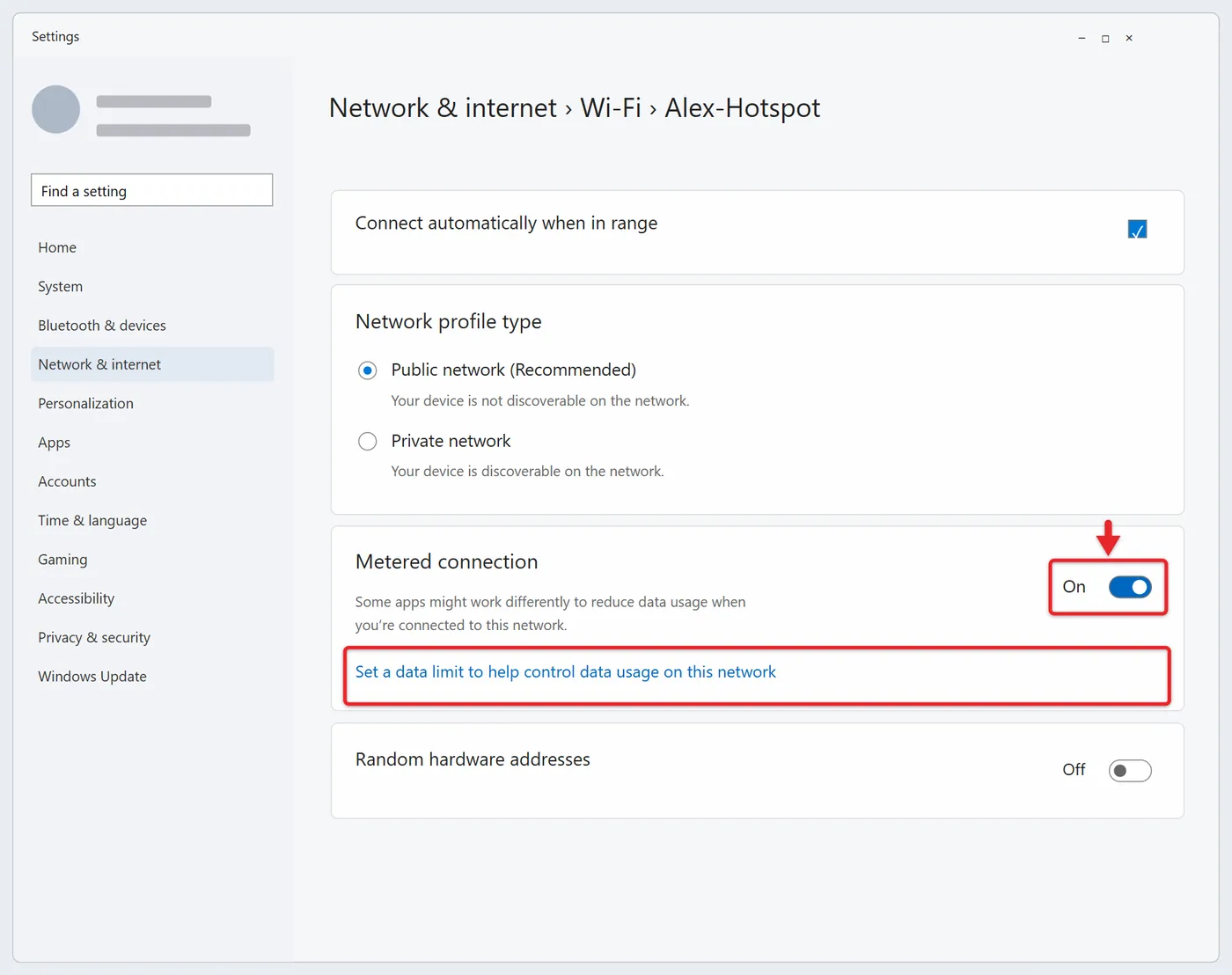
The switch takes effect right away. According to Microsoft’s page on metered connections in Windows, Windows Update will download only priority updates, Microsoft Store downloads might pause, offline files might not sync automatically, and some apps show or download less. The setting belongs to that one network, so your home Wi-Fi keeps working normally.
Step 2: Set a data limit for the network
- Go back to the same network’s properties page (Network & internet > Wi-Fi > your network).
- Select Set a data limit to help control data usage on this network. You can also reach it from Advanced network settings > Data usage.
- Select Enter limit.
- Choose a Limit type: Monthly (resets on a date you pick), One time (for a prepaid pack or a trip) or Unlimited (tracks usage without a cap).
- Enter the amount and unit (MB or GB), set the reset date if asked, then select Save.
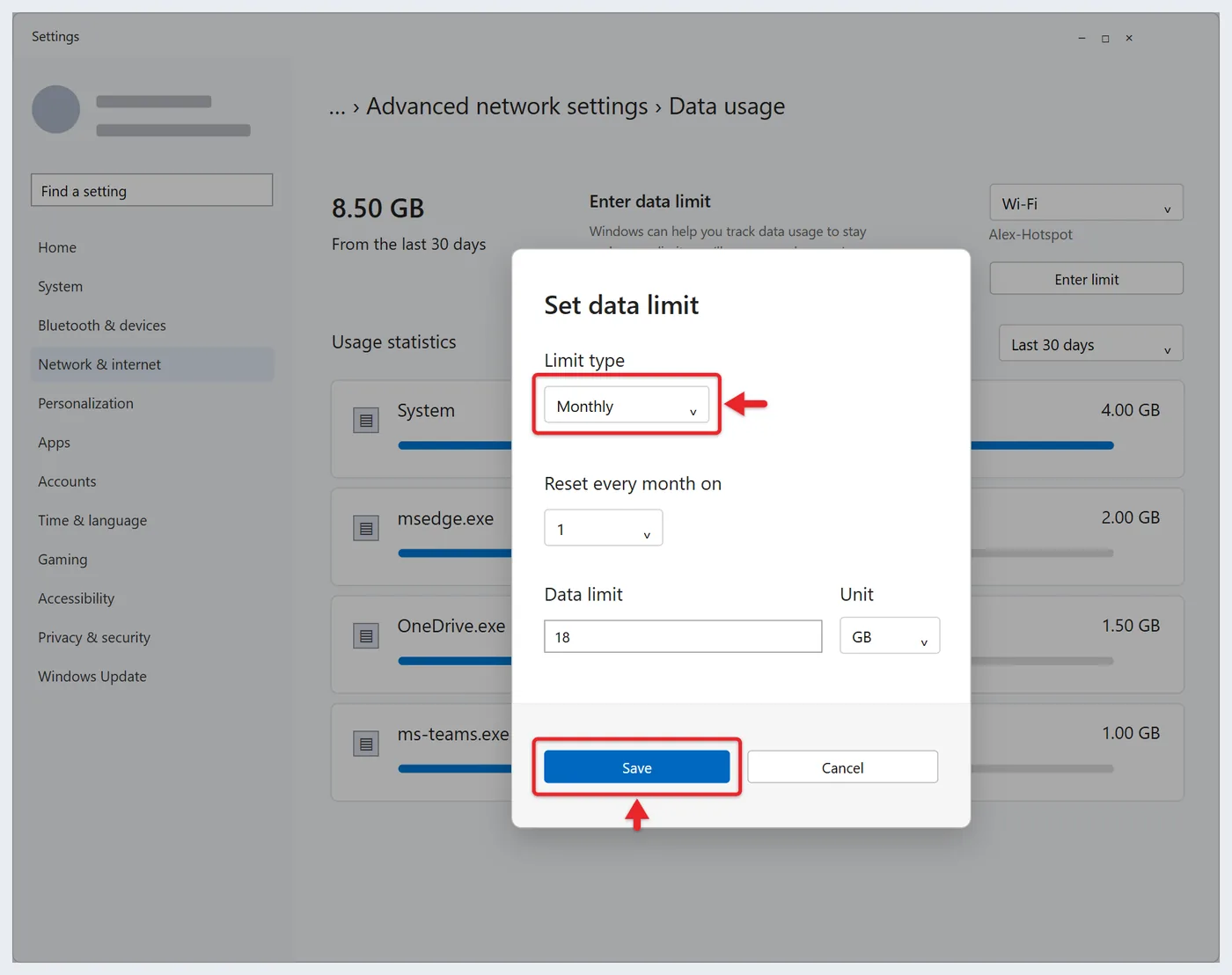
Windows now shows how much of the limit you’ve used and warns you as you get close and again when you go over. It does not cut off the connection at the limit, so treat it as an alarm rather than a hard stop. Set it a little below your real allowance, for example 18 GB on a 20 GB plan, to give yourself time to react.
Step 3: Keep Windows Update from eating the allowance
- Open Settings > Windows Update > Advanced options.
- Make sure Download updates over metered connections is off. When it’s off, a metered network gets only priority updates.
- Still in Advanced options, select Delivery Optimization.
- Turn off Allow downloads from other devices. If you’d rather leave it on, choose Devices on my local network so your laptop never uploads update pieces to strangers on the internet.
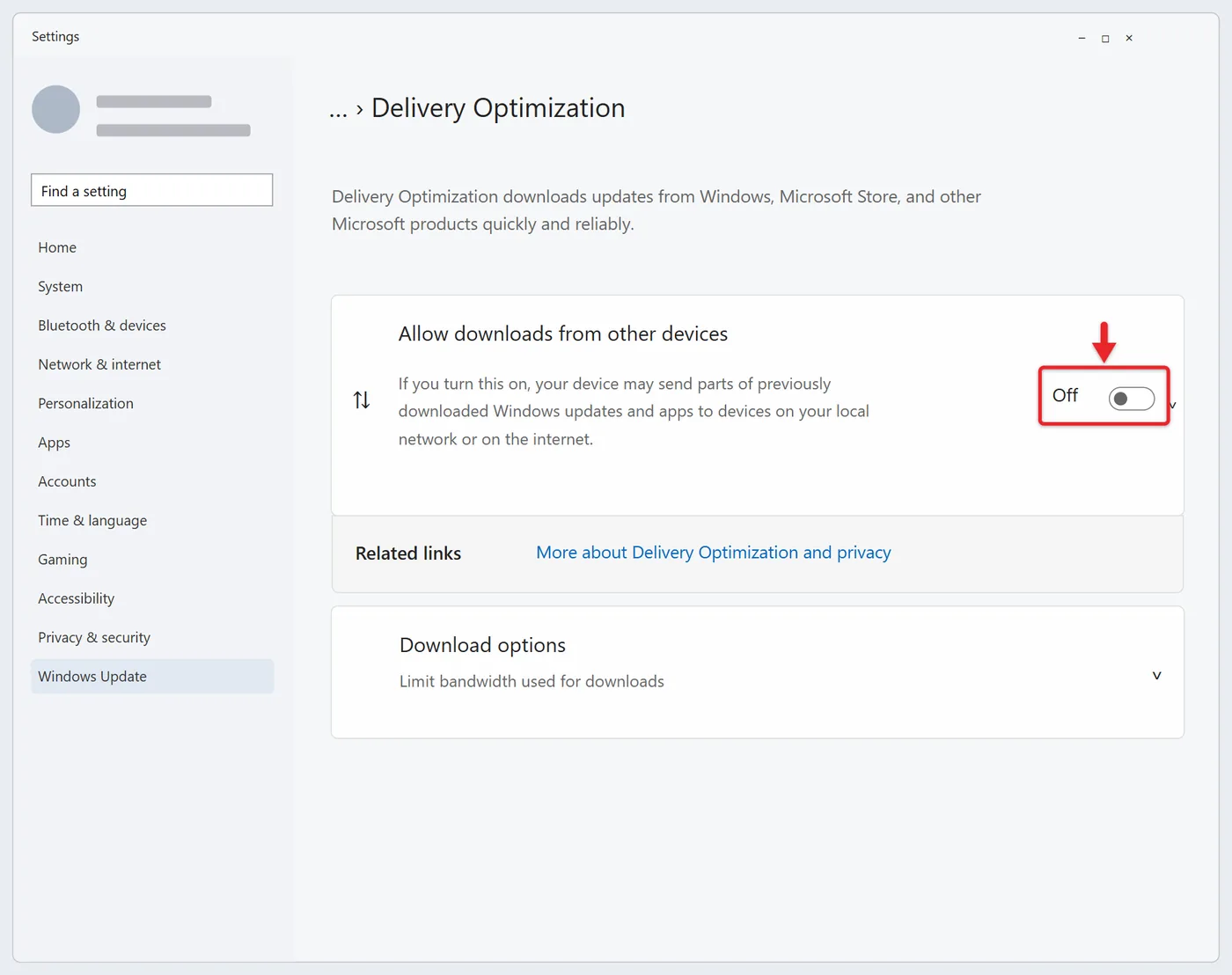
Delivery Optimization also has an Advanced options page where you can limit download bandwidth (an absolute Mbps figure or a percentage) and set a Monthly upload limit. Microsoft’s Delivery Optimization page explains each option. These caps apply only to automatic update downloads, so they slow updates down rather than stop them.
On a short trip you can also pause updates: on the Windows Update page, use Pause updates and pick a date. Microsoft lets you pause for up to 35 days, and Windows checks for and installs updates as soon as the pause ends. The full routine is in pausing Windows 11 updates. Avoid disabling the Windows Update service itself; it’s easy to forget and you’d miss security fixes.
Step 4: Rein in OneDrive and Windows backup
OneDrive is built to pause by itself on a metered network, so Step 1 handles most of it. If you still see OneDrive near the top of the Data usage list:
- Select the OneDrive cloud icon in the notification area at the right end of the taskbar.
- Select the gear icon, choose Pause syncing and pick 2 hours, 8 hours or 24 hours. The cloud icon shows that sync is paused, and it resumes on its own when the time runs out.
- For a lasting fix, open the same gear menu > Settings > Sync and back up > Advanced settings and check that the option to pause syncing on a metered network is turned on.
Keep Files On-Demand turned on as well (it’s in the same Advanced settings area). With it, files stay online until you open them, so OneDrive doesn’t download your whole library onto the laptop.
Windows can also sync your settings and app list to your Microsoft account. Under Settings > Accounts > Windows backup, turn off Remember my apps and Remember my preferences while you’re on a limited connection. Each sync is small, but there’s no reason to run it on a hotspot.
Step 5: Stop background apps and Store downloads
- Open Settings > Apps > Installed apps.
- Find an app you don’t need running all the time (news, weather, games, photo apps), select the three dots (More options) and choose Advanced options.
- Under Background app permissions, set Let this app run in background to Never.
Microsoft’s page on Windows background apps notes that desktop programs (Steam, Chrome, Dropbox and similar) don’t have this setting. For those, use the program’s own settings, quit it from the notification area, or stop it launching at sign-in under Settings > Apps > Startup. There’s more on this in turning off background apps in Windows 11.
For Microsoft Store apps, a metered connection already makes Store downloads wait. Microsoft now keeps Store app updates automatic and offers a pause rather than an off switch: open Microsoft Store, select your profile picture > Settings and look for the app updates option to pause them. Use the Store’s Check for updates button once you’re back on unlimited Wi-Fi.
Step 6: Lower video quality and tame the browser
Video is the biggest single user of data for most people, and no Windows setting controls it. Change it inside each service instead:
- Netflix: in your account’s profile, open Playback settings and choose a lower data usage option. Netflix lists high definition at about 3 GB an hour and its lowest setting at up to 0.3 GB.
- YouTube and other video sites: pick a lower resolution from the player’s settings (gear) menu, such as 480p, instead of Auto.
- Music: lower the streaming quality in the app and download playlists at home for offline listening.
In the browser, close tabs you aren’t reading, since news and social sites keep refreshing and autoplaying. The Widgets board also loads news and weather; you can hide it under Settings > Personalization > Taskbar. If you were hoping to save data by downloading Disney+ movies to the laptop first, note that Disney Plus downloads aren’t available on Windows 11, so plan to download on a phone or tablet instead.
Which changes help most?
- On a phone hotspot for an hour or two: Step 1 plus pausing OneDrive and keeping video at low quality is usually enough.
- On a capped plan every day: do Steps 1 to 5 once, then check the Data usage list weekly for anything new climbing the chart.
- When one program keeps downloading no matter what: quit it, change its own update settings, or block it with an outbound rule in Windows Defender Firewall. The firewall console works the same way described in blocking an app from the internet in Windows 10.
If data usage is still high
- The Metered connection switch is greyed out. Microsoft lists three causes: a data limit is set on that network (remove it under Data usage, change the setting, then add the limit back), you aren’t signed in as an administrator, or your organization manages the setting. On a work laptop, ask IT.
- “System” still uses hundreds of megabytes. Priority updates can still download on a metered network, and Delivery Optimization or sync services may be busy. Check that Delivery Optimization sharing is off, pause updates if you really can’t afford the download, and leave the laptop on unlimited Wi-Fi now and then so it can catch up.
- A game launcher or cloud app ignores metered mode. Metered is a request, not a block. Many desktop programs don’t check it, so pause downloads in the program or quit it before you connect.
- The numbers don’t match your carrier’s bill. Windows counts only this laptop on the selected network. Other devices on the same hotspot, including the phone itself, add to the carrier’s total.
- You hit the limit and the internet kept working. That’s expected. Windows warns but doesn’t disconnect. If you need a hard stop, turn on Airplane mode from the quick settings panel when you’re not using the connection.
Check it worked, and undo it later
A day after making these changes, open Data usage again for the same network. The total should climb more slowly, and the apps you changed should drop down the list. The limit bar on the network’s page shows how much of your allowance is left.
When you’re back on a home connection, nothing needs undoing there, because metered mode and the data limit belong only to the limited network. If you marked your home Wi-Fi by mistake, turn off the metered connection in Windows 11. Resume any paused Windows updates and OneDrive sync so security fixes and backups catch up. Still running an older laptop? The same switch on Windows 10 is covered in setting a metered connection in Windows 10.
Frequently asked questions
Does a metered connection stop Windows updates completely?
No. With Download updates over metered connections turned off, Windows still downloads priority updates. Pausing updates (up to 35 days) is the only built-in way to hold everything back for a while, and updates resume automatically afterward.
Can I set a data cap for one app?
Windows 11 tracks data per app but only lets you set a limit per network. To control a single app, stop it running in the background, change its own update or quality settings, or block its internet access with a firewall rule.
Is it safe to turn off Delivery Optimization sharing?
Yes. Your laptop still gets updates directly from Microsoft; it just stops fetching pieces from, and sending pieces to, other PCs. On a capped connection, sharing with devices on the internet is the part worth switching off.
Should I turn off optional diagnostic data too?
It’s a small saving, but if you want it, go to Settings > Privacy & security > Diagnostics & feedback and turn off Send optional diagnostic data. Required diagnostic data still goes to Microsoft.
Next step
Mark your hotspot or capped network as metered and add a data limit now, then glance at the Data usage list after a day of normal use. Whatever sits at the top is the next thing to adjust.

Matt Jacobs writes and maintains the guides on Support Your Tech, which he started in 2017. He spent most of his career keeping small-business PCs running and still takes the occasional consulting job, so the steps here come from fixing the same problems on other people’s computers. Every guide is checked on his own Windows 11, Windows 10, Mac, iPhone and iPad before it goes up.