Open Settings > Apps > Apps & features, select each McAfee app, and select Uninstall. Restart, then open Windows Security and check that Microsoft Defender Antivirus is on, so your PC is still protected.
Applies to: Windows 10.
Before you start
- McAfee often comes as more than one app, such as the antivirus and a separate helper. Remove each one.
- If you paid for McAfee, you don’t lose your subscription by uninstalling. You can install it again later.
Uninstall McAfee
- Select Start > Settings > Apps > Apps & features.
- Type McAfee in Search this list.
- Select the McAfee app, then select Uninstall, and select Uninstall again.
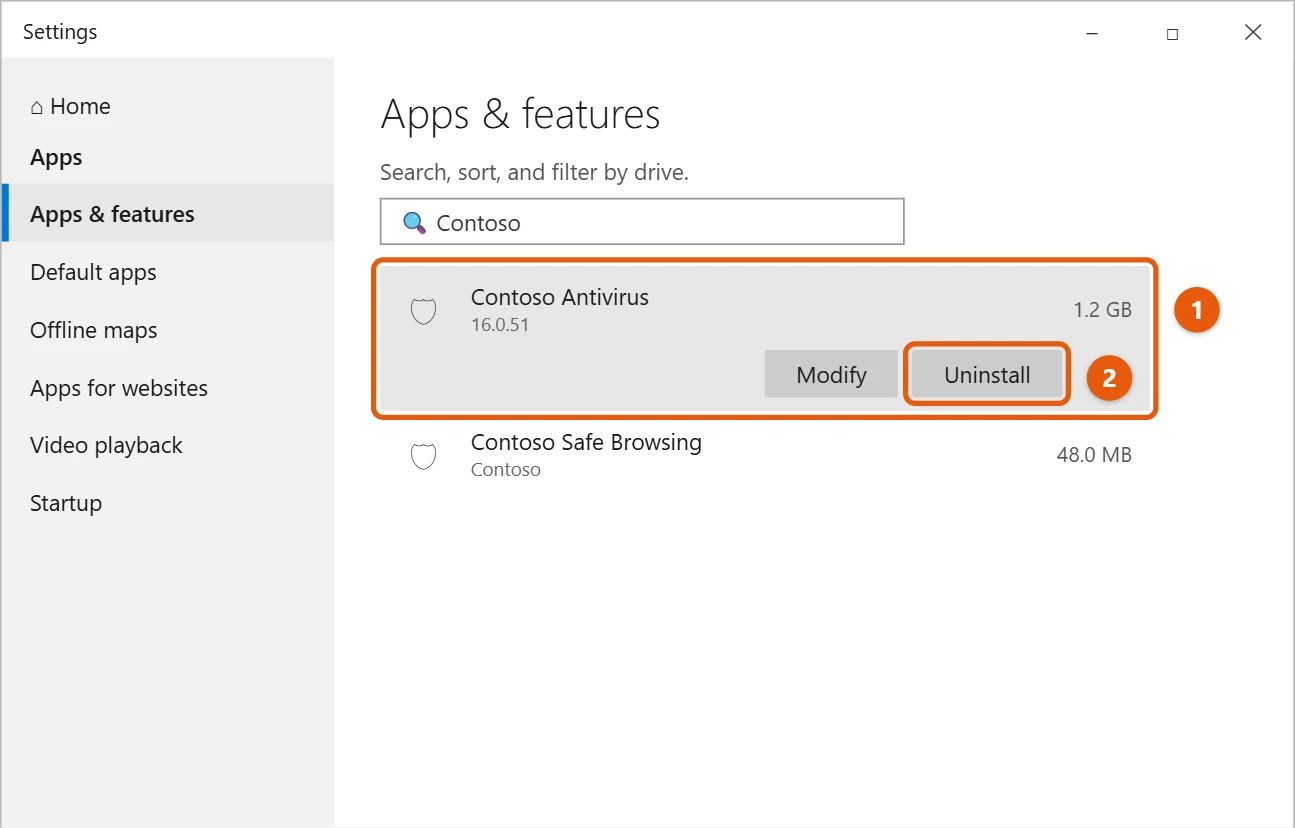
- Select Yes if Windows asks for permission, and follow McAfee’s steps on the screen.
- Repeat for any other McAfee apps in the list, then restart your PC.
Check that your PC is protected
- Select Start, type Windows Security, and open it.
- Select Virus & threat protection.
- Make sure it shows No action needed and that Real-time protection is on. Windows normally turns Microsoft Defender Antivirus back on by itself after another antivirus is removed. If you’d rather replace McAfee with a different paid product, follow the steps to install antivirus in Windows 10 and confirm it shows as the active provider.
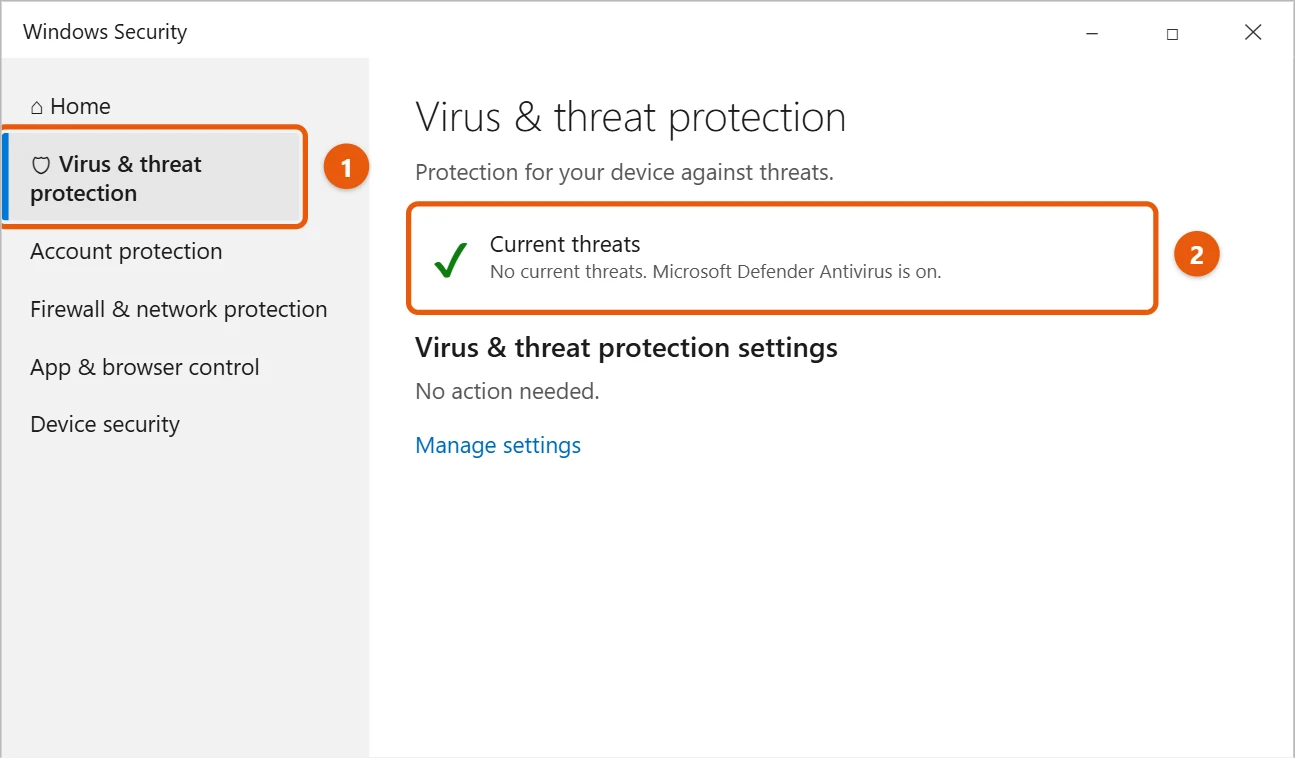
If it’s off, you can turn Windows Defender back on in Windows 10.
If McAfee won’t uninstall
- Try Control Panel > Programs > Programs and Features instead, the older way of uninstalling programs on Windows 10.
- If that fails too, McAfee offers its own removal tool on its support website.
Use McAfee’s removal tool
McAfee’s official tool is called the McAfee Consumer Product Removal tool (MCPR). Download it only from McAfee’s own support site.
- Run the downloaded file and select Yes when Windows asks for permission.
- Select Next, then Agree to the license.
- Type the security code shown on screen and select Next.
- Wait for Removal Complete, then restart the PC.
If it reports that the cleanup was unsuccessful, restart and run it once more.
Remove McAfee from your browser too
McAfee WebAdvisor is often installed as its own app plus a browser extension. Uninstall McAfee WebAdvisor in Apps & features, then check your browser’s extensions page, such as edge://extensions in Edge, and remove any McAfee extension that’s left.
Cancel automatic renewal
Uninstalling doesn’t cancel a McAfee subscription. If you don’t want to be charged again, sign in to your McAfee account on its website and turn off automatic renewal. Do this before the renewal date shown in your account.
Stop McAfee from coming back
McAfee is often offered with other downloads, such as browser plug-ins or PDF readers. During any installation, read each screen and clear checkboxes that offer extra software you didn’t ask for.
Troubleshooting
- Windows Security shows no antivirus is active. Restart the PC. Defender turns itself on when no other antivirus is installed. If it doesn’t, select Turn on in Virus & threat protection.
- The uninstaller asks you to keep McAfee or offers a discount. That’s normal. Choose the option to continue removing it.
- McAfee is still in the list after uninstalling. Restart and check again. If it’s still there, run the removal tool.
- Pop-ups still appear. They may come from a website, not McAfee. Remove the site’s permission in your browser’s notification settings.
Frequently asked questions
Do I need another antivirus after removing McAfee?
No. Microsoft Defender Antivirus is built into Windows 10 and is free.
Will McAfee pop-ups stop?
Yes, once every McAfee app is removed and you restart.
Is it safe to remove McAfee that came with my new PC?
Yes. Many PCs include a trial version. Removing it is safe as long as Microsoft Defender Antivirus turns on afterward.
Can I run McAfee and Defender together?
Not as two full antivirus programs. When McAfee is active, Defender steps back. After you remove McAfee, Defender takes over.
Do I still get Windows 10 security updates for Defender?
Defender’s virus definitions keep updating on Windows 10. Windows itself only gets security fixes through Extended Security Updates, which for home users run until October 12, 2027.
Will uninstalling McAfee delete my files?
No. It removes only the McAfee apps. Your documents, photos and other apps stay as they are.
There’s more about Defender and the other protection features on Microsoft’s Stay protected with the Windows Security app page.

Matt Jacobs has been working as an IT consultant for small businesses since receiving his Master’s degree in 2003. While he still does some consulting work, his primary focus now is on creating technology support content for SupportYourTech.com.
His work can be found on many websites and focuses on topics such as Microsoft Office, Apple devices, Android devices, Photoshop, and more.