To recover an uninstalled program on Windows 11, reinstall it. For apps from the Microsoft Store, open the Store, select Library, turn off Show installed products only, and select Install next to the app. For other programs, download the installer again from the maker’s website, or run the setup file you still have. If you need your PC back exactly as it was, System Restore can roll back to a restore point, but it needs an administrator account.
Applies to: Windows 11.
Before you start: your files and settings
- Uninstalling removes the program, not usually your files. Documents you saved in Documents, Pictures or other folders stay where they were.
- You may need your license or account. Paid programs often ask you to sign in or enter a product key again after reinstalling.
Reinstall apps from the Microsoft Store Library
The Store keeps a list of every app and game you’ve gotten with your Microsoft account.
- Open Microsoft Store.
- Select Library at the bottom left.
- Turn off Show installed products only (or open Sort and filter and clear it), so apps that aren’t installed appear.
- Find the app and select Install.
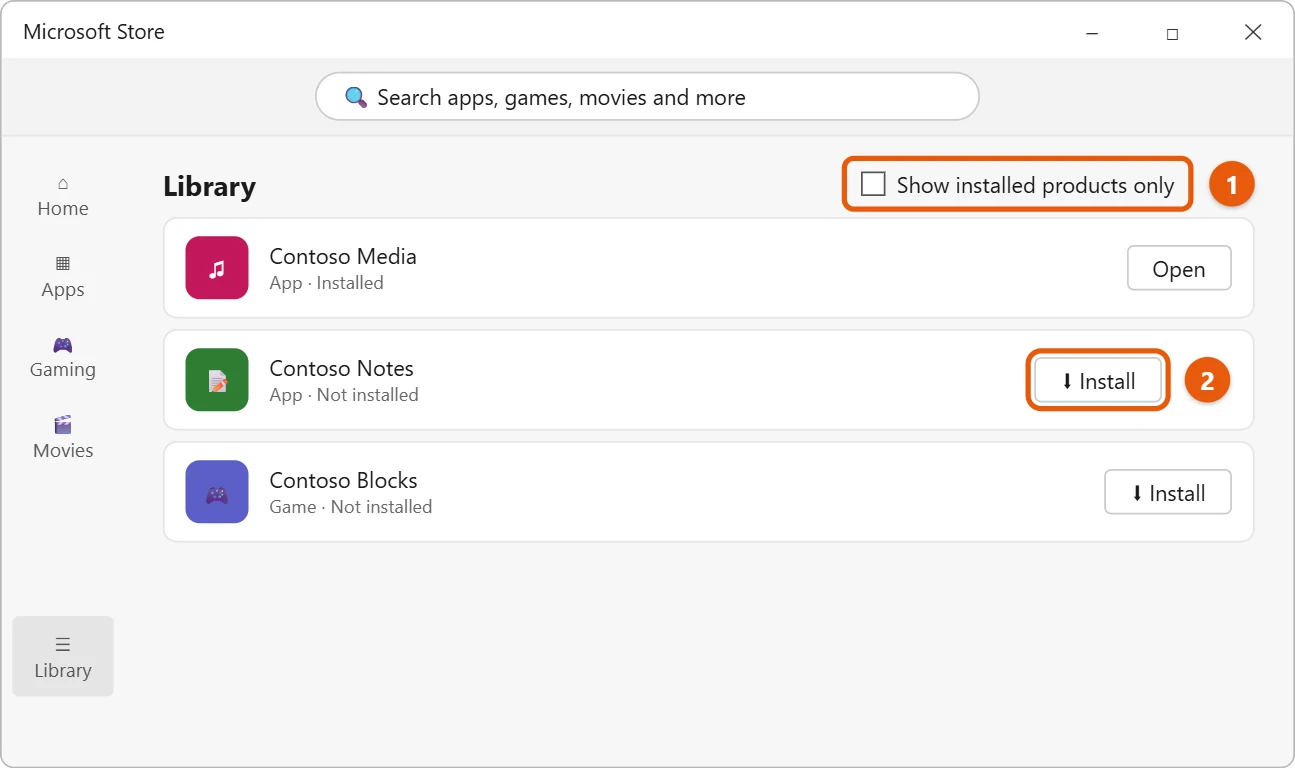
If you can’t find it in Library, search for it in the Store. An app may not appear if it was removed from the Store or isn’t available in your region.
Reinstall built-in Windows apps
Many apps that come with Windows 11, such as Calculator, Photos, Clipchamp and Sound Recorder, are in the Microsoft Store. Search for the app’s name, check that the publisher is Microsoft Corporation, and select Get.
Reinstall desktop programs
Programs that didn’t come from the Store need their installer:
- Go to the maker’s official website and download the program again. Avoid download sites that repackage installers.
- Open the installer from your Downloads folder and follow the steps.
- Sign in or enter your license key if asked.
If you saved the original setup file, you can run it again instead. For programs that came with the PC, check the PC maker’s support site for your model, or the Store under Library.
Not sure what you uninstalled?
- Scroll through Start > All and Settings > Apps > Installed apps to see what’s still there.
- In the Store, Library also shows apps you’ve installed on other PCs with the same account.
See What Was Uninstalled With Reliability Monitor
If you cannot remember the program’s name, Windows keeps a record. Select Start, type reliability and open View reliability history. Select a day, then look under Informational events for entries such as Successful application removal. Double-click one to see the program’s name and version, then reinstall it using the steps above.
Reinstall Programs With winget
The Windows Package Manager can reinstall many popular programs from their official sources with one command. Right-click Start, select Terminal, and run:
winget search "program name"
Note the ID in the results, then install it with:
winget install --id Publisher.Program
Replace the ID with the one shown. winget is built into Windows 11 and is useful when you are reinstalling several apps after a cleanup.
Use Your PC Maker’s Support App
Utilities and drivers that came with the PC, such as audio control panels, touchpad settings or function-key tools, are usually available from the PC maker. Open its support app if it is still installed, or visit the maker’s support website, enter your model or serial number, and download the software for Windows 11.
Will My Settings Come Back?
Often, yes. Many programs leave their settings in your user profile when they are uninstalled, so reinstalling the same program picks them up again. Apps that sync to an account, such as browsers, Microsoft 365 and game launchers, restore your settings when you sign back in. Programs that store everything in their own install folder start fresh.
Roll back with System Restore (administrator)
System Restore returns Windows system files, settings and installed programs to an earlier restore point. It doesn’t change your documents or photos, but it removes programs installed after the restore point.
- Select Start, type Create a restore point, and open it.
- Select System Restore, and then Next.
- Choose a restore point from before you uninstalled the program.
- Select Scan for affected programs to see what will change, then Close, Next and Finish.
System Restore needs an administrator account, and it only works if restore points were turned on before you uninstalled the program. Your PC restarts during the process. On a work or school PC, ask your IT administrator.
If a program is still listed but broken
If the program still appears in Installed apps but doesn’t work, you may not need to reinstall it. Select More options (…) next to it and look for Modify or Advanced options > Repair. Those same menus are where you uninstall a program in Windows 11, so pick Repair rather than Uninstall.
Frequently asked questions
Is there a recycle bin for uninstalled programs?
No. Uninstalled programs don’t go to the Recycle Bin. You reinstall them instead.
Will I lose my purchases?
No. Apps and games you bought in the Microsoft Store stay in your Library. For other programs, your purchase is tied to your account or license key with the maker.
Can I get apps back after resetting Windows 11?
Yes, the same way. Resetting Windows removes apps that didn’t come with the PC, and Windows saves a list of the removed apps on the desktop. Use that list to reinstall them once you reset Windows 11.
Do file recovery tools bring programs back?
Not reliably. Recovering scattered program files rarely gives you a working program. Reinstalling is faster and safer.
Related: recover uninstalled programs on Windows 10.

Matt Jacobs writes and maintains the guides on Support Your Tech, which he started in 2017. He spent most of his career keeping small-business PCs running and still takes the occasional consulting job, so the steps here come from fixing the same problems on other people’s computers. Every guide is checked on his own Windows 11, Windows 10, Mac, iPhone and iPad before it goes up.