The fastest way to open Settings in Windows 11 is to press Windows + I. You can also select Start and then Settings, which is pinned to the Start menu by default, or right-click Start and choose Settings.
Applies to: Windows 11.
Eight ways to open Settings
- Keyboard shortcut: press Windows + I.
- Start menu: select Start, then select Settings (the gear icon) under Pinned.
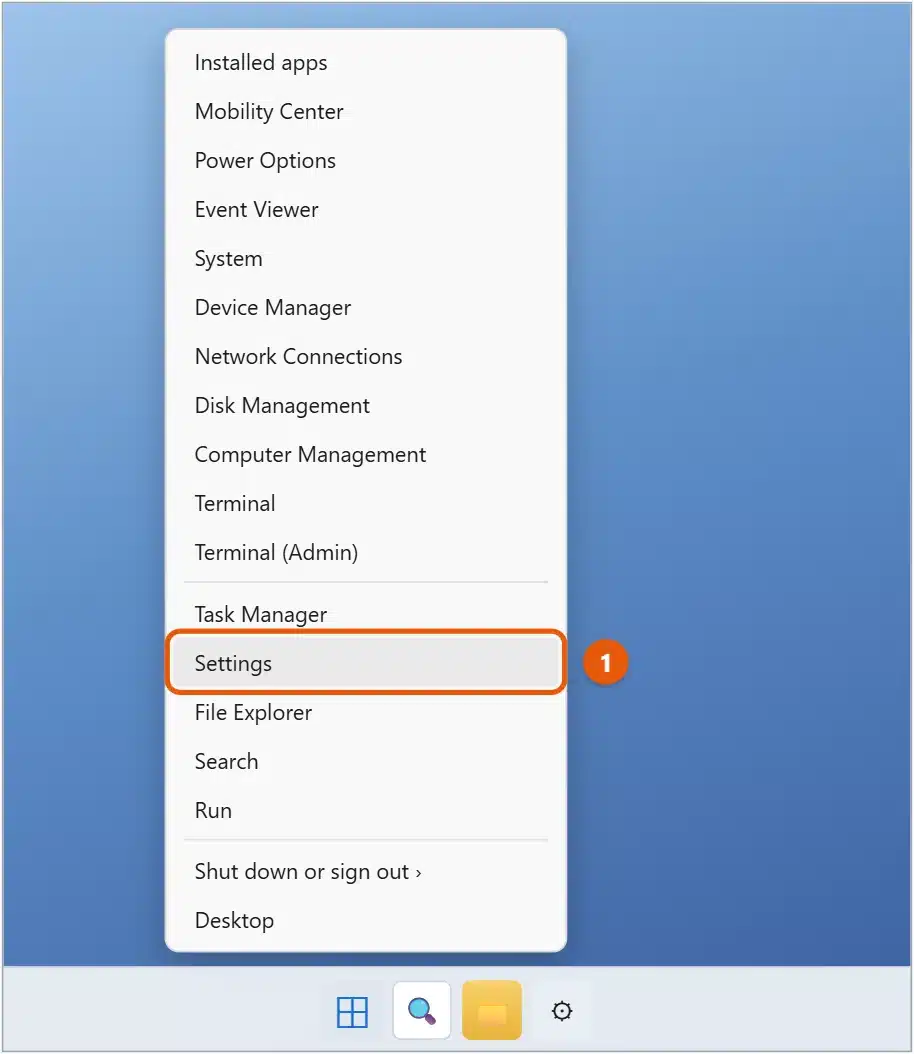
- Start button: right-click Start (or press Windows + X) and select Settings.
- Search: select Start, type
settings, and press Enter. - Quick Settings: select the network, volume, or battery icons on the taskbar (or press Windows + A), then select the All settings gear icon.
- Run box: press Windows + R, type
ms-settings:, and press Enter. - Terminal or Command Prompt: type
start ms-settings:and press Enter. - File Explorer: type
ms-settings:in the address bar and press Enter.
More ways that open a Settings page
Several right-click menus open Settings on a related page. Select Home at the top of the left pane to get to the main page from there.
- Desktop: right-click an empty area and select Display settings or Personalize.
- Taskbar: right-click an empty part of the taskbar and select Taskbar settings.
- Clock: right-click the date and time and select Adjust date and time or Notification settings.
- Task Manager: press Ctrl + Shift + Esc, select Run new task, type
ms-settings:, and select OK. This is handy when the Start menu or taskbar has frozen. - PowerShell: run
Start-Process ms-settings:. - Web browser: typing
ms-settings:in the address bar of Edge or Chrome shows a prompt asking to open Settings. Only accept that kind of prompt when you typed the address yourself, not when a website triggers it.
Find your way around Settings
Settings opens on Home, which shows a few recommended settings and cards for your account and storage. Everything else sits in the categories on the left:
- System: display, sound, notifications, power, storage, and About.
- Bluetooth & devices: Bluetooth, printers, mouse, and touchpad.
- Network & internet: Wi-Fi, Ethernet, VPN, and airplane mode.
- Personalization: wallpaper, colors, themes, Start, and the taskbar.
- Apps: installed apps, default apps, and startup apps.
- Accounts: your account, sign-in options, and other users.
- Time & language, Gaming, Accessibility, Privacy & security, and Windows Update.
If the left pane is missing, the window is too narrow. Maximize Settings or drag its edge wider, or select the menu button at the top left to show the categories.
Go straight to a Settings page
These shortcuts skip the home page and open one section directly:
- Windows + U opens Accessibility.
- Windows + Pause opens System > About, where you’ll find your PC’s name and specs.
- In the Run box (Windows + R), type an address such as
ms-settings:windowsupdate,ms-settings:display,ms-settings:bluetooth, orms-settings:defaultapps, and press Enter.
More page addresses from Microsoft’s list, to type in the Run box:
ms-settings:network-wifi: Wi-Fims-settings:sound: Soundms-settings:printers: Printers & scannersms-settings:appsfeatures: installed appsms-settings:personalization-background: wallpaperms-settings:dateandtime: Date & timems-settings:storagesense: Storagems-settings:yourinfo: your accountms-settings:privacy: Privacy & security
Microsoft keeps the full list in Launch Windows Settings. Type the colon and the page name exactly; a typo opens the Settings home page instead, or shows an error.
If you don’t know where a setting lives, type what you want into the search box at the top left of Settings, such as mouse speed or night light.
Keep Settings one click away
- Pin it to the taskbar: open Settings, right-click its icon on the taskbar, and select Pin to taskbar.
- Put it back on Start: if Settings isn’t pinned, select Start, type
settings, right-click Settings in the results, and select Pin to Start. - Create a desktop shortcut: right-click the desktop, select New > Shortcut, type
ms-settings:(with the colon), select Next, name it Settings, and select Finish. Any page address from the list above works too. - Give it a key combination: right-click that shortcut, select Properties, click in Shortcut key, and press a combination such as Ctrl + Alt + S. Select OK.
If Settings won’t open
- Restart the PC. This fixes most cases where Settings opens and closes straight away.
- Try another method. If the shortcut does nothing, use the Start menu or the Run box instead.
- Install updates. If you can’t reach Windows Update in Settings, open it from the Run box with
ms-settings:windowsupdate. - Repair system files. Right-click Start, select Terminal (Admin), type
sfc /scannow, and press Enter. Restart when it finishes. - Some pages are blocked: on a work or school PC, your organization can hide or lock parts of Settings. Ask your IT support team.
If the Start menu and taskbar are frozen too, restart File Explorer first: press Ctrl + Shift + Esc, right-click Windows Explorer on the Processes tab, and select Restart. Then try Windows + I again.
If Settings still crashes or shows blank pages
When the basic fixes above don’t help, the Settings app itself may be damaged. You can reset it without affecting your files or your settings choices:
- Right-click Start and select Terminal (Admin).
- Paste this command and press Enter:
Get-AppxPackage windows.immersivecontrolpanel | Reset-AppxPackage - Restart the PC and try opening Settings again.
If that doesn’t work either, run DISM /Online /Cleanup-Image /RestoreHealth in the same window, wait for it to finish, then run sfc /scannow again. DISM downloads fresh copies of damaged system files, which SFC then uses to repair Windows.
As a last check, create a new user account and sign in to it. If Settings works there, the problem is limited to your profile, and moving your files to the new account is often quicker than repairing the old one.
Frequently asked questions
Is Control Panel still in Windows 11?
Yes. Select Start, type control panel, and open it. Some older options still live there, but Microsoft keeps moving settings into the Settings app.
Why do some settings say “Some of these settings are managed by your organization”?
Your PC is connected to a work or school account, or a policy has been set on it. Those settings can only be changed by your organization’s IT team.
What’s the difference between Settings and Quick Settings?
Quick Settings is the small panel on the taskbar for Wi-Fi, Bluetooth, volume, and brightness. Settings is the full app with every option.
Do I need to be an administrator to use Settings?
No. Anyone can open Settings and change their own options, such as the wallpaper or mouse speed. Pages that affect the whole PC, like adding users or changing the date and time, ask for an administrator password when you make a change.
Every shortcut mentioned here, and many more, is on the Keyboard shortcuts in Windows page.
Related: opening Settings in Windows 10, opening Task Manager in Windows 11, and getting help in Windows 11 when Settings doesn’t have the answer.

Matt Jacobs has been working as an IT consultant for small businesses since receiving his Master’s degree in 2003. While he still does some consulting work, his primary focus now is on creating technology support content for SupportYourTech.com.
His work can be found on many websites and focuses on topics such as Microsoft Office, Apple devices, Android devices, Photoshop, and more.