To download a Windows 10 ISO file, go to Microsoft’s Download Windows 10 page and select Download Now under Create Windows 10 installation media. Run the Media Creation Tool, select Create installation media, choose your language and edition, and then select ISO file. The tool saves the ISO to the folder you pick.
Applies to: Windows 10.
Before you start
- Windows 10 no longer gets security updates unless the PC is enrolled in Extended Security Updates.
- Download only from Microsoft’s site. ISO files from other websites can be changed or unsafe.
- You need about 8 GB of free space and a steady internet connection.
- The ISO is only the installer. To activate Windows after you install it, the PC needs a valid Windows 10 license.
Windows 10 reached end of support on October 14, 2025. Microsoft still offers the final version, 22H2, on its download page, so the steps below still work. A PC installed from it has the same update limits, so check whether the PC can run Windows 11 before you reinstall Windows 10 on it.
Download the ISO with the Media Creation Tool
- Go to Microsoft’s Download Windows 10 page and select Download Now under Create Windows 10 installation media.
- Open the downloaded MediaCreationTool file and select Yes if Windows asks for permission.
- Read the license terms and select Accept if you agree.
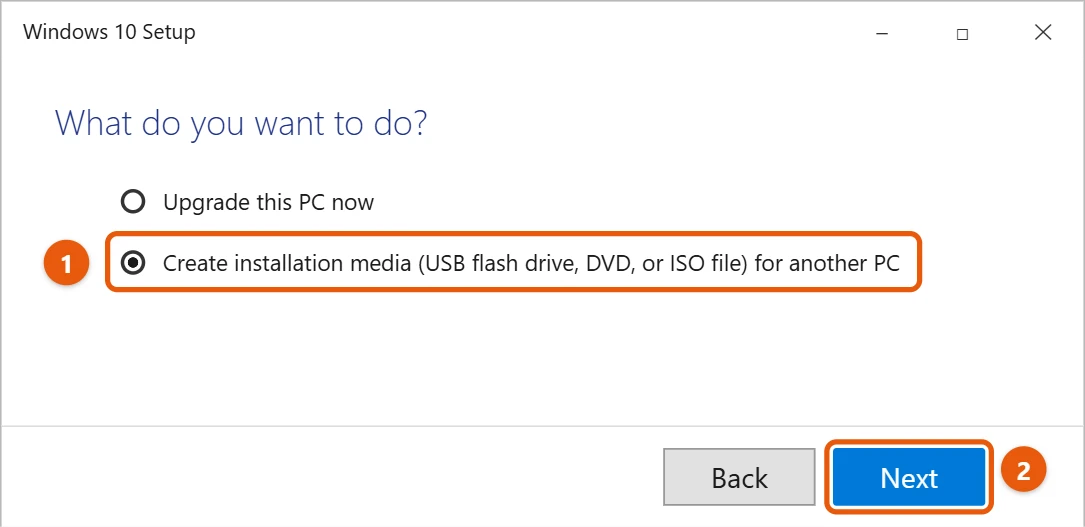
- Select Create installation media (USB flash drive, DVD, or ISO file) for another PC, then Next.
- Check the language, edition and architecture (64-bit for most PCs), then select Next.
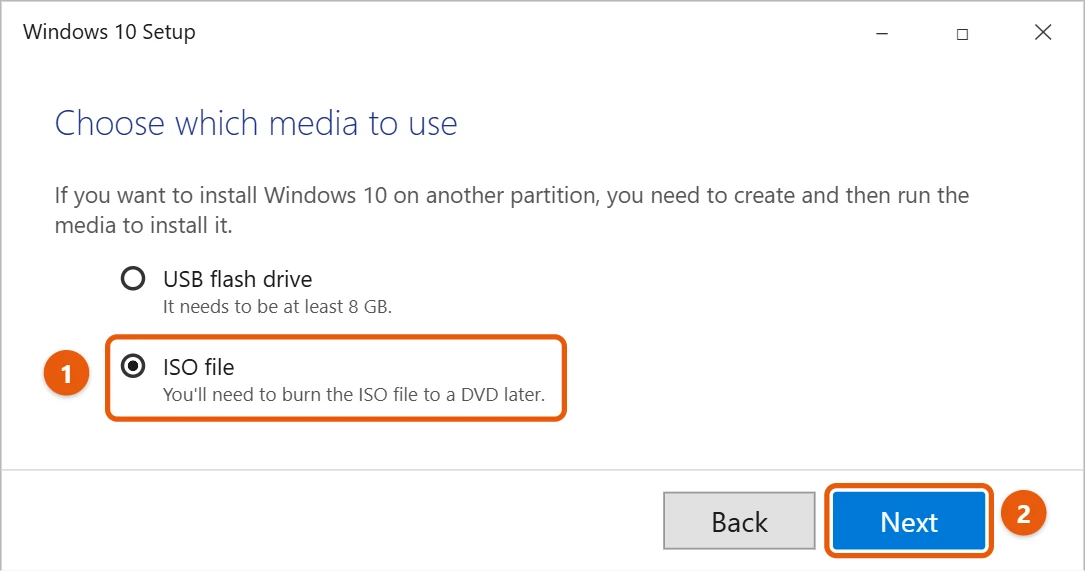
- Select ISO file, then Next.
- Pick a folder, like Downloads, and select Save. Wait for the download to finish, then select Finish.
Download the ISO directly instead
If you open Microsoft’s Download Windows 10 page on a Mac, a Linux PC, a phone, or a tablet, the page offers the ISO file itself instead of the tool. Pick the edition and language, select Confirm, and choose 64-bit Download. The download link only works for 24 hours, so start the download right away.
Check that the download is complete
Microsoft publishes SHA256 hashes for its ISO files on the download pages. In PowerShell, run Get-FileHash followed by the path to your ISO, and compare the result with Microsoft’s list. If they match, the file downloaded correctly and hasn’t been changed. With the ISO saved, Rufus or the DISM command can also turn it into a portable Windows 10 installation on an external drive.
What to do with the ISO
- Make a bootable USB drive to install Windows on a PC, using the steps for creating a bootable Windows 10 USB drive.
- Burn it to a DVD with the steps for burning a Windows 10 ISO to a DVD.
- Open it without burning by mounting the ISO file in File Explorer.
If the Media Creation Tool fails
- It shows an error code or Something happened. Restart the PC, make sure the date and time are correct, and run the tool again by right-clicking it and selecting Run as administrator.
- It stops partway through. Check that you have at least 8 GB of free space for the ISO and the tool’s temporary files, and that your internet connection is steady.
- It’s very slow. The ISO is several gigabytes. A wired connection is faster and more reliable than Wi-Fi.
- It won’t run on a work PC. Your organization may block it. Use the direct download from another device instead.
Frequently asked questions
Why don’t I see a direct ISO download link?
On a Windows PC, Microsoft’s page offers the Media Creation Tool instead. The tool builds the ISO for you.
Can I use the ISO to install Windows on another PC?
Yes, with a clean install of Windows 10 from a USB drive. That PC needs its own Windows 10 license.
How big is the Windows 10 ISO?
Around 5 to 6 GB, depending on the language. It’s too big for a standard DVD, so most people use a USB drive of 8 GB or more.
Do I need a product key to download it?
No. The download is free. You only need a valid license when you install and activate Windows. A PC that had Windows 10 before usually activates by itself.
Which editions does the ISO include?
The standard ISO includes Windows 10 Home and Pro, among others. Setup picks the edition that matches your PC’s license, or asks you to choose.
You can try the ISO before installing it on real hardware by creating a Hyper-V virtual machine. Upgrading an older PC is covered in installing Windows 10 from Windows 7. The same ISO file also works in VirtualBox, so you can set up Windows 10 inside VirtualBox without touching your main installation. An ISO is also exactly what a hypervisor needs, so you can install Windows in a virtual machine on Windows 10 without a USB drive.
Microsoft’s reference is Create installation media for Windows.

Matt Jacobs writes and maintains the guides on Support Your Tech, which he started in 2017. He spent most of his career keeping small-business PCs running and still takes the occasional consulting job, so the steps here come from fixing the same problems on other people’s computers. Every guide is checked on his own Windows 11, Windows 10, Mac, iPhone and iPad before it goes up.