Last updated on November 10th, 2026 at 10:13 am
Dragging Spotify from Start > All onto the desktop gives you a shortcut in Windows 11. If that doesn’t work, press Windows logo key + R, type shell:AppsFolder, select OK, right-click Spotify, select Create shortcut, and then select Yes. For on-screen music controls instead of an icon, use Spotify’s Miniplayer or the media controls in Windows Quick Settings. No app yet? Install it from Microsoft Store or Spotify’s website.
Add a Spotify shortcut to the desktop
Drag it from Start:
- Select Start, and then select All (or All apps).
- Scroll to Spotify.
- Drag Spotify onto an empty part of the desktop, and let go when you see Link.
Or use the Applications folder (works when dragging doesn’t):
- Press Windows logo key + R, type shell:AppsFolder and select OK.
- Right-click Spotify and select Create shortcut.
- When Windows offers to put the shortcut on the desktop, select Yes.
If you installed Spotify from Spotify’s website rather than the Store, you can also search for Spotify in Start, right-click it, select Open file location, then right-click the Spotify shortcut there and select Show more options > Send to > Desktop (create shortcut).
To rename the new icon, right-click it and select Rename.
Should I use the Store version or the website version?
Either works and they look the same. The Store version updates through the Microsoft Store, and the website version updates itself.
How do I put other apps on the desktop?
Use the same steps for any app in the Start menu. The WhatsApp desktop shortcut is another worked example.
Pin Spotify to the taskbar or Start
A taskbar button stays visible when windows cover the desktop, so many people find it handier than a desktop icon.
- Select Start > All and find Spotify.
- Right-click Spotify and select More > Pin to taskbar. Or select Pin to Start to add it to the top of the Start menu.
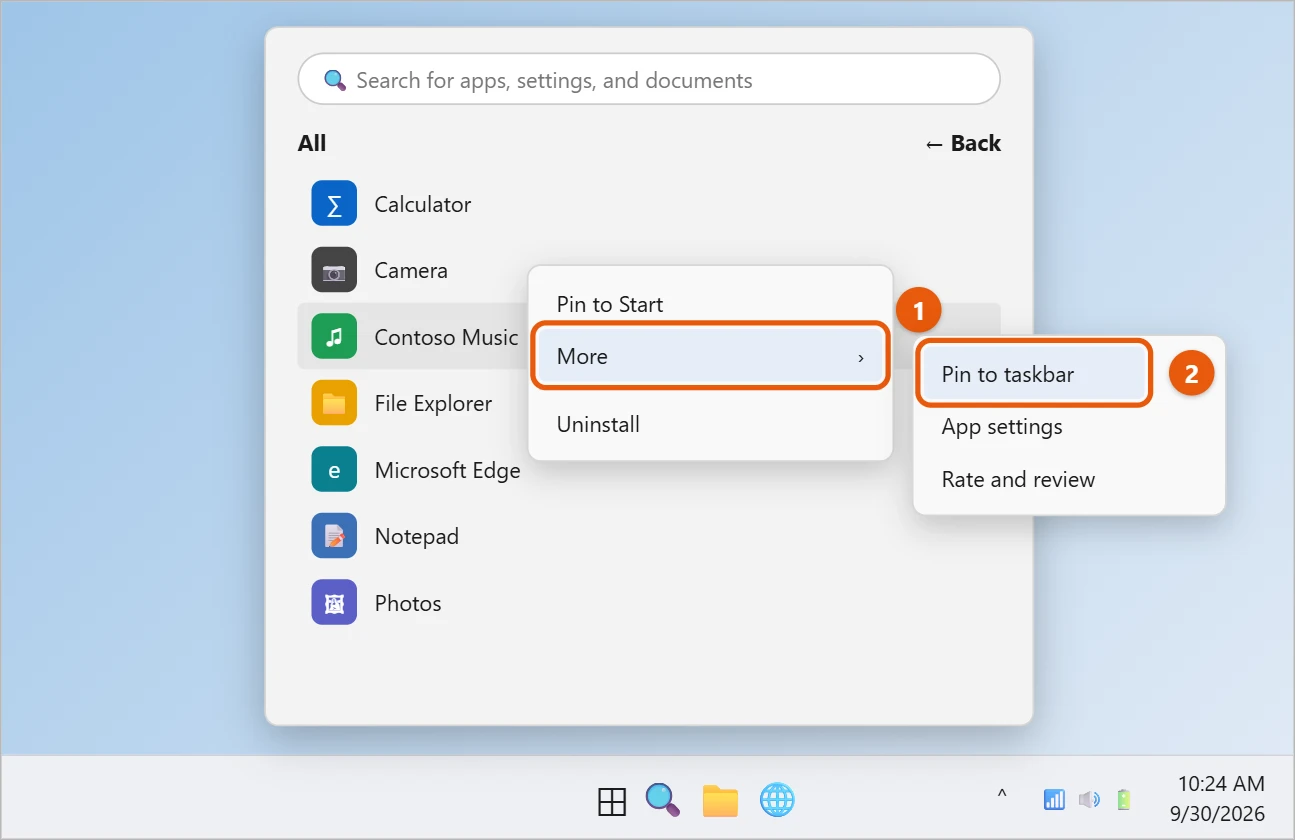
You can also open Spotify, right-click its icon on the taskbar, and select Pin to taskbar.
Keep a small player on screen
Windows doesn’t have a Spotify widget for the desktop itself, but there are three built-in ways to control Spotify without opening the full window.
Spotify Miniplayer: in the Spotify app, select the Miniplayer button at the bottom right, next to the volume controls. A small window with the song, playback controls and album art floats over your other apps. You can resize it or close it to go back to the full app.
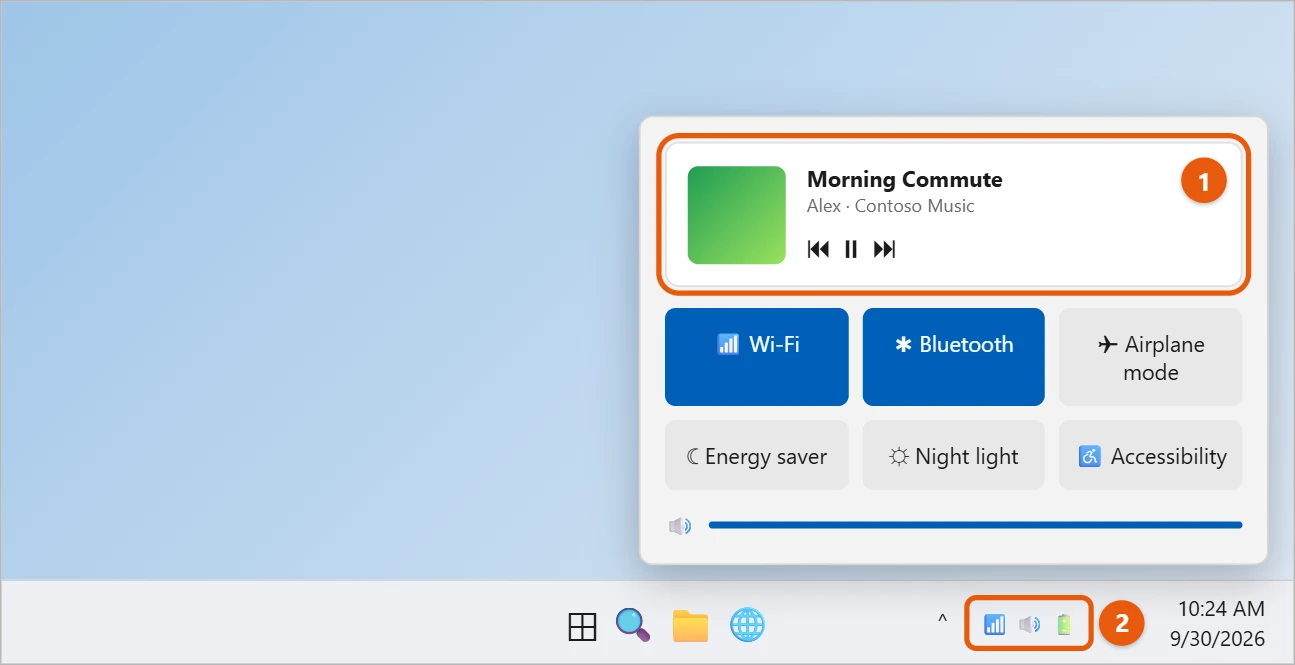
Quick Settings media controls: while Spotify is playing, select the network, volume or battery icons at the right end of the taskbar. The song and play, pause and skip buttons appear at the top of Quick Settings.
Game Bar widget: press Windows logo key + G to open Xbox Game Bar, open the Widget menu, and choose Spotify if it’s listed. Sign in when asked. The widget works over games and other apps, and you can pin it so it stays visible.
Many keyboards also have play, pause and skip keys that control Spotify, and pressing one shows a small media pop-up on the screen. You can also hover over the Spotify icon on the taskbar to see previous, play/pause and next buttons under the preview.
Can I put a playlist on the desktop?
Not directly. The simplest option is to pin Spotify to the taskbar and keep the playlist near the top of Your Library in the app.
Open Spotify when Windows starts
If you’d like Spotify ready as soon as you sign in, turn it on in Start > Settings > Apps > Startup, or in Spotify’s own settings under Startup and window behavior. To stop it opening automatically, turn the same setting off.
Use the Spotify Web Player as a Desktop App
If you cannot install apps on the PC, you can still give Spotify its own window and desktop icon.
- Open open.spotify.com in Microsoft Edge or Google Chrome and sign in.
- In Edge, select Settings and more (…) > Apps > Install this site as an app. In Chrome, select the menu (three dots) > Cast, save, and share > Install page as app.
- Choose to add a desktop shortcut when asked.
The web player supports most features, but offline downloads are only available in the installed Spotify app.
If the Spotify icon looks wrong or doesn’t work
- The icon is blank or white. Restart your PC first. If it’s still blank, delete the shortcut and create it again from the Applications folder.
- The shortcut does nothing. Spotify may have been updated or reinstalled. Delete the shortcut and create a new one.
- Spotify isn’t in the Start menu. It isn’t installed for your Windows account. Install it again from the Microsoft Store or Spotify’s website.
- You can’t see desktop icons. Right-click the desktop, select View, and make sure Show desktop icons is checked.
Using a Windows 10 PC? The steps differ a little for desktop shortcuts in Windows 10, and you may also want to update Spotify on Windows 10.
Apple Music listeners can play Apple Music on Windows 11 too.

Matt Jacobs writes and maintains the guides on Support Your Tech, which he started in 2017. He spent most of his career keeping small-business PCs running and still takes the occasional consulting job, so the steps here come from fixing the same problems on other people’s computers. Every guide is checked on his own Windows 11, Windows 10, Mac, iPhone and iPad before it goes up.