Last updated on November 18th, 2026 at 12:26 pm
A Windows 11 laptop can send its screen to a Fire TV Stick as a wireless display, as long as the Fire TV supports Display Mirroring. On the Fire TV, hold the Home button on the remote and select Mirroring (or go to Settings > Display & Sounds > Enable Display Mirroring). On the laptop, press Windows logo key + K and select the Fire TV Stick.
What you can and can’t do
- You can show your laptop’s screen on the TV that the Fire TV Stick is plugged into. This uses Miracast, a wireless display standard built into Windows 11.
- You can’t plug the Fire TV Stick into your laptop and watch it there. A laptop’s HDMI port is an output. Showing a stick’s picture on a laptop needs an extra HDMI video capture device and a viewing app, which this guide doesn’t cover.
If you just want to watch a streaming service on your laptop, it’s usually easier to use that service’s website or Windows app directly.
Can I plug a Fire TV Stick into my laptop’s HDMI port?
It won’t work. The laptop’s HDMI port sends video out and can’t receive a picture from the stick.
- Plug the Fire TV Stick into the TV and turn both on.
- Connect the laptop and the Fire TV Stick to the same Wi-Fi network.
- Turn on Wi-Fi on the laptop, even if it’s also connected by cable.
Not every Fire TV model offers Display Mirroring. If you can’t find the option in the steps below, your model may not support it. Fire TV apps such as Prime Video need an active membership, so check whether you have Amazon Prime first.
Turn on Display Mirroring on the Fire TV
- Press and hold the Home button on the Fire TV remote until a menu appears.
- Select Mirroring. The TV shows a screen that says it’s ready and displays the device’s name.
If that menu doesn’t appear, go to Settings > Display & Sounds > Enable Display Mirroring instead.
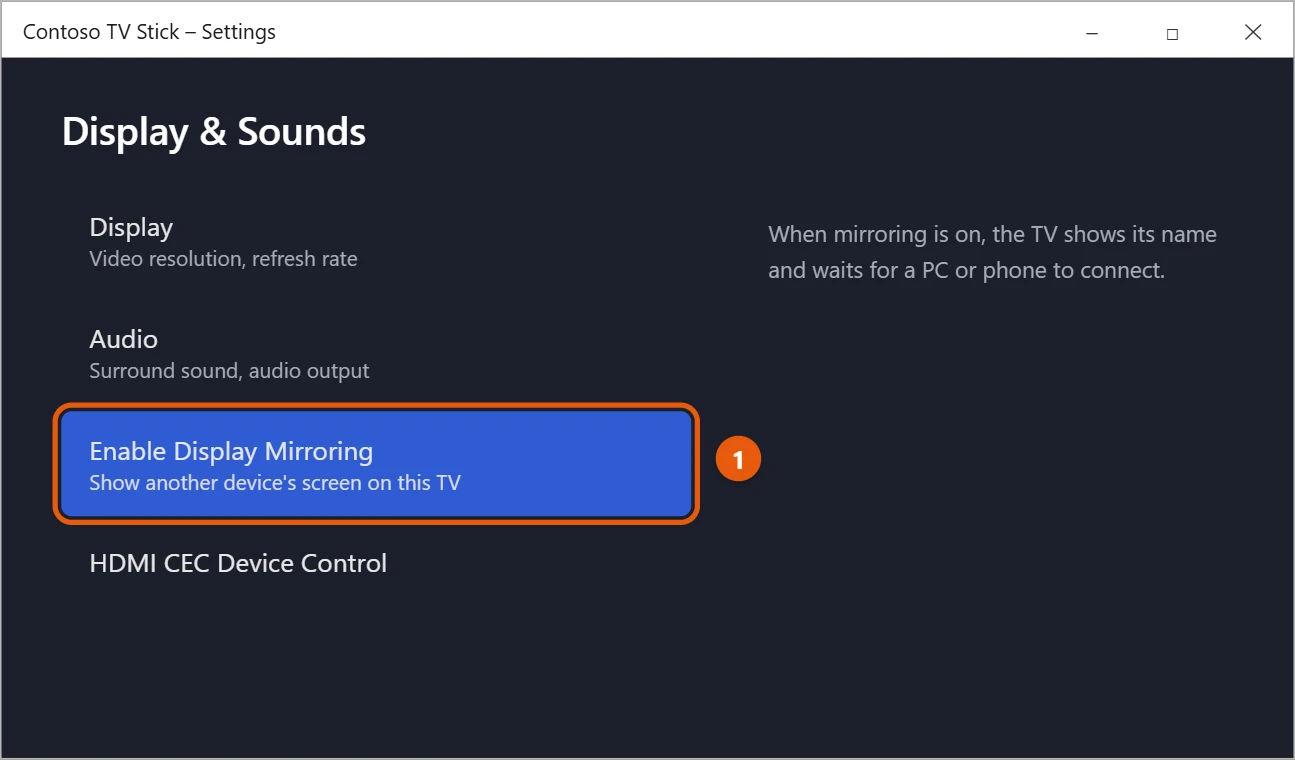
Leave that screen open until the laptop connects.
Cast from your laptop
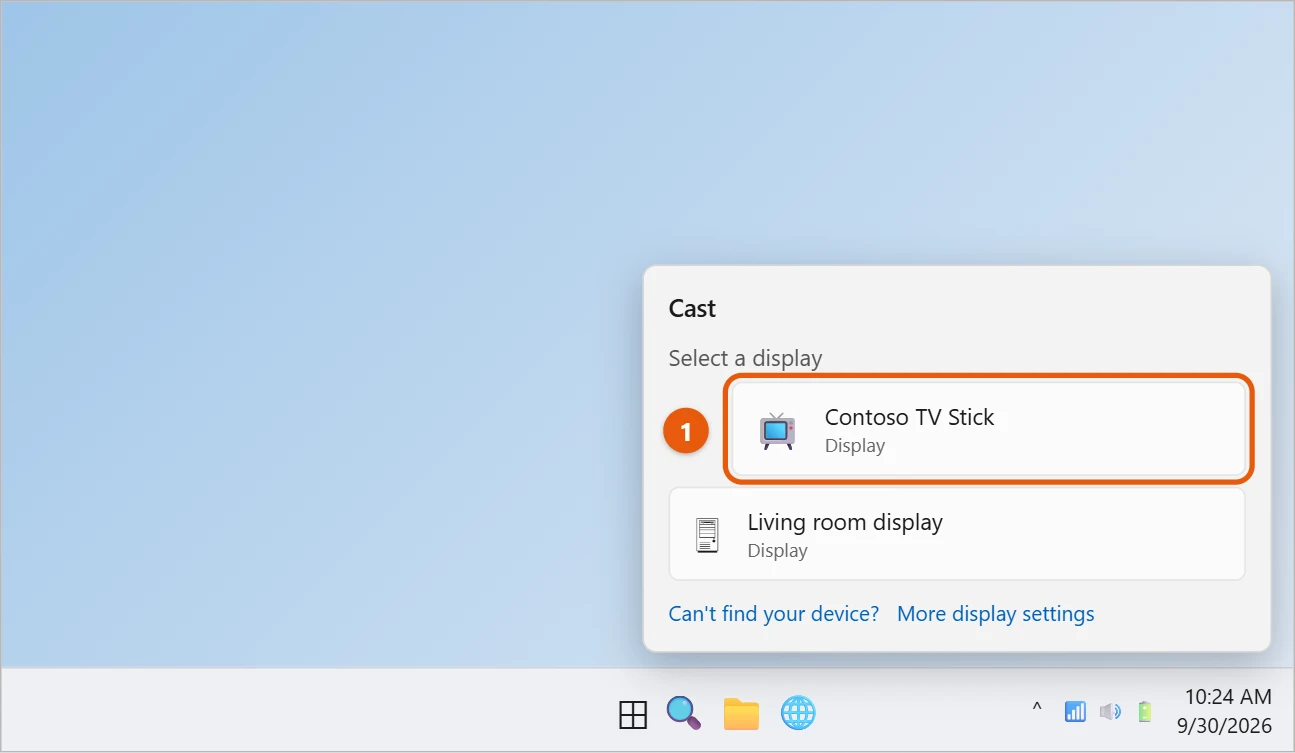
- On the laptop, press Windows logo key + K to open Cast. You can also select the network, sound or battery icons on the taskbar and then Cast.
- Select your Fire TV Stick in the list of displays.
- Wait a few seconds. Your laptop screen appears on the TV.
Can I cast a phone to my laptop instead?
Yes, with a different setup, explained in casting your phone to a Windows 11 laptop. iPhone owners can also mirror an iPhone to Windows 11.
Have a Roku instead? Here’s how to cast to Roku from Windows 11.
Choose what shows on the TV
Press Windows logo key + P and choose a mode:
- Duplicate shows the same thing on both screens.
- Extend makes the TV a second screen, so you can drag windows onto it.
- Second screen only turns off the laptop display and uses only the TV.
More casting options are in casting Windows 11 to a TV.
Stop mirroring
Press Windows logo key + K again and select Disconnect. You can also press Home on the Fire TV remote to leave the mirroring screen.
What works well (and what doesn’t)
- Good for: photos, slides, documents, web pages and most videos.
- Sound plays through the TV while you’re connected.
- Some streaming services block mirroring. Protected videos may show a black screen on the TV. Use that service’s own Fire TV app instead.
- There’s a short delay. It’s fine for watching, but fast games can feel laggy. For gaming, an HDMI cable from the laptop to the TV works better.
Or skip the stick: use an HDMI cable
If the TV is close by, an HDMI cable from the laptop to the TV gives a sharper picture with no delay, and it works with protected streaming video. Plug one end into the laptop’s HDMI port (or a USB-C to HDMI adapter if the laptop only has USB-C), plug the other end into a free HDMI input on the TV, and switch the TV to that input. Then press Windows logo key + P to choose how the screens are used.
If the Fire TV Stick doesn’t appear
- Check the mirroring screen. The Fire TV must be showing its mirroring screen while you search. Open it again if it timed out.
- Check the network. Both devices need to be on the same Wi-Fi network. Guest and public networks often block mirroring.
- Restart both devices, then try again.
- Move closer. Mirroring works best when the laptop is in the same room as the TV.
- Check the laptop. Select Can’t find your device? in the Cast panel for Windows’ own checks. Some older PCs don’t support Miracast.
Check Whether Your Laptop Supports Miracast
If the Fire TV never appears, confirm that your laptop can send a wireless display at all:
- Press Windows logo key + R, type dxdiag and press Enter.
- Wait for the green bar to finish, then select Save All Information and save the text file.
- Open the file and search for Miracast. Available means your laptop supports it. Not Supported means it does not, usually because of the Wi-Fi adapter or its driver.
If Miracast is not supported, updating the Wi-Fi and graphics drivers from your laptop maker sometimes adds it. Otherwise, use an HDMI cable as described above.
Get Better Picture and Less Lag
- Connect the laptop to a 5 GHz Wi-Fi network if your router offers one, and keep the laptop close to the TV.
- Turn off any VPN on the laptop while casting. VPNs can stop the two devices from finding each other.
- Close apps that use a lot of bandwidth, such as cloud backups or large downloads.
- Plug the laptop into power. Some laptops reduce wireless performance on battery.
- If the picture is cut off at the edges, adjust the TV’s picture size or overscan setting.
Related guides

Matt Jacobs writes and maintains the guides on Support Your Tech, which he started in 2017. He spent most of his career keeping small-business PCs running and still takes the occasional consulting job, so the steps here come from fixing the same problems on other people’s computers. Every guide is checked on his own Windows 11, Windows 10, Mac, iPhone and iPad before it goes up.