To run a Steam game as administrator on Windows 11, open your Steam Library, right-click the game, and choose Manage > Browse local files. In the folder that opens, right-click the game’s main .exe file, choose Properties, select the Compatibility tab, tick Run this program as an administrator, and click OK. From then on, the game asks for permission each time you press Play in Steam.
Applies to: Windows 11 (including version 26H2) and the current Steam desktop client. Steam has no per-game “run as administrator” switch of its own, so the setting always goes on the game’s .exe file, which is a Windows feature. The same steps work on Windows 10.
Should you run the game as administrator?
Usually not. Windows starts every app with standard rights, even on an administrator account, and only raises an app to full rights when you approve a User Account Control (UAC) prompt. Microsoft explains that this limits how much access malicious code can get. A game running as administrator can change any file or setting on your PC, and so can every mod, script, or cheat tool it loads. For the general methods, including keyboard and taskbar shortcuts, see how to run as administrator in Windows 11.
It’s worth trying when:
- A mod manager, trainer, or older mod can’t write to the game folder or the game’s files.
- The game can’t save settings or install its own patches, or shows an “access denied” error.
- An older game crashes at launch or won’t start on Windows 11.
- The game’s developer tells you to do it in their support instructions.
Running as administrator doesn’t raise your frame rate or fix missing files. If the game already works, leave it alone.
Before you start
- The game must be installed. Browse local files only works for games installed on this PC. New to Steam? Start with how to install Steam on Windows 11 or 10 and install the game from your Library.
- Admin password. On a standard (non-admin) Windows account, the UAC prompt asks for an administrator’s password. If you enter someone else’s admin credentials, the game runs under that account, so its saves and settings may end up in that person’s user folder instead of yours.
- Online games with anti-cheat. Some anti-cheat systems don’t like games started with admin rights. Check the developer’s support page first if the game is competitive or online.
Method 1: Make a Steam game always run as administrator
This is the method to use if the game needs admin rights every time.
- Open Steam and select Library at the top of the window.
- Right-click the game in the list on the left, then choose Manage > Browse local files. File Explorer opens the game’s install folder. (You can also get there from Properties > Installed Files > Browse.)
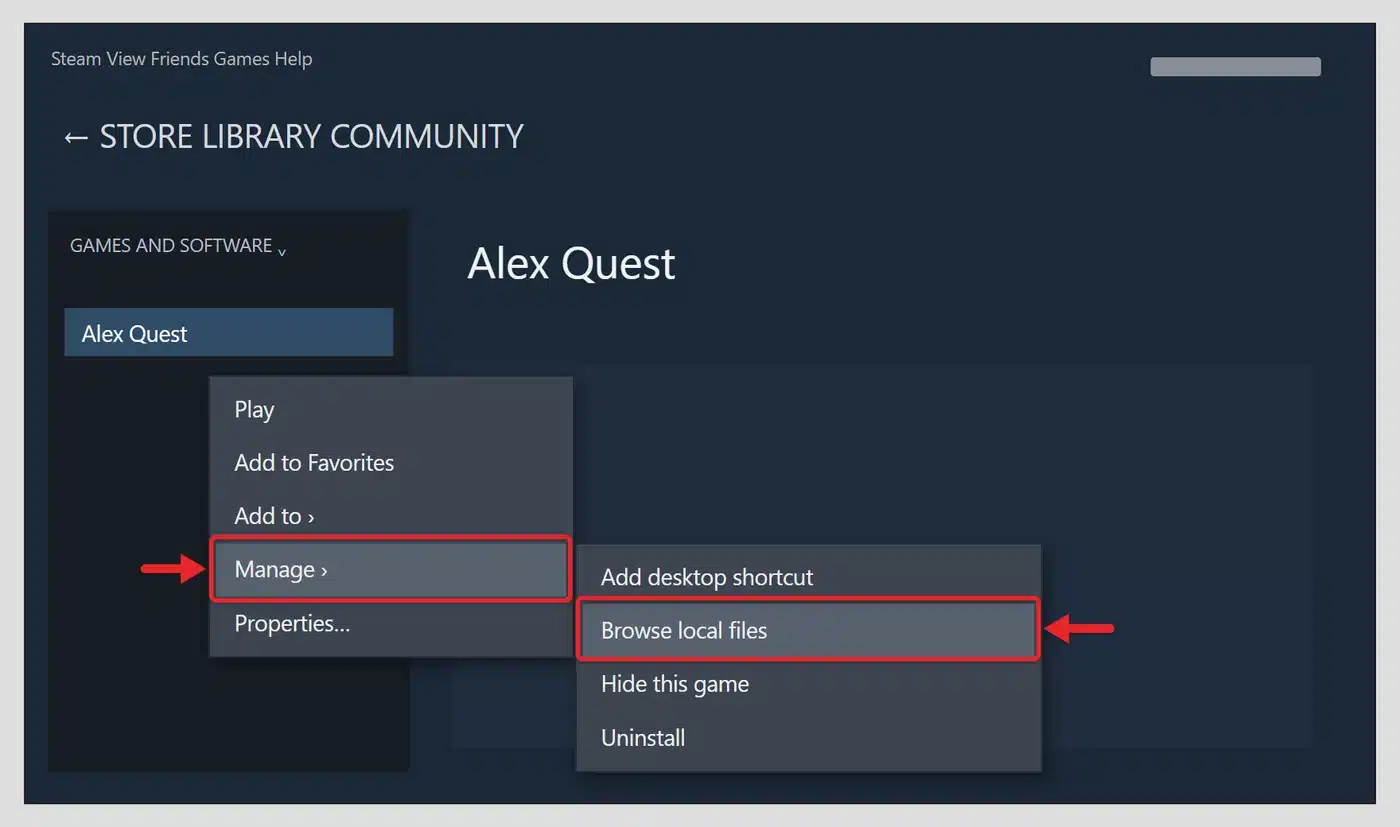
- Find the game’s main .exe. It’s usually named after the game, for example AlexQuest.exe. Some games keep it in a subfolder such as bin, Binaries\Win64, or Game. Skip helper files such as crash reporters, anti-cheat installers, and uninstallers.
- Right-click the .exe and choose Properties. You don’t need Show more options for this; Properties is on the short Windows 11 menu.
- Select the Compatibility tab.
- Under Settings, tick Run this program as an administrator. To apply it to every Windows account on the PC instead, click Change settings for all users and tick the box there.
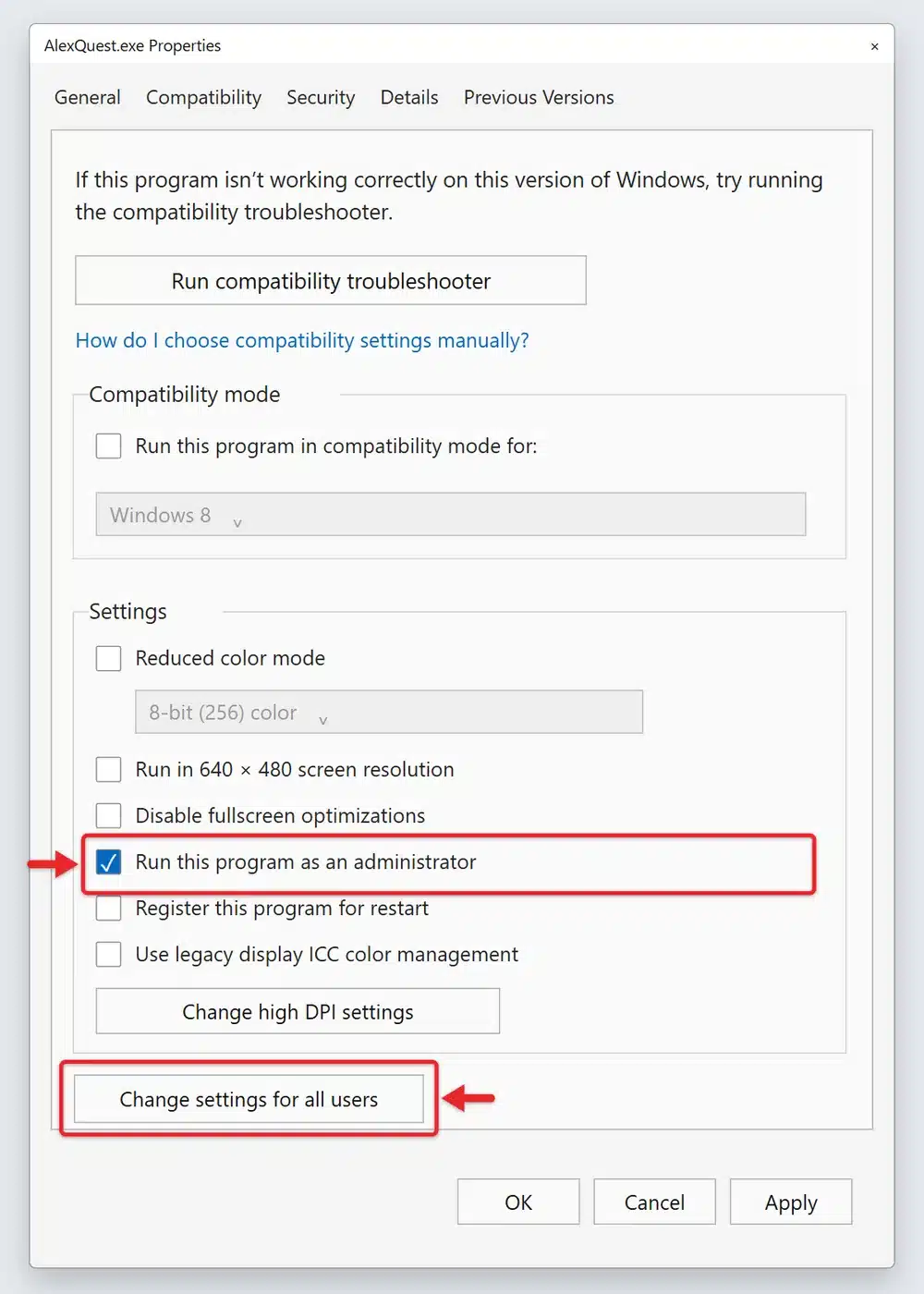
- Click Apply, then OK.
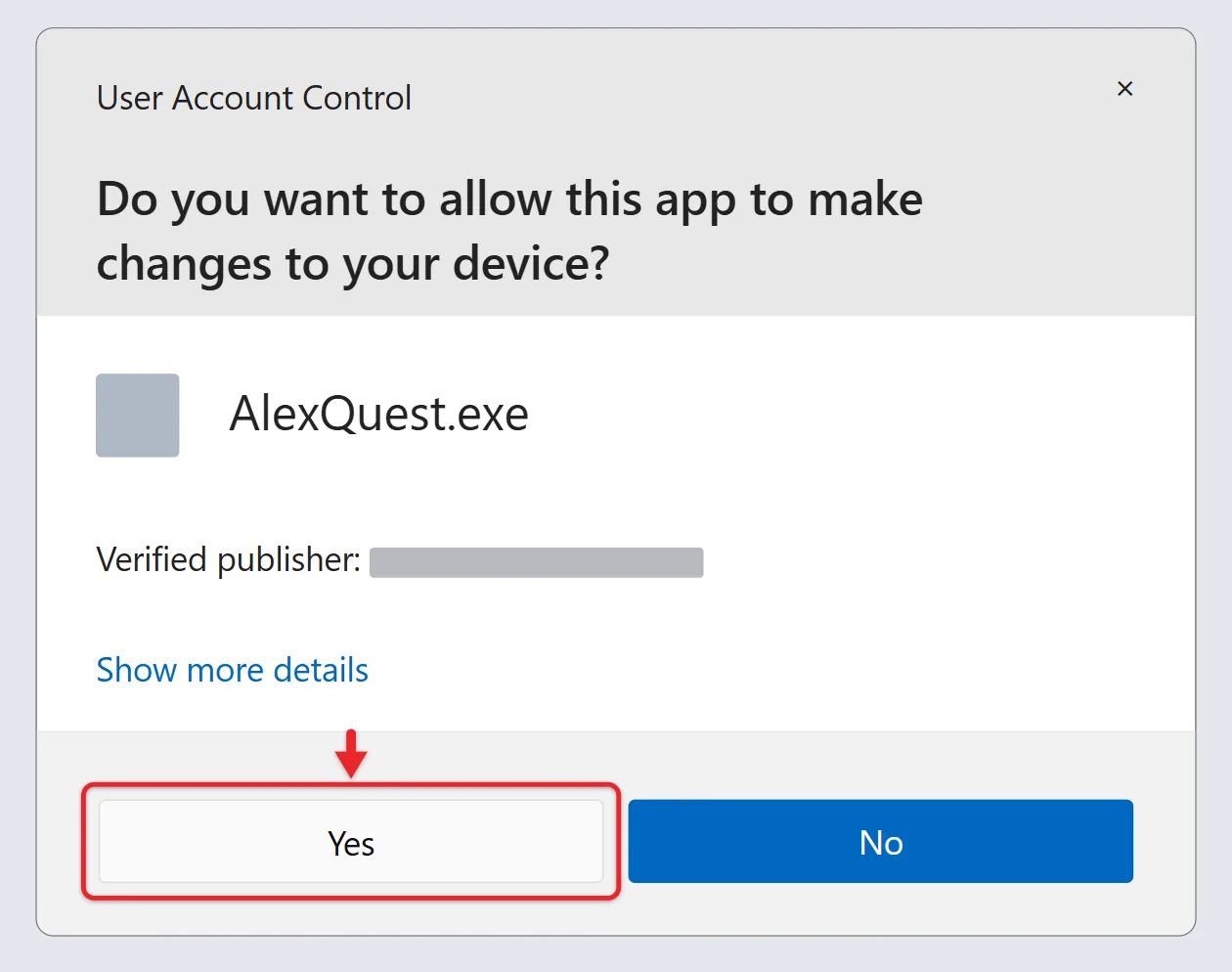
- Go back to Steam and click Play. A UAC prompt appears asking whether to let the app make changes to your device. Click Yes.
Some games start through a small launcher .exe that then opens the real game. If you don’t see a UAC prompt, or the problem continues, set the same option on both the launcher and the main game .exe.
Method 2: Run the game as administrator just once
Use this to test whether admin rights fix the problem before you change anything permanently.
- Close the game if it’s running.
- In Steam, right-click the game and choose Manage > Browse local files.
- Right-click the game’s .exe and choose Run as administrator, then click Yes on the UAC prompt.
Many Steam games check that Steam is running and may restart themselves through Steam, so leave Steam open while you test. If the game works properly this way, switch to Method 1. If it doesn’t, admin rights weren’t the cause.
Method 3: Run the Steam client as administrator
Games launched from Steam generally start with the same rights as Steam, so starting Steam elevated is another quick test.
- Close Steam completely: right-click the Steam icon in the notification area by the clock and choose Exit Steam.
- Open Start, type Steam, right-click the result, and choose Run as administrator. Click Yes.
- Launch the game from your Library.
Treat this as a one-off. Leaving Steam set to run as administrator means every game, download, and overlay you open through it gets full rights, which is a much bigger change than elevating one game.
Which method should you pick?
- Testing a fix: Method 2.
- One game needs it every time: Method 1.
- Steam itself shows errors or the game won’t start even with Method 1: try Method 3 once, then go back to a normal Steam launch.
Troubleshooting
There’s no Run as administrator option on the desktop icon
Steam’s desktop icons are internet shortcuts that tell Steam to start the game, not links to the .exe, so Windows can’t elevate them. Use the .exe in the install folder instead. If you can’t find the folder, see how to find the Steam folder on Windows 11.
The Compatibility tab is missing
You’re probably looking at a shortcut or a non-program file. Make sure the file type shows as Application (.exe) on the General tab. If the tab still isn’t there, open Settings > System > Troubleshoot > Other troubleshooters and run the Program Compatibility Troubleshooter, which Microsoft describes on its page about making older apps compatible with Windows.
The game starts without a UAC prompt
You changed a different .exe from the one the game actually runs. Start the game, press Ctrl + Shift + Esc to open Task Manager, right-click the game’s process, and choose Open file location. Windows highlights the exact .exe to change.
The game crashes, or the Steam overlay stops working
Some games, overlays, and anti-cheat tools don’t work well when the game has higher rights than Steam. Untick the option and try other fixes instead. In Steam, right-click the game and choose Properties > Installed Files > Verify integrity of game files to repair damaged or missing files (Valve covers this on its Verify Integrity of Game Files support page). Older games may do better with compatibility mode; the options are explained in running a program in compatibility mode in Windows 11. Fallout 3: Game of the Year Edition is one Steam title that often needs both settings, as the Fallout 3 fixes for Windows 10 show.
You see a different error about permissions
If Windows says you need permission for a file or folder rather than the game failing to launch, work through fixing administrator permission errors in Windows 11. Don’t give your whole Steam folder full control for every user to get around it, as that lets any program change your games.
How to confirm it worked, and how to undo it
The clearest sign is the UAC prompt each time you click Play. That prompt is expected and is part of how Windows keeps the setting safe, so don’t turn off User Account Control to get rid of it; Microsoft doesn’t recommend that.
To undo the change, open the same .exe’s Properties > Compatibility tab, untick Run this program as an administrator (and the box under Change settings for all users, if you used it), then click Apply. If you elevated Steam itself, just exit Steam and start it normally.
Frequently asked questions
Does running a Steam game as administrator improve performance?
No. Admin rights only change what the game is allowed to access on your PC. They don’t change how much CPU or GPU power it gets, so frame rates stay the same.
Do I have to set this again after a game update?
Usually not, because Windows ties the setting to the file’s location. If an update moves or renames the .exe, or you move the game to another drive, the setting won’t follow it and you’ll need to apply it to the new file.
Does this work for games from other launchers?
Yes. The Compatibility setting is part of Windows, so it works on any game’s .exe once you find its install folder. The general version is in how to run a game as administrator in Windows 11.
Is it safe?
For a game you bought from Steam and trust, running it elevated is a reasonable troubleshooting step. The risk comes from what the game loads: mods, trainers, and downloaded scripts get the same full rights. Only use files from sources you trust, and turn the setting off once you no longer need it.
If the game works normally after your fix, consider unticking the option and launching it once without admin rights. If it still works, you’ve kept your PC better protected with no downside.

Matt Jacobs writes and maintains the guides on Support Your Tech, which he started in 2017. He spent most of his career keeping small-business PCs running and still takes the occasional consulting job, so the steps here come from fixing the same problems on other people’s computers. Every guide is checked on his own Windows 11, Windows 10, Mac, iPhone and iPad before it goes up.